Keep the glass, logs, louvers and vents clean, change remote and receiver batteries each season, and test your carbon monoxide alarms. Have a technician service it once a year to clean the burner and pilot, check the valve and gas connections, and confirm the venting is clear.
Key points
- Plan on a professional service once a year, ideally before the heating season or before you start using an outdoor unit heavily.
- Clean the glass only when cool, with a cleaner made for fireplace glass, not household window spray.
- Never wash logs or embers with water. Dust them gently and put them back exactly as the manual shows.
- A yellow, lifting or sooty flame, a pilot that will not stay lit, or a gas smell means call a pro.
- Working carbon monoxide alarms are part of fireplace maintenance.
Why gas fireplaces need upkeep
Gas fireplaces burn clean compared with wood, but they are not maintenance free. Dust, pet hair and spider webs build up around the burner and pilot. Logs shed fibers. Glass picks up a white film from combustion. Outdoor units fill with leaves, water and insects. None of this is dramatic on its own, but it adds up to the calls we get most: a pilot that will not stay lit, a burner that will not come on, soot on the glass, or a smell when the unit runs.
Most fireplace manufacturers, including Napoleon and Valor, recommend a yearly inspection by a qualified technician. NFPA 211, the national standard for chimneys, fireplaces and vents, also calls for annual inspection of venting systems. In between, the homeowner jobs are simple.
Need the part? Pro Grill can find it
Send us your brand, model and the part you need. We source OEM parts, including ones that aren't listed in our online store.
Ask Pro Grill for a partWant a pro to handle it?
Most companies in our network are dealers or have dealer accounts, so they can usually bring the right part and install it in one visit.
What you need
- Soft cloths and a soft paintbrush
- Vacuum with a brush attachment
- Fireplace glass cleaner (sold for gas fireplace glass; ask your dealer which one your manufacturer approves)
- Fresh batteries for the remote and receiver
- Your owner's manual, especially the log placement diagram
Monthly or as needed during the season
Clean the glass, only when it is cool
Glass on a gas fireplace gets very hot and stays hot for a while after the flame goes off. Wait until it is cool to the touch.
- Spray the cleaner on a cloth, not directly on the glass, so it does not run into the gasket.
- Wipe the inside and outside.
- Buff dry with a clean cloth.
The white, hazy film on the inside of the glass is a normal combustion deposit. If you let it sit and bake on, it etches the glass and will not come off. Household ammonia window cleaners and abrasive pads do not remove it well and can damage the ceramic glass. Use a fireplace glass cleaner instead.
On most direct vent units, the glass is part of a sealed assembly held by latches or clips. If you are not comfortable removing it, clean the outside and have the inside done at the yearly service. Do not run the fireplace with the glass removed, cracked or loose. A sealed unit depends on that glass to keep combustion gases out of the room. Cracked or fogged glass that will not clean is a replacement item, and our fireplace parts cost guide covers typical prices.
Dust the louvers and vents
Wipe the louvers above and below the firebox. If they lift out, wash them with mild soap and water and dry them fully before putting them back. Vacuum the lower grille area gently. That lower compartment is where the valve, pilot wiring and receiver live, and dust and pet hair there can cause erratic operation.
Check the flame
With the fireplace running for 15 minutes or so, look at the burner. Gas logs normally have some yellow, dancing flame by design. What you do not want:
- Heavy black soot on the logs or glass
- Flames lifting off the burner or blowing around
- A pilot that is small, yellow, or flickering
- Flames that change when the blower kicks on
Any of those is a reason to call a tech. Soot usually means a log is out of position, the burner or air shutter needs cleaning, or the venting is restricted.
Each season
Replace remote and receiver batteries
Many remote systems use a battery receiver in the lower compartment, and some ignition systems have a battery backup. Weak batteries are behind a lot of "fireplace won't turn on" calls. Replace them at the start of each season. Turn off the fireplace first and let it cool, and use the battery type the manual lists. If new batteries do not fix it, our guide on a gas fireplace that won't turn on goes through the next checks.
Inspect the logs and embers
Look for cracks, crumbling or logs that have shifted. Dust them with a soft brush or a gentle puff of air outdoors. Never wash them or spray cleaner on them. If you remove logs, put them back exactly where the diagram shows. A log a half inch out of place can block the flame path and cause soot or carbon monoxide. Replace damaged logs only with the manufacturer's logs for your model.
Glowing embers, rock wool and vermiculite are consumables. Add only the amount and type the manual calls for. Piling extra material over the burner ports is a common cause of soot and poor ignition.
Test carbon monoxide alarms
Every home with a gas fireplace should have working carbon monoxide alarms, including one near the bedrooms. Test them, change batteries, and replace any alarm past the date printed on it.
Check the outside vent cap
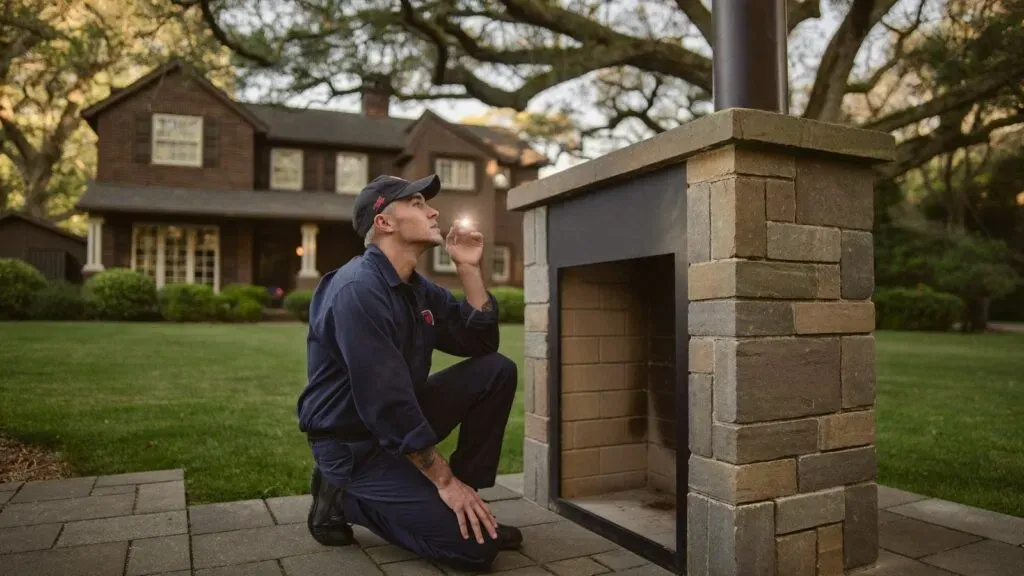
For direct vent units, find the termination cap on the outside wall or roof. Look for bird nests, wasp nests, leaves, overgrown shrubs and anything stacked against it. Keep plants trimmed back. Do not paint over or cover it.
Outdoor gas fireplaces
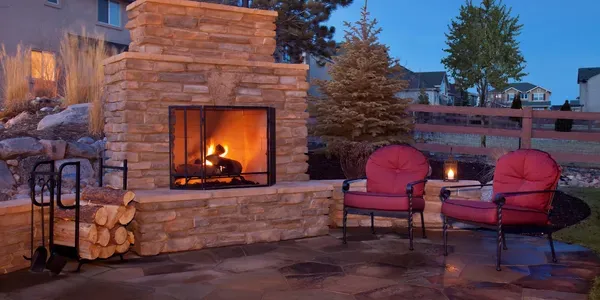
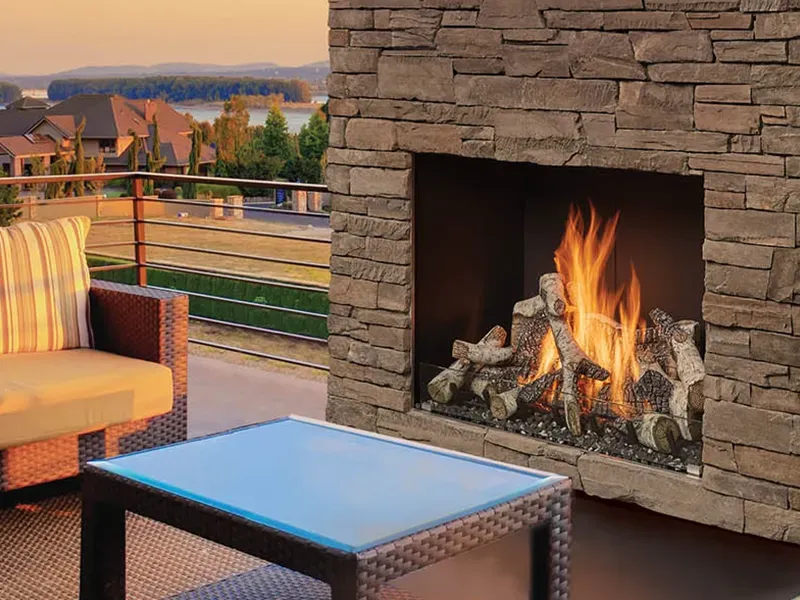
Outdoor fireplaces and fire features get the same care plus a few extras. Spiders and wasps love pilot tubes and burner ports, especially in spring. Rain fills the firebox and rusts the burner pan if the drain is clogged. Clear debris off the burner before every use, keep the drain open, and cover the unit if the manufacturer makes a cover for it. Pilots on outdoor units also blow out more in wind, so a pilot that drops out on gusty days is not always a failed part. See why a fireplace pilot won't stay lit for how to tell the difference.
What a yearly service covers
A good annual service is more than a glass wipe. Expect the tech to:
- Shut off the gas and remove the glass and logs
- Vacuum the firebox, burner and lower compartment
- Clean the pilot assembly, including the thermocouple or thermopile and the flame sensor or igniter on electronic ignition units
- Check the pilot and main burner flame and adjust the air shutter if needed
- Measure thermopile or thermocouple output so a weak part gets replaced before it quits mid-winter
- Leak test the valve and gas connections
- Inspect the glass gasket and the vent system
- Reinstall the logs per the diagram and test fire
Most annual services run about $100 to $250. Our gas fireplace service cost guide breaks down service and common repair prices. To book one, find fireplace cleaning and service pros in your area.
Leave these to a pro
Do not take apart the gas valve, pilot assembly or gas connections, and do not adjust gas pressure. Do not swap logs, media or glass for parts that were not listed for your model. These are certified appliances, and the wrong part can change how the burner breathes. Call a pro for:
- A pilot that will not stay lit after the batteries and basics check out
- Soot, yellow lazy flames, or flames that roll out of the firebox
- A clicking igniter that never lights
- Cracked glass or a damaged gasket
- Any gas smell
If you smell gas strongly, do not touch switches or try to light the fireplace. Leave the house, then call your gas utility or 911 from outside.
Most companies in our network that do gas fireplace repair are dealers or have dealer accounts, so they can usually bring the correct thermopile, thermocouple or valve for your unit. Before you call, find the rating plate. On most gas fireplaces it is on a chain or a plate in the lower control compartment behind the bottom grille, and it lists the model and serial number. If you need a part on your own, send Pro Grill a parts request with those numbers. Always buy OEM for valves, pilot assemblies and anything else in the gas train.
Want a local tech? Search fireplace pros by ZIP.
Frequently asked questions
How often should a gas fireplace be serviced?
Once a year by a qualified technician, plus simple homeowner cleaning during the season. Outdoor units used often or exposed to weather may need attention more often.
What is the white film on my gas fireplace glass?
A normal deposit left by combustion. Clean it off with a fireplace glass cleaner once the glass is cool. If it bakes on for too long it can permanently etch the glass.
Can I use Windex on my gas fireplace glass?
It is not a good choice. Household window cleaners do not remove the combustion film well and some contain ammonia that can damage fireplace glass. Use a cleaner made for gas fireplace glass.
Should I turn off the pilot light in summer?
Many owners do to save gas, and it is fine on most standing pilot units. Some manufacturers suggest leaving it on in humid areas to keep moisture and insects out. Check your manual and relight per its instructions.
Why is my gas fireplace leaving soot on the glass?
Usually a log or ember material is out of place, the burner or air shutter is dirty, or the venting is restricted. Turn it off and have a tech look, since soot can be a sign of incomplete combustion.