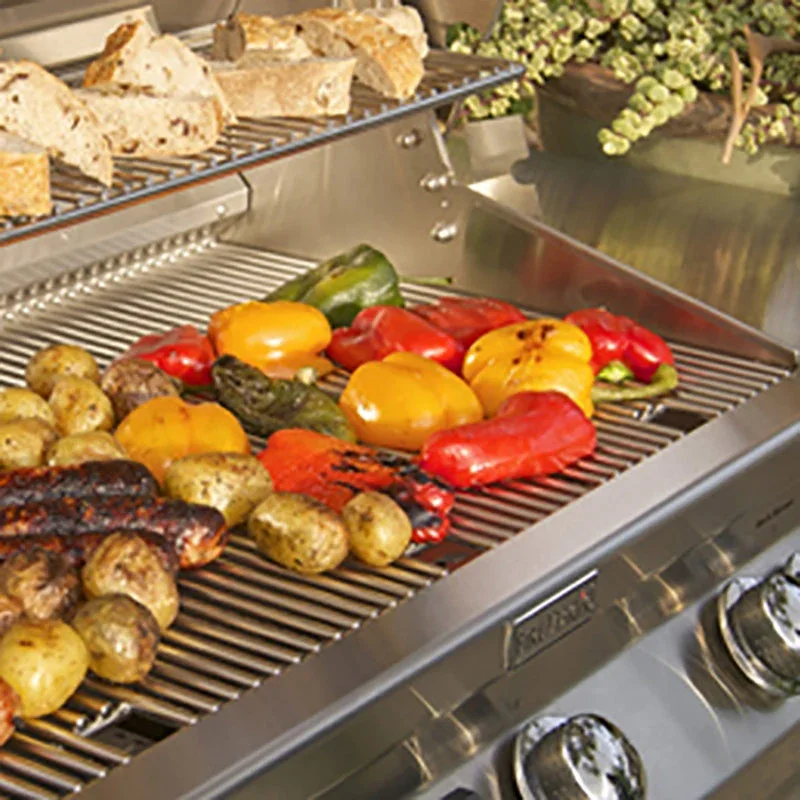
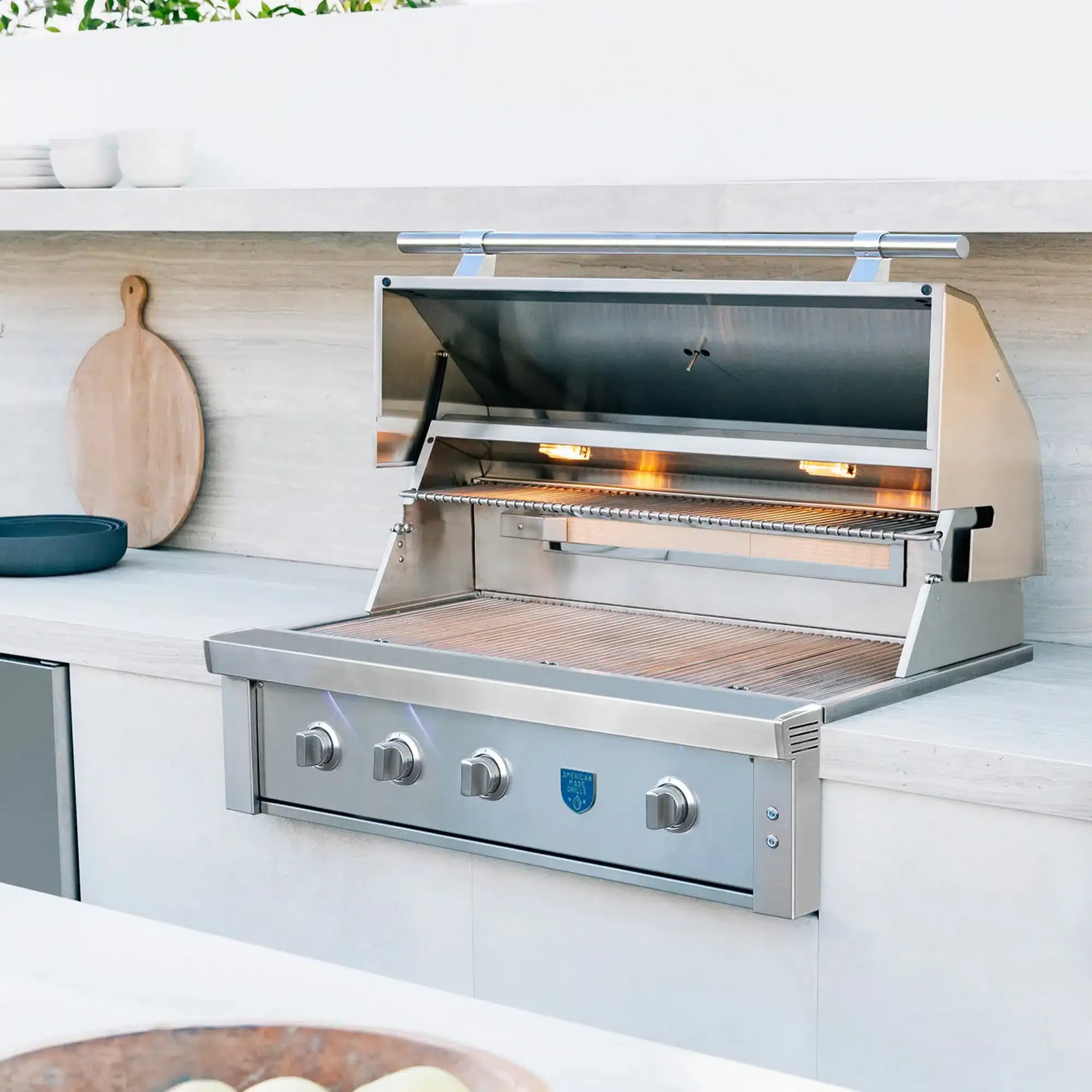
Many premium built-in grills can be converted from propane to natural gas with the manufacturer's kit, which swaps the burner orifices and converts or replaces the regulator. Some grills, including Weber gas grills, are not approved for conversion at all. Kits usually cost about $100 to $300, and the work should be done by a qualified tech who can leak test and adjust every burner.
Key points
- Not every grill converts. Check the manual or ask the manufacturer before buying anything.
- Conversion means new orifices on every burner, a regulator set or swapped for the new gas, and often valve adjustments.
- Only use the maker's conversion kit for your exact model. Never drill out orifices.
- Many manufacturers require an authorized tech to do it, and a DIY conversion can void the warranty.
- Budget for the gas line too. Running natural gas to the grill often costs more than the conversion.
Why conversion is more than swapping a hose
Propane and natural gas behave differently. Propane carries about 2,500 BTU per cubic foot and is delivered to a grill at around 10 to 11 inches of water column. Natural gas carries roughly 1,000 BTU per cubic foot and runs at around 3.5 to 7 inches of water column depending on the grill. To get the same heat out of a burner, a natural gas grill has to push much more gas through larger openings at lower pressure.
That is why a propane grill hooked straight to a natural gas line burns weak and lazy, and a natural gas grill hooked to propane can produce dangerous, oversized flames. Getting a flame does not mean the grill is set up correctly.
Need the part? Pro Grill can find it
Send us your brand, model and the part you need. We source OEM parts, including ones that aren't listed in our online store.
Ask Pro Grill for a partWant a pro to handle it?
Most companies in our network are dealers or have dealer accounts, so they can usually bring the right part and install it in one visit.
Which grills can be converted
It depends on the brand, the model and sometimes the year. Some examples from manufacturer manuals:
- Weber: Weber says its gas grills are built for one gas type and that conversion kits are not available. Buy the grill in the gas type you need. We do not convert Weber grills.
- Summerset: Summerset's manual says its grills ship with a conversion kit containing orifices for the other gas, and that some conversions may need additional parts.
- Cal Flame: The G series manual says its grills can be converted to natural gas with a separately ordered kit, but only by an authorized service technician, and the rating plate has to be marked for the new gas afterward.
- Bull: Bull's grill manuals say a different gas valve must be installed to change gas types, conversion kits are not sold to consumers, and a professional (grill dealer, licensed plumber or authorized service center) must do the work.
- Lynx: Lynx sells conversion kits by product line, for example a propane to natural gas kit for its Professional grills and separate kits for Sedona, All Sear and its pizza oven.
- Twin Eagles: The regulator on Twin Eagles grills converts by inverting a pin under the regulator cap, but the burner orifices still have to change.
Many cart grills and inexpensive grills are not approved for conversion. If your manual does not describe a conversion or list a kit, assume it cannot be converted.
What a conversion kit changes
A proper kit for your model typically includes some or all of these:
Burner orifices
Each burner valve has a brass orifice (a small jet) that meters gas into the burner. Natural gas orifices have larger holes than propane orifices. Every burner gets a new one: main burners, the infrared rear rotisserie burner, sear burners, side burners and power burners. Missing one is a common mistake. Some kits use orifices stamped with a size, and the tech checks each against the chart in the instructions.
Regulator
Propane grills use either the regulator on the tank hose or a regulator mounted on the grill. Natural gas grills need a regulator set for natural gas pressure. On many premium built-ins the regulator converts with a pin, cap or spring change. On others it is replaced. A freestanding grill switching from a 20 lb tank also needs the tank hose removed and a natural gas hose with a quick disconnect installed.
Valve low settings and air shutters
Many grill valves have a low-flame bypass screw that has to be adjusted for the new gas so the burner does not go out or run too high on low. Air shutters on the burners may need resetting to get a clean blue flame. On some grills, like Bull, the valve itself is different for each gas and has to be replaced.
Labels
The rating plate should be updated or labeled for the new gas so the next tech knows what it is set for.
For valve and regulator pricing, see our guides on grill valve costs and regulators and hoses.
Why a pro should do it
We get calls every year to fix home conversions. The usual problems:
- Orifices drilled out with a bit instead of replaced, which gives uneven, oversized or yellow flames
- One burner (usually the rotisserie or side burner) left on the old orifice
- Regulator not converted, so every burner runs low
- Cross-threaded or overtightened orifices that leak at the valve
- Low settings not adjusted, so burners blow out on low
- A natural gas line that is too small for the grill's BTU load
A qualified tech confirms the grill has an approved conversion path, uses the correct kit, checks each orifice, sets the regulator, adjusts low settings and air shutters, leak tests every connection, measures pressure if the flame looks off, and test fires every burner. Many manufacturers also require it. Cal Flame and Bull both say conversions must be done by a qualified or authorized tech, and Weber, Bull and Cal Flame all warn that improper or unauthorized conversions void the warranty.
Do not try to drill, enlarge or modify orifices yourself.
What it costs
- Conversion kit: about $100 to $300 for most brands. A Lynx Professional propane to natural gas kit sells for a little over $100.
- Labor: a service call plus about one to two hours on most built-ins. Our grill repair cost guide has current service call and hourly ranges.
- Natural gas line to the grill: often the biggest cost. A typical new line to a grill runs about $600 to $1,300, and about $15 to $25 per foot on easy runs, more with trenching. See grill installation costs for the full breakdown.
- Shutoff valve, permit and pressure test: often required for new gas lines.
If your grill is old, rusted, or already needs burners and valves, add those parts to the math. Conversion plus repairs can approach the cost of a new grill built for natural gas. Our repair vs replace guide helps with that decision, and if you go new, the grill cutout fit guide shows which grills fit your existing island opening.
Before you buy a kit
- Find the model and serial number on the rating plate. On many built-ins it is under the drip tray or behind the control panel. Our guide on finding your grill's model number shows where each major brand puts it.
- Confirm in the manual or with the manufacturer that a conversion exists for that model.
- Order the kit that matches your model and, where it matters, your serial number range. Lynx, Alfresco and Fire Magic kits vary by series and year.
- Make sure the natural gas line can supply the grill's total BTU rating plus anything else on that line.
Many companies in our network are dealers or have dealer accounts, so they can confirm the right kit and convert the grill in one visit. Find a grill repair pro or a grill installation pro if you also need the gas line run. If you want the kit yourself to hand to your tech, Pro Grill carries kits for several brands, including Lynx conversion kits at the Pro Grill store, and can source a kit for other brands.
If you smell gas after a conversion
Shut off the gas at the grill's supply valve, keep flames and sparks away, and do not try to light it. If the smell is strong, move away and call your gas utility or 911. A leak after a conversion usually means an orifice or fitting that was not seated correctly, and it needs a pro.
Frequently asked questions
Can I convert my Weber propane grill to natural gas?
No. Weber says its gas grills are built for one gas type and does not offer conversion kits. Buy a Weber model built for natural gas instead.
How much does it cost to convert a grill to natural gas?
The kit usually runs about $100 to $300, plus a service call and an hour or two of labor. Running a new natural gas line to the grill often costs $600 to $1,300 on top of that.
Can I just drill out the orifices?
No. Drilled orifices give uneven or oversized flames and can be a fire hazard. Use the manufacturer's orifices for your model and gas type.
Can you convert a natural gas grill to propane?
Many premium grills that convert one way also convert the other way with a different kit. It needs smaller orifices and a regulator set for propane, and the same rules apply: correct kit, qualified tech.
Does converting a grill void the warranty?
It can. Many manufacturers require an authorized or qualified tech to do the conversion with their kit. A DIY or unauthorized conversion often voids the warranty.
Will my grill get as hot on natural gas?
A correctly converted grill is rated close to the same BTUs on either gas. If it runs cool after a conversion, an orifice, the regulator setting or an undersized gas line is usually the cause.