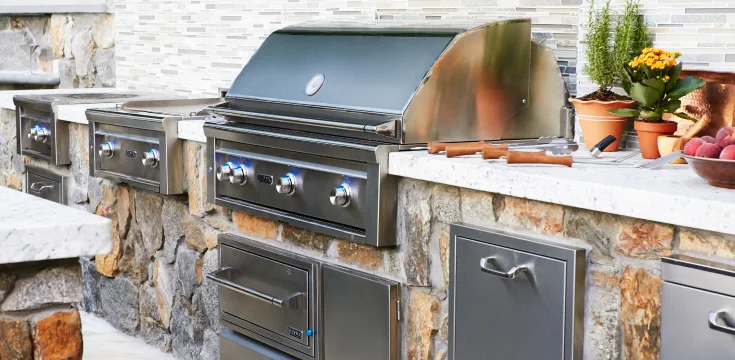
If the smell is strong or you hear hissing, turn off the gas at the tank or supply valve, keep every flame and spark away, and call your gas utility or 911 from a safe distance. If it is faint, a soap bubble test on the tank connection, regulator, hose and fittings will usually show the leak in a few minutes.
Key points
- Strong smell or hissing: shut off gas, no ignition sources, move away and call the gas utility or 911.
- The most common cause is a loose or worn connection at the propane tank.
- A 50/50 dish soap and water mix brushed on every joint finds most leaks.
- Bubbles anywhere other than the tank fitting mean the grill stays off until repaired.
- Valve, manifold and natural gas line repairs belong with a pro.
Safety first: how serious is the smell?
Propane and natural gas have no smell on their own. Suppliers add an odorant that smells like rotten eggs so a leak gets noticed. Take it seriously every time.
If the smell is strong, you can hear hissing, or you smell gas inside the house:
- Turn off the gas at the propane tank valve or the grill's supply shutoff, but only if you can reach it without standing in the gas.
- Do not light anything, flip light switches, start a car, or use anything that sparks near the grill.
- Move people and pets away from the area.
- From a safe distance, call your gas utility (natural gas) or your propane supplier. If the smell is heavy or you cannot shut the gas off, call 911.
- If the tank itself is leaking at the valve or body, do not move it. Let the fire department or supplier handle it.
A brief whiff right as you turn a knob before the igniter catches can be normal. A smell that lingers with the grill off, or that gets stronger while you cook, is not.
Need the part? Pro Grill can find it
Send us your brand, model and the part you need. We source OEM parts, including ones that aren't listed in our online store.
Ask Pro Grill for a partWant a pro to handle it?
Most companies in our network are dealers or have dealer accounts, so they can usually bring the right part and install it in one visit.
Common causes, in the order techs see them
1. Loose or worn tank connection
Most gas smells on propane grills come from the tank fitting. The connector was not threaded on straight, was not tightened by hand all the way, or the rubber seal inside the fitting is cracked. Reseating the tank fixes a lot of these.
2. Cracked or chewed hose
Regulator hoses dry out and crack in the sun, especially in desert heat. Rodents also chew them inside grill carts and islands. Bend the hose gently and look for cracks along its full length.
3. Leaking fittings and flex connections
On built-in grills, the flex connector between the gas shutoff and the grill, the regulator connection, and the manifold inlet can all loosen over time from heat cycles and vibration.
4. A burner valve that is not fully off or is leaking
A knob bumped slightly open lets gas out with the grill "off." Valves also wear and can leak at the stem, which you may smell right at the control panel.
5. Delayed ignition
If the igniter is weak, gas flows for several seconds before it lights. You smell it, and you often hear a whoomp when it catches. See our guide on igniters that won't spark.
6. Blocked burners and venturi tubes
Spider webs and mud dauber nests in the venturi tubes push gas back out the front of the burner instead of through the ports. You may smell gas and see flame near the knobs. This is a fire risk.
7. A failing regulator
A regulator with a stuck diaphragm can leak at its vent or send pressure the grill was not built for. Low, uneven flame plus a gas smell points here.
8. Gas trapped in the island
Built-in grill manufacturers require vent panels in the island cabinet. Propane is heavier than air and settles low, so an island without low vents can collect gas and smell when you open the doors.
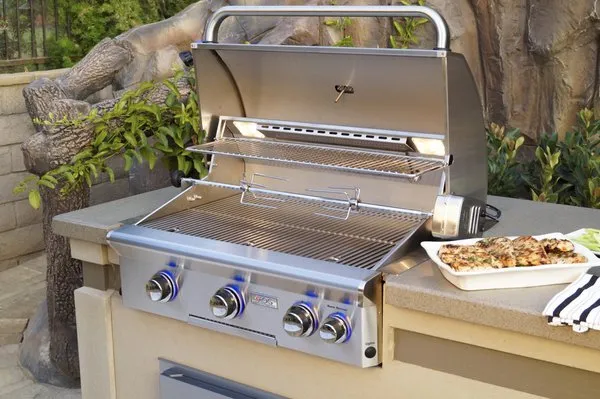
How to do a soap bubble leak test
Do this at the start of each season, every time you swap a tank, and any time you smell gas.
- Turn all burner knobs off and let the grill cool. Make sure nothing nearby is lit.
- Mix roughly equal parts liquid dish soap and water in a spray bottle or a cup with a small brush.
- Open the tank valve slowly, or open the natural gas shutoff. Do not light the grill.
- Brush or spray the mix on the tank valve, the tank connection, the regulator, the full length of the hose, and every fitting where the hose or flex line meets the grill. On built-ins, include the shutoff valve and the flex connector inside the island.
- Watch each spot for 10 to 20 seconds. Bubbles that form and grow mean gas is escaping.
- Close the gas before you touch anything.
What the result means:
- Bubbles at the tank connection: disconnect, check the fitting is clean and the seal is intact, reconnect straight and hand tight, and test again.
- Bubbles on the tank valve or tank body: close it if you can, leave the tank outdoors away from the house, and call your propane supplier.
- Bubbles anywhere else: leave the gas off and do not use the grill until the part is replaced.
Never check for leaks with a match or lighter.
What you can fix yourself, and what you should not
Reasonable homeowner fixes:
- Reseating the propane tank and replacing the tank connection seal.
- Replacing a propane regulator and hose assembly with the OEM part made for your grill.
- Cleaning spider webs out of the venturi tubes with a venturi brush.
Leave these to a pro: burner valves, the manifold, natural gas lines and flex connectors, built-in regulators, and any fuel conversion. A small mistake on these parts can create a leak you cannot see.
What a pro does
A grill tech will leak test every joint, check gas pressure with a manometer, inspect the valves and orifices, clear the venturis, and confirm the island is vented correctly. Most companies in our network are dealers or have dealer accounts, so they can usually bring the correct regulator, hose or valve for your model and install it in the same visit. You can search for a grill tech by ZIP code or go straight to our list of grill repair pros. If the grill has not been serviced in a while, a full grill inspection is a smart way to catch worn parts before they leak. For what the visit usually runs, see our grill repair cost guide.
Parts that usually fix it
- Regulator and hose: see regulator and hose prices.
- Burner valves: see what grill valves cost. Always buy OEM for valves and anything else in the gas path.
- Igniters, for delayed ignition: see ignition part costs.
- Burners damaged by blocked venturis: see grill burner prices.
Before you order, find the model and serial number. On most built-ins it is on a tag under the drip tray, behind the control panel, or inside the cart door. Our guide on finding your grill model number covers the usual spots by brand. For brands like Lynx, Blaze and Fire Magic you can shop Fire Magic parts at the Pro Grill store, and if a part is not listed, ask Pro Grill to track it down.
Frequently asked questions
Is it normal to smell gas when I first turn on my grill?
A faint smell for a second before the burner lights can be normal. If the smell lasts, is strong, or you hear a whoomp when it lights, check the igniter and run a soap bubble test.
Why does my grill smell like gas when it is turned off?
Usually a loose tank connection, a cracked hose, or a burner valve that is slightly open or leaking. Shut off the gas at the tank or supply valve and do a soap bubble test before using it again.
Can I keep using my grill if the smell is faint?
No. Find the source first. A small leak near a hot grill or inside an island can ignite, and leaks rarely fix themselves.
Who do I call if I smell natural gas at my outdoor kitchen?
If the smell is strong, call your gas utility or 911 from a safe distance after shutting off the supply valve if you can. For a smaller leak at the grill, a grill repair pro can find and fix it, but gas line work beyond the shutoff may need a licensed plumber.
How often should I leak test my grill?
At the start of grilling season, every time you change a propane tank, after any repair to the gas parts, and any time you smell gas.