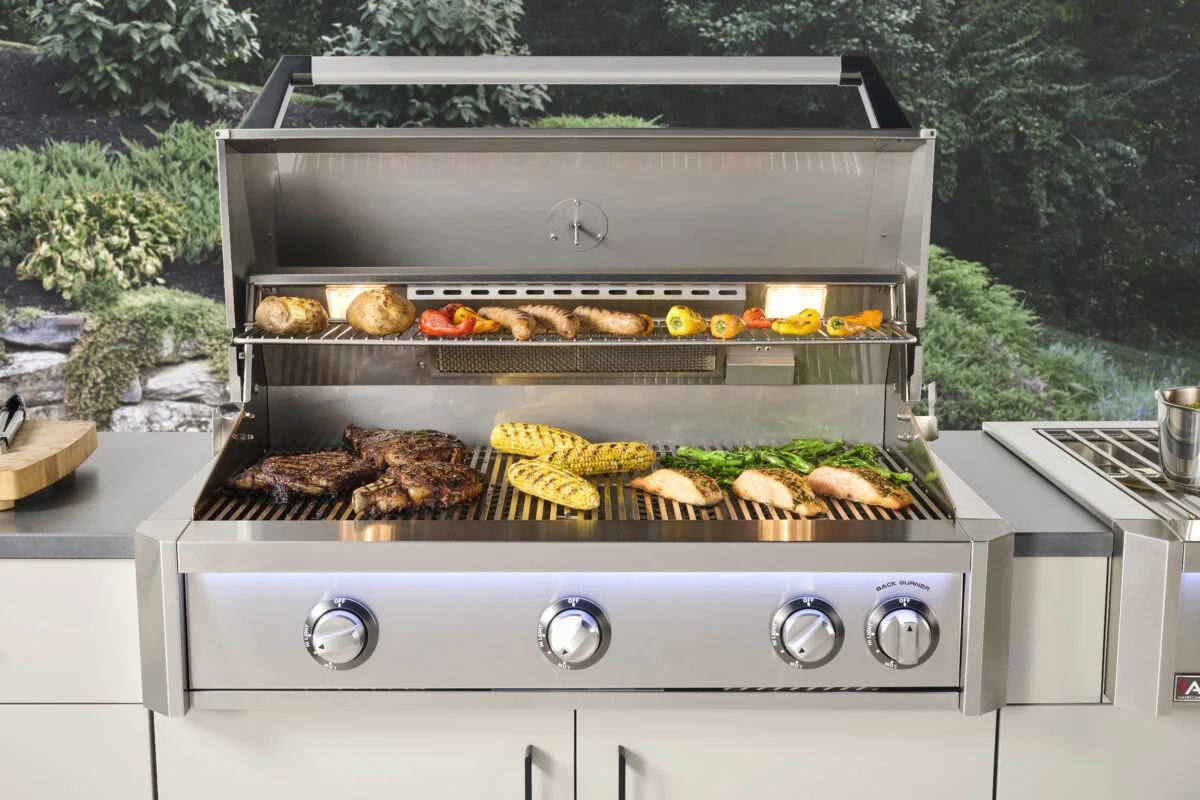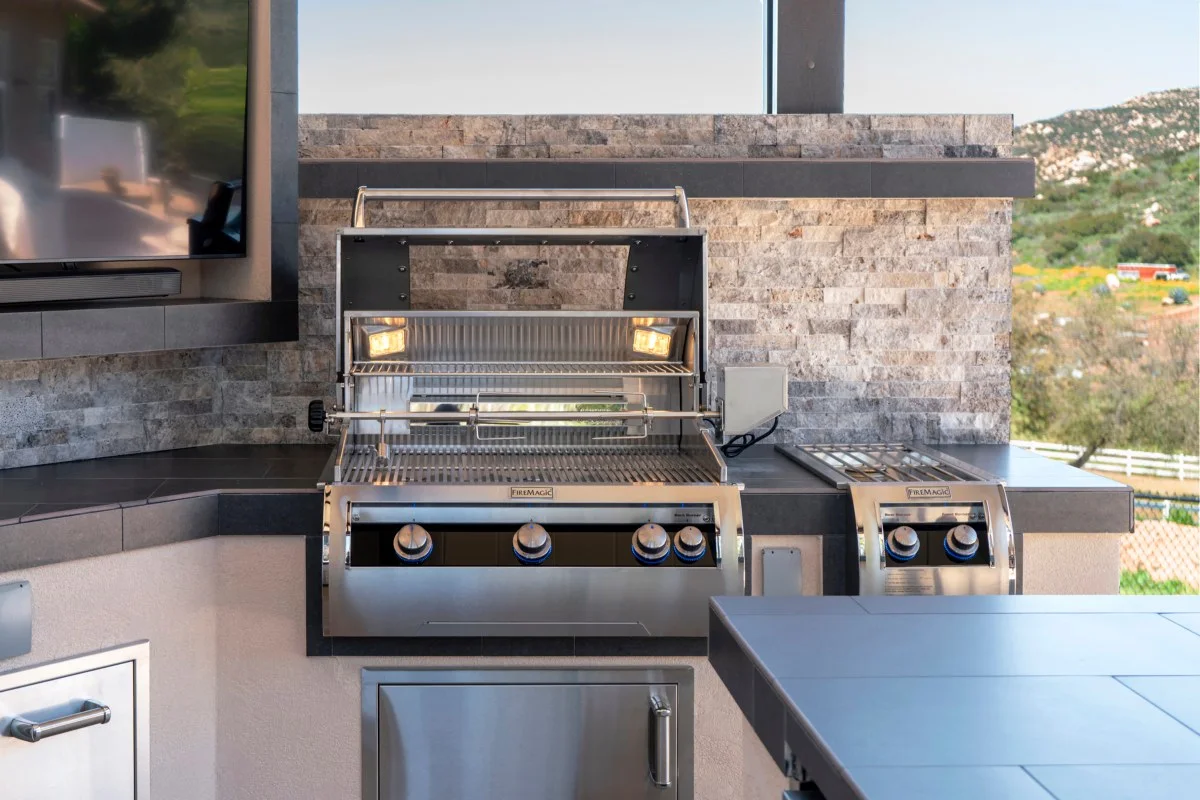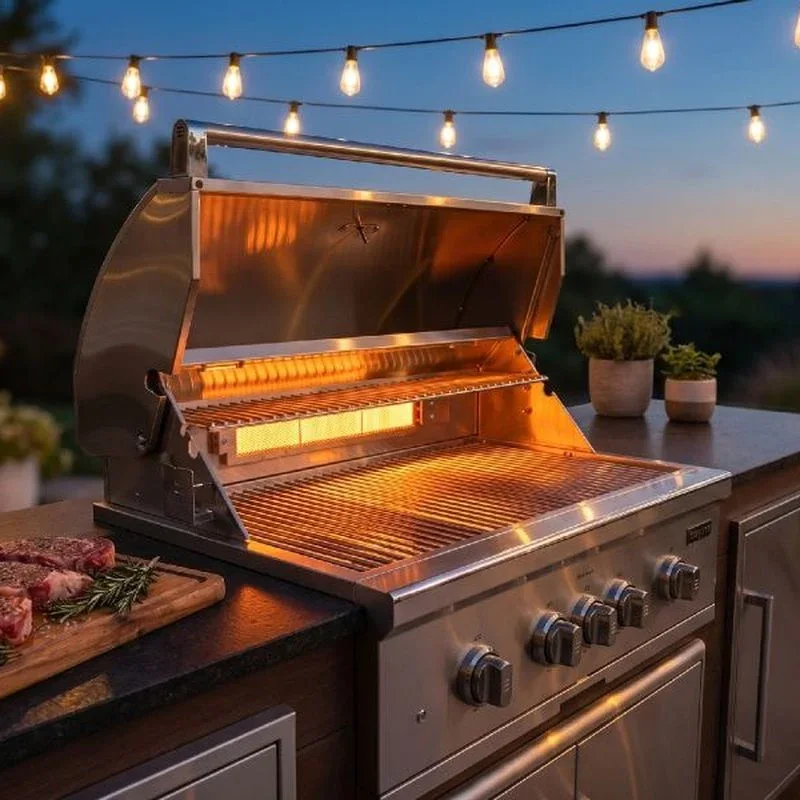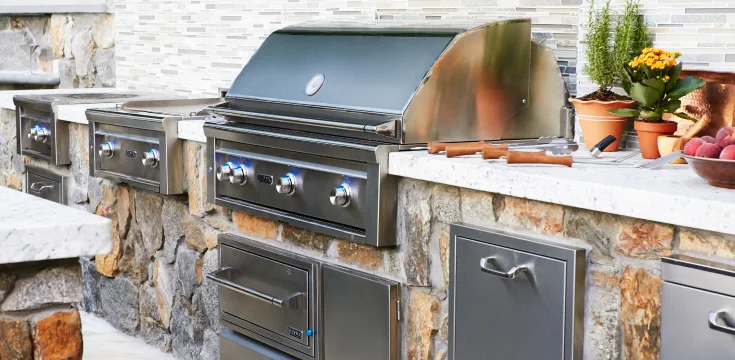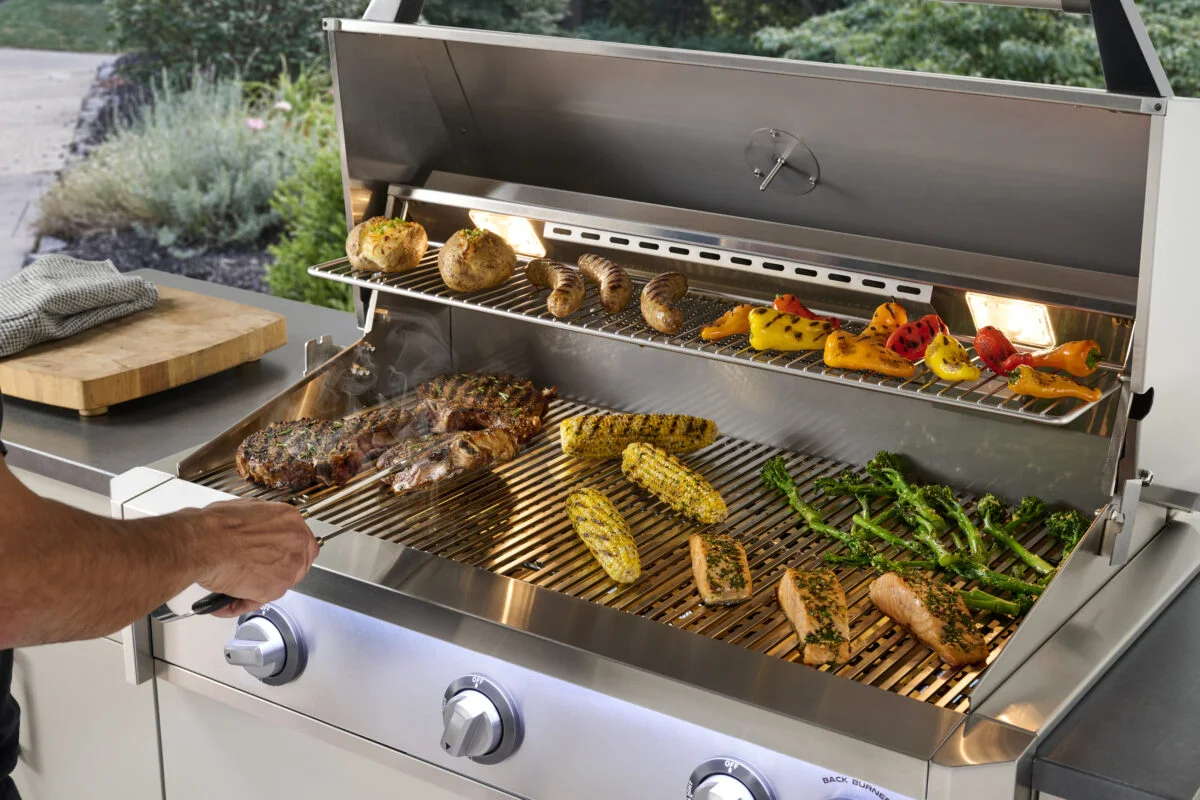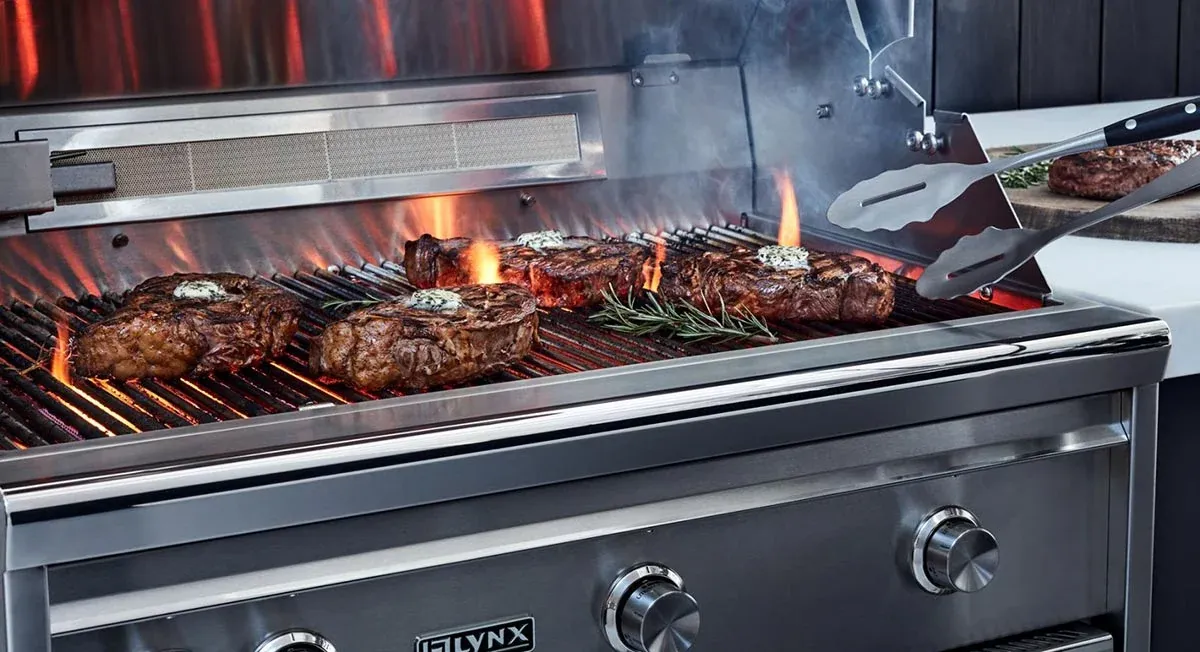
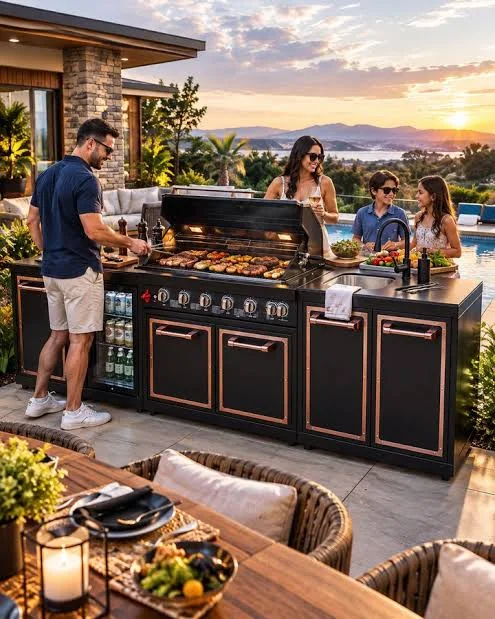
Pick the size you will really use (32 to 36 inches suits most homes), insist on 304 stainless and cast or heavy burners, and order the grill for the gas you have. Then confirm the cutout and whether you need an insulated jacket before you buy, and choose a brand with long-term parts support.
Key points
- 32 to 36 inch grills with 3 or 4 burners fit most households.
- 304 stainless is the biggest factor in how long a grill lasts outdoors.
- Infrared sear burners are great for steaks but crack if abused.
- Natural gas and propane grills are not interchangeable without the right kit.
- Every brand has a different cutout; wood or steel stud islands need an insulated jacket.
A built-in grill is the one appliance in an outdoor kitchen you can't easily swap out later, because the island is built around it. We service these grills every day, and most of the regrets we hear come from the same handful of decisions. Here is what actually matters, in the order we would think about it.
1. Size and burner count
Built-in grills are sold by width. The common sizes:
- 26 to 30 inch: two or three burners. Fine for a couple or a small patio.
- 32 to 34 inch: usually four burners. The most popular size and the easiest to cook two zones on.
- 36 to 38 inch: three or four large burners, often with a sear zone. Good for families that host.
- 42 inch and up: four or five burners. Great for parties, but you pay more for the grill, the gas, and cleaning.
More burners is not the same as more heat. What you want is enough separate burners to run one side hot and one side low. Three or four controls is plenty for most people. Don't go bigger than your island can safely hold or your gas line can feed. A 42 inch grill plus a side burner can outrun an undersized line.
Need the part? Pro Grill can find it
Send us your brand, model and the part you need. We source OEM parts, including ones that aren't listed in our online store.
Ask Pro Grill for a partWant a pro to handle it?
Most companies in our network are dealers or have dealer accounts, so they can usually bring the right part and install it in one visit.
2. Steel: look for 304 stainless
This is the biggest durability factor we see. 304 stainless resists rust and pitting. 430 and 443 stainless are cheaper and show rust spots and pitting sooner, especially near salt air or pool chemicals. Many grills mix them: 304 outside, 443 inside for flame tamers and firebox panels. That's not a dealbreaker, but know what you're getting.
A quick check in a showroom: 304 is barely magnetic, while 430 grabs a magnet hard. Also look at gauge. Press on the hood and side panels. Thin steel flexes and dents.
3. Burners and heat plates
Cast stainless and cast brass burners last the longest. Tube burners made from stamped or welded stainless are cheaper and fine on a budget, but expect to replace them sooner. Ask what the burner warranty is. Lifetime or 15 year burner warranties usually signal a better burner.
Under the grates, grills use flame tamers, ceramic briquettes or radiant plates. Ceramic briquettes, common on Lynx and Fire Magic, hold heat well but need replacing as they break down. Stainless flame tamers are easier to clean but warp and rust over time. See what replacements cost in our heat plate and briquette tray guide and burner cost guide.
4. Infrared sear burner
An infrared burner gets very hot, very fast, which is great for steaks. It also has a ceramic or mesh surface that cracks if you drip marinade on it, hit it with water, or let grease build up. If you sear often, it's worth it. If you mostly cook chicken and burgers, skip it and keep the space for a regular burner. Replacement infrared burners are not cheap, as our infrared burner price guide shows.
5. Rotisserie and rear burner
Many mid and premium grills include a rear infrared rotisserie burner and a motor. If you will actually spin a chicken or prime rib, a strong motor and a hood tall enough for the spit matter more than a long feature list. Motors and spits wear out. Check rotisserie parts prices before you choose a brand with a proprietary motor.
6. Lights and ignition
Interior halogen or LED hood lights and lit knobs are handy at night. They also add a transformer or battery pack and wiring, which means one more thing to fail. LED is more reliable than halogen. For ignition, we see more trouble with battery spark modules than with hot surface or hard-wired electronic systems. If the grill needs a 120V outlet, plan a GFCI outlet in the island.
7. Gas type: natural gas or propane
Order the grill for the fuel you have. Natural gas and propane grills use different orifices and often different valves or regulators. Some brands sell conversion kits; others don't allow field conversion. Converting should be done by a qualified tech, never by drilling orifices. Read our propane to natural gas conversion guide first.
Natural gas means you never run out, but it requires a properly sized line. Propane works anywhere but needs a tank location with proper ventilation inside the island.
8. The cutout and insulated jacket
Every brand has its own cutout dimensions, even at the same nominal size. A 32 inch Blaze needs an opening about 30 5/8 by 21 1/4 by 8 1/2 inches. A 32 inch Lion needs about 31 by 21 1/2 by 9 5/8. If your island is framed in wood or steel studs, or has anything combustible nearby, you need the manufacturer's insulated jacket, which takes a larger opening.
If you already have an island, the cutout limits your choices. Use the built-in grill fit guide to see which grills drop into your existing opening, and read how to replace a grill in the same cutout.
9. Parts support and service
Ask the dealer two questions: how long has this brand been around, and can I still get parts for models from ten years ago? A grill you can't get parts for becomes scrap metal when a valve fails. Brands with long histories and dealer networks are easier to keep running. For a sense of price differences, compare our AOG parts guide with premium brand guides.
The Pro Grill store stocks parts for many major built-in brands, and if something isn't listed, you can ask Pro Grill to track down the part.
Mistakes we see on service calls
- Buying the biggest grill and never using half of it.
- Picking a grill with no insulated jacket in a wood-framed island.
- No ventilation panels in the island for gas grills, especially propane.
- Skipping a cover and cleaning schedule near the coast.
- Buying an unknown online brand with no US parts support.
Get it installed right
A great grill installed badly will give you trouble from day one: gas leaks at fittings, low flame from an undersized line, or heat damage to the island. Look up typical grill installation prices, then find a grill installer who works on your brand. If you're still comparing brands, our built-in grill brands by budget breaks down what each price tier gets you.
Frequently asked questions
What size built-in grill should I get?
Most households do well with a 32 to 36 inch grill with three or four burners. Go to 42 inches or more only if you cook for big groups often and your gas line can supply it.
Is 304 stainless steel really better than 430?
Yes, for outdoor grills. 304 resists rust and pitting much better than 430 or 443, especially near salt air or pools. A magnet barely sticks to 304 but grabs 430 firmly.
Do I need an infrared burner?
Only if you sear steaks often. Infrared burners get very hot quickly, but their ceramic or mesh surface is fragile and costly to replace.
Can I convert a propane built-in grill to natural gas?
Some grills can be converted with the manufacturer's kit, which changes orifices and sometimes the regulator or valves. Others can't be converted at all. Have a qualified tech do it.
What is an insulated jacket and do I need one?
It's a stainless liner that sits between the grill and the island. You need one when the island is framed with wood or steel studs or has combustible materials nearby. It requires a larger cutout than the grill alone.