
Store a Propane Tank Full or Empty for Winter? A Tech Answers
The question most people ask is full or empty. The question that matters more is where the tank sits and what shape it's in before you put the cover on.
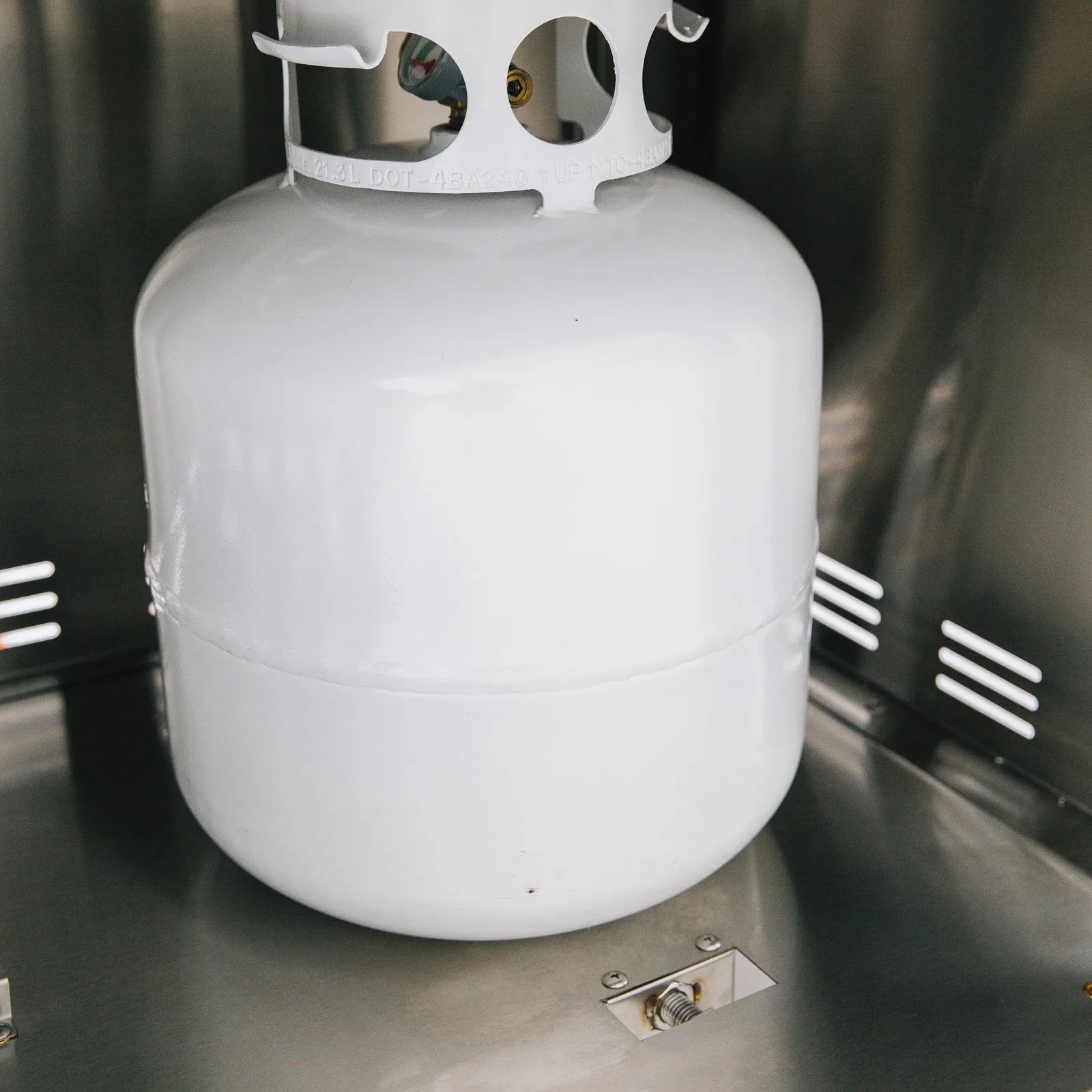
Short answer: where and how you store the tank matters more than how full it is. Keep it upright, with the valve closed, outdoors, in a shaded spot. Never keep it in a garage, a basement or a car. Before you cover the grill, look over the collar, the valve and the hose. If you see rust or smell gas, stop and deal with that first.
This follows a House Digest story from November 9, 2026 on whether to store a grill tank empty or full over the winter. Below is how we'd walk a customer through it, in the order you'd actually do it.
Full or empty: what to take from the question
Plenty of people want a yes or no here. The storage rules are the same either way. A tank that is full, half full or nearly empty still gets stored upright, closed, outdoors and out of direct sun. Don't treat an "empty" tank as harmless and toss it in the garage corner.
So stop worrying about the gauge and put your effort into the spot you pick and the inspection you do. Those are the parts that keep the tank safe.
How to store the tank
Upright
Stand the tank on its base the way it sits on the grill. Don't lay it on its side in a cart, a truck bed or a closet. Set it on flat, solid ground where it can't tip. A tank that falls over is a problem you don't need.
Closed
Turn the valve all the way clockwise until it's shut. Do this even if the tank looks empty. If your tank has a plug or cap for the valve outlet, put it on. After that, disconnect the regulator hose from the tank. Don't leave a closed tank connected and call it done.
Outdoors, in a shaded spot
Pick a spot outside, away from the house walls, doors, windows and vents, and out of direct sun. A shaded side yard or a spot beside the grill under cover works for most people. Rain on a tank isn't the issue. Heat and a closed-in space are.
Never in a garage, basement or car
This is the rule people break most, because the garage feels like the sensible place. It isn't. A tank stored in an enclosed space gives any leak nowhere to go, and those spaces often hold a water heater, a furnace, a freezer or other things that can light a gas leak. A car is worse, since it sits closed up and gets hot. Keep the tank outside, every time, including the drive home from the exchange cage.
Check the tank before you cover the grill
Do this on a dry day with the grill cool and the tank valve closed. It takes about five minutes. Look at three things.
1. The collar
The collar is the metal ring around the valve at the top of the tank. It protects the valve and it's also the handle you lift the tank by. Check that it's solid and not bent, cracked or loose. Run your hand around it for rough spots or crushed edges.
2. The valve
Look at the valve and the threads where the hose attaches. You want clean threads, a valve that turns smoothly, and no dirt, spider webs or debris in the outlet. Spiders like gas fittings, and a blocked fitting causes trouble once you fire the grill back up in spring. If the valve is stiff, damaged or won't shut all the way, don't store that tank. Have a propane supplier look at it.
3. The hose
Go along the whole hose from the tank to the regulator to the grill. Bend it gently and look for cracks, brittle spots, cuts, burns, bulges or sticky, worn patches. Check the fittings at each end. A hose with any of those signs gets replaced, not taped or patched.
If the hose, regulator or valve parts are the weak link, our parts store carries replacements, and the parts diagrams by brand help you match the right one to your grill. We sell parts for Lynx grills too, though we don't sell the Lynx grills themselves.
If you see rust
Surface rust on the tank body or the collar means the tank has been sitting in moisture, and you shouldn't ignore it. Don't keep using or storing a tank that looks rusty or damaged. Take it to a propane supplier and let them decide whether it stays in service. Swapping a tank is cheap next to guessing wrong on a pressurized cylinder.
Also look at the spot where the tank sits. If it stands in water or damp ground, move it to a dry, solid base.
If you smell gas
Propane has a strong rotten-egg odor added so you notice a leak. If you smell it at any point:
- Shut the tank valve right away if you can do it safely.
- Move away from the tank and the grill.
- Keep flames, sparks and switches away. No lighters, no cigarettes, no starting the car nearby.
- Don't try to find the leak with a flame.
- Call a pro. If the smell is strong or you can't shut the gas off, call 911 from a safe distance.
A faint smell near a connection is still a reason to stop. Leave the grill off until someone has looked at it. If you want an insured tech to inspect it, you can find a grill pro near you.
What about grills on a natural gas line?
Built-in grills hooked to a house gas line don't have a tank to store. For those, close the gas shutoff valve before the cover goes on, and have a pro check the line and connections if anything seems off. The hose and fitting checks above still apply wherever you have a flexible connector.
Finish the winter prep
With the tank handled, you're ready to put the grill away. A clean grill goes into winter better than a greasy one, so follow our guide on how to clean your barbecue for the winter before you cover it. Then cover it once it's fully cool, and keep the tank in its shaded outdoor spot until you're ready to hook it up again.
Quick checklist
- Valve closed all the way.
- Hose disconnected from the tank.
- Tank upright on flat, dry ground.
- Outdoors, in the shade, away from the house.
- Not in a garage, basement or car.
- Collar, valve and hose checked.
- Any rust, damage or gas smell dealt with before the cover goes on.
FAQ
Should I store a propane tank full or empty for winter?
The storage rules are the same either way: upright, valve closed, outdoors and in a shaded spot. How full the tank is matters less than where it sits and what condition it's in.
Can I keep my propane tank in the garage over winter?
No. Keep it outdoors, never in a garage, basement or car. Enclosed spaces give a leak nowhere to go.
Should a propane tank be stored upright or on its side?
Upright, on flat, solid ground where it can't tip over.
What should I check on a propane tank before storing it?
Check the collar for bends or cracks, the valve and threads for damage or debris, and the hose for cracks and wear. Replace a bad hose and have a supplier look at any tank with a damaged valve.
What do I do if my propane tank is rusty or I smell gas?
For rust, stop using the tank and take it to a propane supplier. For a gas smell, shut the valve if it's safe, move away, keep ignition sources away and call a pro, or 911 if the smell is strong.
More seasonal
See all →
Power Out? Never Heat Your Home With a Grill or Fire Pit
A grill, fire pit or patio heater is built for open air. Used inside, or under a roof, it can fill a home with carbon monoxide. Here is what to do in…

End-of-Summer Grill Cleaning: Get Your BBQ Ready for Cooler Weather
What to clean on your grill before cooler weather, how to get rid of summer grease and carbon buildup, and when it makes sense to have a pro handle i…
Why Have a BBQ Cleaning Before Winter?
Cleaning your grill before winter clears out old grease and food residue, helps keep pests away, and shows you what needs repair before the next cook…