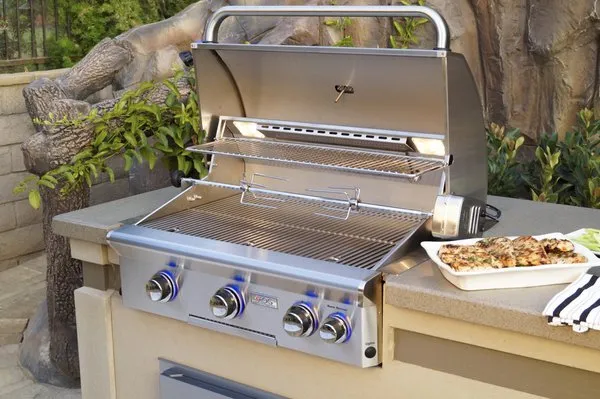
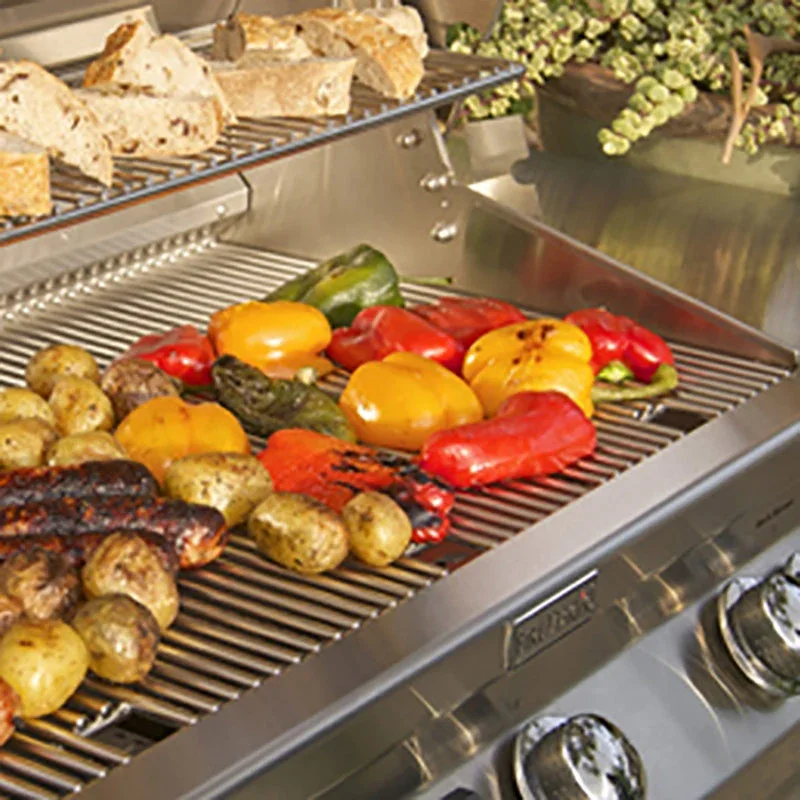
A short flare-up when fat drips is normal. Constant or growing flare-ups almost always mean grease buildup on the heat plates, in the firebox or in a full grease tray. Clean those out, cook fatty food with indirect heat, and if a grease fire starts, turn off the gas, close the lid and never use water.
Key points
- Quick flare-ups from dripping fat are normal. Flames that keep growing are a grease fire.
- Most bad flare-ups come from grease on heat plates and briquettes or an overflowing grease tray.
- Empty the grease tray often and scrape the heat plates every few cooks.
- Use two-zone cooking for fatty food so you can move it off the flames.
- Grease fire: burners and gas off, lid closed, baking soda or a Class B or ABC extinguisher. Never water.
Flare-up or grease fire?
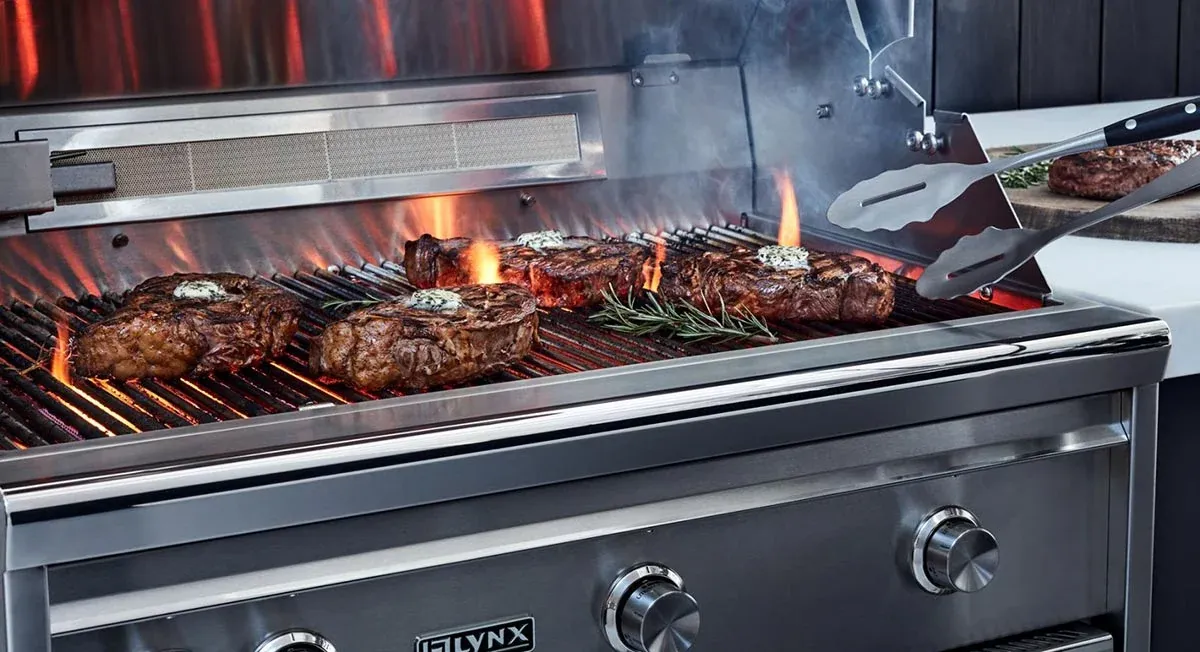
A flare-up is a burst of flame when fat or marinade drips onto the heat plates or burners. It lasts a few seconds and dies down on its own. Every grill does this.
A grease fire is different. Flames keep burning or grow after the food is moved, fire shows under the grates or around the grease tray, heavy dark smoke rolls out, and you may see flames at the front of the grill or under the control panel. That is fuel from built-up grease burning, and it needs to be handled right away.
Need the part? Pro Grill can find it
Send us your brand, model and the part you need. We source OEM parts, including ones that aren't listed in our online store.
Ask Pro Grill for a partWant a pro to handle it?
Most companies in our network are dealers or have dealer accounts, so they can usually bring the right part and install it in one visit.
What to do if a grease fire starts
- Turn off the burners, if you can reach the knobs safely.
- Shut off the gas at the tank valve or the natural gas shutoff, if you can reach it safely.
- Close the lid to starve the fire of air, and leave it closed. Weber and other manufacturers say to keep the lid shut until the fire is out.
- Step back and keep kids and pets away.
- If it keeps going, smother it with baking soda or use a Class B or ABC fire extinguisher. Aim at the base of the fire, pull, aim, squeeze and sweep.
- Never use water. Water on burning grease throws the burning fat around and spreads the fire.
- Don't move the grill.
- Call 911 if the fire spreads beyond the grill, reaches the tank, hose or house, or you can't get it under control.
Once it's out and cool, don't just fire the grill back up. Grease fires melt igniter wires, warp heat plates, cook knobs and valve seals and can damage hoses and regulators. Have it looked at, or at least check those parts before the next cook. A grill safety inspection covers all of it.
Why your grill keeps flaring up, in the order we see it
- Grease buildup on heat plates, flame tamers or briquettes. Old grease catches every time fresh fat hits it.
- Full or clogged grease tray. When the tray or catch pan overflows, grease pools in the bottom of the firebox right under the burners.
- Blocked grease channel. The slot or funnel that leads to the tray gets plugged, so grease sits in the firebox.
- Fatty food on high direct heat. Thick-skinned chicken, burgers, sausages and fatty steaks drip a lot.
- Oily marinades dripping straight onto the plates.
- Saturated ceramic briquettes. Some built-ins use briquette trays. Once briquettes soak up enough grease they burn on their own.
- Rusted-through heat plates that let grease drip straight onto the burners.
Grease management, the way techs do it
After every cook:
- Burn off for 10 to 15 minutes on high with the lid closed, then brush the grates.
Every few cooks:
- Empty the grease tray and replace the liner if your grill uses one. Pouring a layer of cat litter or sand in a catch pan is an old trick that works.
- Scrape the heat plates or flame tamers with a putty knife or grill scraper.
Every 3 to 6 months, depending on how much you cook:
- Pull the grates, heat plates and burners and scrape the firebox walls and bottom into the grease tray.
- Clear the grease channel.
- Flip ceramic briquettes so the dirty side faces the flame and burns clean, and replace them when they stay black or start crumbling.
Our guides on how often to clean a grill and how to deep clean a gas grill go through the full process. On a big built-in, a professional cleaning is often easier. Typical prices are in our BBQ cleaning cost guide, and you can book grill cleaning pros in your area.
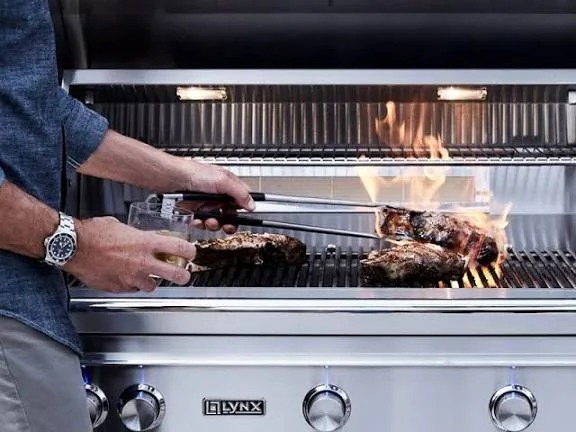
Cooking to avoid flare-ups
- Set up two zones. Leave one or two burners off or on low. Sear over the hot side and move food to the cool side when it flares.
- Keep the lid closed. Less air means smaller flare-ups.
- Trim excess fat from steaks and chops, and score fat caps so they render instead of dripping in a rush.
- Wipe off marinade before the meat goes on, and baste with sauces near the end.
- Don't fight flare-ups with a spray bottle on a gas grill. Move the food instead. Water on hot porcelain or cast iron can crack it.
- Watch the rotisserie. A full rotisserie roast drips a lot. Use a drip pan under it with the main burners off. Our rotisserie parts cost guide covers the gear.
What a pro does and when to call
Call a tech if you've had a grease fire, if heat plates or briquette trays are rusted through, if knobs or wiring look melted, or if flare-ups keep happening after a good cleaning. A tech deep cleans the firebox and grease system, replaces warped plates and burned briquettes, and checks the igniter wires, valves and hose for heat damage.
Most service companies in our network are dealers or have dealer accounts, so they can usually get the right heat plates, burners or trays and install them the same visit. Find a grill service company near you by ZIP.
Parts that usually fix it
- Heat plates, flame tamers or briquette trays when they're rusted through or warped. See our heat plate and briquette tray cost guide.
- Grease tray and liners when the tray is rusted or bent. See the drip tray cost guide.
- Igniter wires and electrodes after a grease fire.
Get the model and serial number from the rating plate before ordering. Pro Grill carries parts for brands like Bull and Twin Eagles, and if a part isn't listed, request it from Pro Grill.
Frequently asked questions
Should I close the grill lid during a grease fire?
Yes. Turn off the burners and the gas if you can reach them safely, then close the lid to cut off air and leave it closed until the fire is out. Use baking soda or a Class B or ABC extinguisher if it keeps burning.
Can I put out a grill grease fire with water?
No. Water on burning grease splatters the burning fat and spreads the fire. Use baking soda, a Class B or ABC extinguisher, or let a closed lid smother it.
Why does my grill flare up so much?
Usually grease buildup on the heat plates or briquettes, a full grease tray, or a clogged grease channel. Fatty food on high direct heat makes it worse. A thorough cleaning and two-zone cooking fix most cases.
How often should I empty my grill grease tray?
Check it every few cooks and empty it before it gets close to full. Heavy cooks or rotisserie roasts can fill it in one session.
Is my grill safe to use after a grease fire?
Check it first. Grease fires can melt igniter wires, damage knobs and valve seals, warp heat plates and harm the hose and regulator. Have a tech inspect it if you see any heat damage or smell gas.