A gas grill flame should be mostly blue with small yellow tips. Tall, lazy, yellow flames mean the burner is getting too little air or too much gas, most often because of spider webs in the burner tubes, an air shutter closed too far, or orifices that don't match the gas after a conversion.
Key points
- Blue flames with small yellow tips are normal. Tall, floppy yellow flames that leave soot are not.
- Spiders and insects nesting in the burner tubes are the most common cause we find.
- Grills with adjustable air shutters can be tuned. Open until the yellow is gone but the flame doesn't lift off the ports.
- Natural gas orifices on a propane grill make big yellow flames and are dangerous. Shut it down and get it fixed.
- Fire at the control panel or behind the knobs means flashback. Turn off the gas right away.
What a normal flame looks like
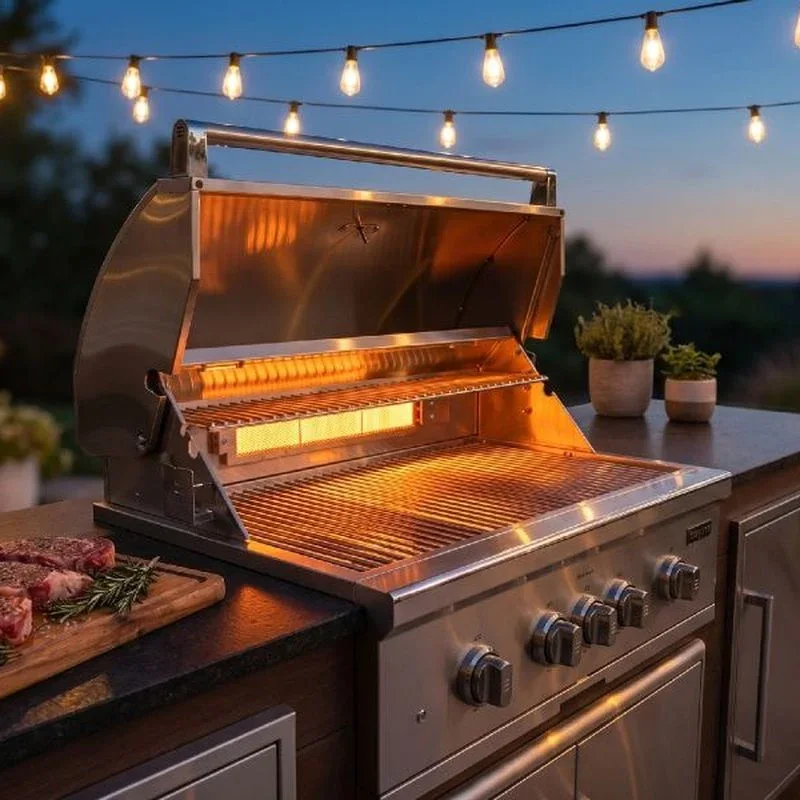
A healthy gas grill flame is mostly blue, with steady cones coming off each port and small yellow tips at the ends. Infrared burners glow orange-red instead of showing a flame. See our guide to an infrared burner that isn't working for those.
A bad flame is tall, floppy and yellow or orange, wanders around in the air and may leave black soot on the grates, the lid and your food. That flame isn't burning the gas completely, which wastes fuel, gives off more carbon monoxide and tastes bad.
Some yellow is not a problem:
- A brand new grill burns off manufacturing oils for the first cook or two.
- Dripping grease burns yellow. That is a flare-up, not a burner problem. See our guide to grill flare-ups.
- Orange flecks in an otherwise blue flame often come from dust or salt particles in the air, which is common near the coast.
If the whole flame is yellow with the grill clean and empty, keep reading.
Need the part? Pro Grill can find it
Send us your brand, model and the part you need. We source OEM parts, including ones that aren't listed in our online store.
Ask Pro Grill for a partWant a pro to handle it?
Most companies in our network are dealers or have dealer accounts, so they can usually bring the right part and install it in one visit.
Likely causes, in the order we see them
- Spider webs, nests or insect debris in the burner tubes (venturis).
- Air shutter closed too far, or knocked out of adjustment during cleaning.
- Burner not seated over the valve orifice, so gas and air don't mix properly.
- Wrong orifices after a gas conversion, or a conversion done halfway.
- Grease, rust flakes or carbon inside the burner.
- Dirty or damaged orifice spraying gas off center.
Spiders and the venturi
Each burner tube has a wider section near the valve called the venturi. Gas shoots from the orifice into it and pulls in air through openings or an adjustable shutter. Spiders like the faint smell of gas and the sheltered space, and they spin webs and nests right in that tube. Weber's manuals list yellow and lazy flames, a gas smell, uneven heating, a grill that won't reach temperature and burners that won't light as the signs to look for. Many Weber grills ship with spider guards over the air openings for this reason.
The real danger is flashback. A blocked tube can force gas back out the air openings, where it lights and burns under the control panel. If you see flame or scorching at the knobs, smell burning plastic or see melted wires, turn off the gas at the tank or shutoff immediately and don't use the grill until it's been inspected.
To clean them, with the gas off and the grill cool:
- Pull the grates and heat plates.
- Remove the burners. Most lift out after removing a cotter pin, clip or screw at the back.
- Shine a flashlight into each tube. Webs, egg sacs and mud dauber tubes are easy to spot.
- Run a venturi brush or flexible bottle brush all the way through. Tap out debris.
- Check the spider guards or screens, if you have them, and brush them clean.
- Reinstall each burner so its inlet slides fully over the orifice.
Grills that sit unused for weeks, especially under covers or in islands, get spiders the most. Checking every spring is a good habit, and it's on our grill maintenance checklist.
Air shutters
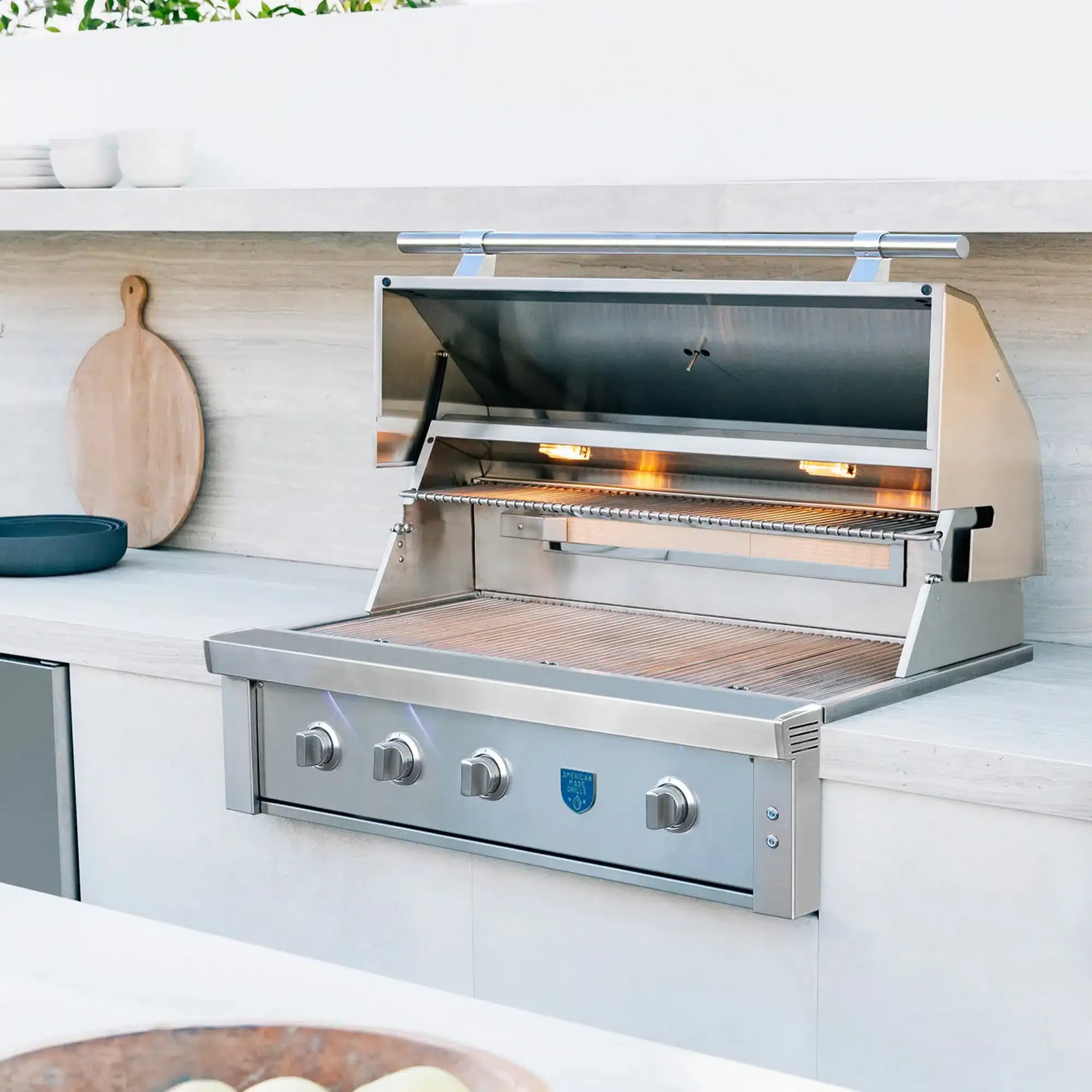
Many built-in grills have an adjustable air shutter, a sleeve or plate at the burner inlet held with a screw. Mass-market grills often have fixed openings. If yours adjusts:
- Light the burner and set it to high.
- Loosen the screw and slowly open the shutter until the yellow mostly disappears.
- Stop if the flame starts lifting off the ports, roaring or blowing out. That's too much air. Close it slightly.
- Tighten the screw and check the flame on low as well.
Air shutter settings are different for propane and natural gas, so check the manual for the factory setting. If you can't reach the shutters without pulling the control panel, have a tech do it.
Wrong orifices after a conversion
Natural gas orifices have much larger holes than propane orifices. If a natural gas grill is hooked to propane, or a propane to natural gas conversion is reversed without changing the orifices back, far too much gas flows. The result is huge, yellow, sooty flames, and it's a real fire hazard. Turn it off and don't use it until the orifices are corrected.
The opposite mismatch, propane orifices on natural gas, gives small, weak flames, covered in our guide to a grill that won't get hot.
Orifices are usually stamped with a size. A proper conversion changes every orifice, sets the regulator for the new gas and adjusts the air shutters. See our propane to natural gas conversion guide, and leave the actual conversion to a pro.
What a pro does and when to call
Call a tech if cleaning the tubes doesn't fix the flame, if you've seen flashback or melted wires, if the grill was recently converted, or if you can't reach the air shutters. A tech checks orifice sizes against the rating plate, sets the shutters, measures gas pressure, replaces burners that are rusted or cracked and leak-tests the grill afterward.
Most service companies in our network are dealers or have dealer accounts, so they can usually get the right burner or conversion parts for your grill and install them the same visit. Look up a grill pro by ZIP or book grill repair service. If the burners are just dirty, a deep grill cleaning includes pulling and cleaning the burners and tubes.
Parts that usually fix it
- Burners with rusted, cracked or burned out ports. See the grill burner cost guide.
- Orifices and conversion kits after a gas change. Buy the kit made for your model.
- Spider guards if yours are missing or torn.
Get the model and serial number first. Pro Grill can source parts for brands like American Outdoor Grill and many others, including parts not in the online store. Ask Pro Grill for a part if you can't find it.
Frequently asked questions
Is a yellow flame on a gas grill dangerous?
A fully yellow, lazy flame means incomplete burning, which makes soot and more carbon monoxide. It can also mean a blocked burner tube, which can cause flashback at the control panel. Find the cause before cooking on it again.
What color should my grill flame be?
Mostly blue with small yellow tips. Infrared burners glow orange-red instead of showing a blue flame.
Why do spiders get into gas grills?
They are drawn to the smell of the gas odorant and the sheltered burner tubes. Grills that sit unused, especially covered ones, get them most. Check and brush the tubes at least once a year.
Why did my grill flame turn yellow after converting to natural gas?
The air shutters may need resetting for natural gas, or the conversion missed something. If the grill is actually running on propane with natural gas orifices, the flame will be huge and yellow and the grill is unsafe to use.
Can I adjust the air shutter on my grill?
If your grill has adjustable shutters, yes. Open slowly with the burner on high until the yellow fades, and back off if the flame lifts off the ports. Many mass-market grills have fixed openings that don't adjust.