Brush the grates every time you cook, empty and scrape the grease tray about once a month or every 5 to 10 cooks, and deep clean the whole grill once or twice a year. Grills used several times a week, grills near the ocean, and grills used for fatty meats need a deep clean every 3 to 4 months.
Key points
- Every cook: preheat, brush the grates, and oil them lightly.
- Monthly or every 5 to 10 cooks: grease tray, drip pan and a quick look at the burners.
- Once or twice a year: full deep clean of burners, heat plates and firebox.
- Coastal homes and heavy users should deep clean quarterly.
- The grease tray is the part people forget, and it is where most grease fires start.
The honest answer depends on how much you cook, what you cook and where the grill lives. A grill that does burgers twice a month in Phoenix needs a lot less attention than one that does pork shoulders every weekend a few blocks from the beach. Here is the schedule our techs give customers, and the signs that tell you it is time sooner.
After every cook
- Preheat on high for 10 to 15 minutes before cooking, or run it on high for a few minutes after, to burn food residue to ash.
- Brush the grates while they are hot. Use a brush that matches your grates; see cleaning grates by material.
- Wipe the grates with a lightly oiled towel held in tongs. This keeps cast iron seasoned and reduces sticking on everything else.
- Close the lid and shut off the gas at the tank or supply valve, not just the knobs.
This takes five minutes and does most of the work of keeping food from sticking.
Need the part? Pro Grill can find it
Send us your brand, model and the part you need. We source OEM parts, including ones that aren't listed in our online store.
Ask Pro Grill for a partWant a pro to handle it?
Most companies in our network are dealers or have dealer accounts, so they can usually bring the right part and install it in one visit.
Every month, or every 5 to 10 cooks
- Pull the grease tray and drip pan and scrape them out. If you use a disposable liner, change it.
- Lift the grates and look at the heat plates or flame tamers. Scrape off chunks of carbon.
- Look at the flames with the grates off. They should be mostly blue and even along the burner.
- Wipe the outside with a soft cloth and a stainless cleaner, going with the grain.
If you cook a lot of fatty food (brisket, chicken thighs, bacon, burgers), do the grease tray every couple of weeks during grilling season. A full grease tray is the most common cause of grease fires we see on service calls. If you are getting more flare-ups than usual, start there; our grill flare-up guide covers the rest.
Once or twice a year: the deep clean
This is the full job: grates, heat plates, burners and venturi tubes out, firebox scraped, grease tray and cavity cleaned, then reassembly and a flame check. Our step-by-step deep cleaning guide covers it. Good times to do it:
- At the start of grilling season, to clear out spider webs and anything that nested over the winter.
- At the end of a heavy season, so grease and moisture do not sit on the parts for months.
When to clean more often
Bump the deep clean to every 3 to 4 months if any of these apply:
- You cook 3 or more times a week.
- You live within a few miles of the ocean. Salt air speeds up rust on burners, heat plates and even stainless; see protecting a grill from salt air.
- The grill is under trees, near a pool, or in a dusty area. Pool chemicals and fertilizer in the air are hard on stainless too.
- You smoke on the gas grill with wood chips. Ash and creosote build up faster.
- The grill sits uncovered.

When you can get away with less
A grill used a handful of times a year, kept covered in a dry inland climate, can usually go with one deep clean a year. It still needs the grease tray emptied and the burners checked before the first cook of the season. Insects do not care how little you grill.
Signs your grill needs cleaning now
- Yellow or uneven flames, or one side cooking slower than the other. See grill not getting hot.
- Frequent flare-ups or smoke that smells like old grease.
- Black flakes falling from the inside of the hood onto food. That is carbonized grease, not paint.
- The grill takes longer to light or a burner lights late. Debris on the igniter or blocked ports is often the cause.
- Grease dripping out of the bottom of the grill or cart.
Other grill types
- Pellet grills: vacuum the fire pot and the bottom of the barrel every 3 to 5 cooks. Ash left in the fire pot causes failed starts and temperature swings. Scrape the drip tray and change the bucket liner often.
- Charcoal grills: dump the ash after every cook or two. Ash holds moisture and rusts the bowl and the bottom vents faster than anything else.
- Flat top griddles: scrape and oil after every cook so the seasoning does not rust.
- Infrared burners and sear zones: burn them off on high after cooking and keep water and cleaners off the ceramic. See infrared burner problems if they stop glowing evenly.
DIY or professional cleaning?
A lot of homeowners do the monthly work themselves and have a pro do the annual or twice-a-year deep clean. That is what we recommend for built-in grills, especially large ones with rotisseries, infrared burners and lights. A pro cleaning includes checking the regulator, valves, igniters and gas connections, which you should not take apart yourself. Techs also catch rusted-out burners and heat plates before they fail mid-cook.
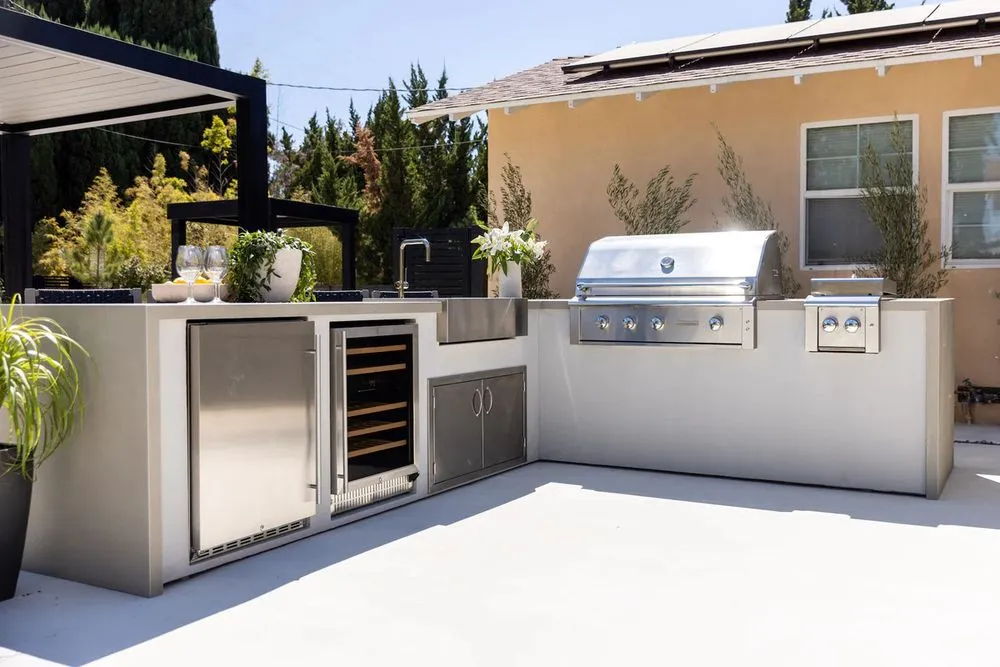
Most service companies in our network are dealers or have dealer accounts, so if they find a worn part they can often bring the right one and install it on the same visit. Look at typical pricing in our BBQ cleaning cost guide, then search for a grill cleaning pro by ZIP code. If you have an outdoor kitchen with a refrigerator, sink and side burners, an outdoor kitchen cleaning covers the whole island.
Keep a seasonal routine with our grill maintenance checklist. If you would rather do parts replacement yourself, Pro Grill can find replacement parts for most brands, including ones not listed in the store.
Frequently asked questions
Is it bad to never clean your grill?
Yes. Grease buildup causes flare-ups and grease fires, rots the burners and heat plates, and makes food taste like old smoke. Most early part failures techs see come from grills that were never cleaned below the grates.
Should I clean my grill before or after cooking?
Either works. Many techs suggest burning off and brushing after cooking while it is hot, then a quick brush and oil after preheating the next time.
How often should I empty the grease tray?
About once a month or every 5 to 10 cooks, and more often if you cook fatty food. Never let it get more than about half full.
How often should a professional clean my grill?
Once a year for most homes, twice a year for heavy use, and every 3 to 4 months for coastal grills or grills used several times a week.
Does burning off the grill count as cleaning?
It cleans the grates. It does not remove grease from the heat plates, burners, firebox or grease tray, which is where fires and rust start.