If you find mouse droppings or a nest in your grill, shut off the gas, don't sweep or blow the debris out, and don't cook on it until it's cleaned and checked. Dry droppings can put germs into the air, so cleanup needs wet methods and gloves. Chewed hoses and wires need a pro inspection before the grill is used again.
Key points
- Don't sweep, vacuum or blow out dry droppings. Wet them with disinfectant first.
- Mice chew gas hoses and wiring, so a gas leak test is part of the cleanup.
- Anything that touches food (grates, warming racks, trays) gets washed and sanitized or replaced.
- Nests in the burner box or cabinet are a job for a pro with the right gear.
- Keep food and grease away from the grill and seal gaps without blocking vents.
What does a mouse problem in a grill look like?
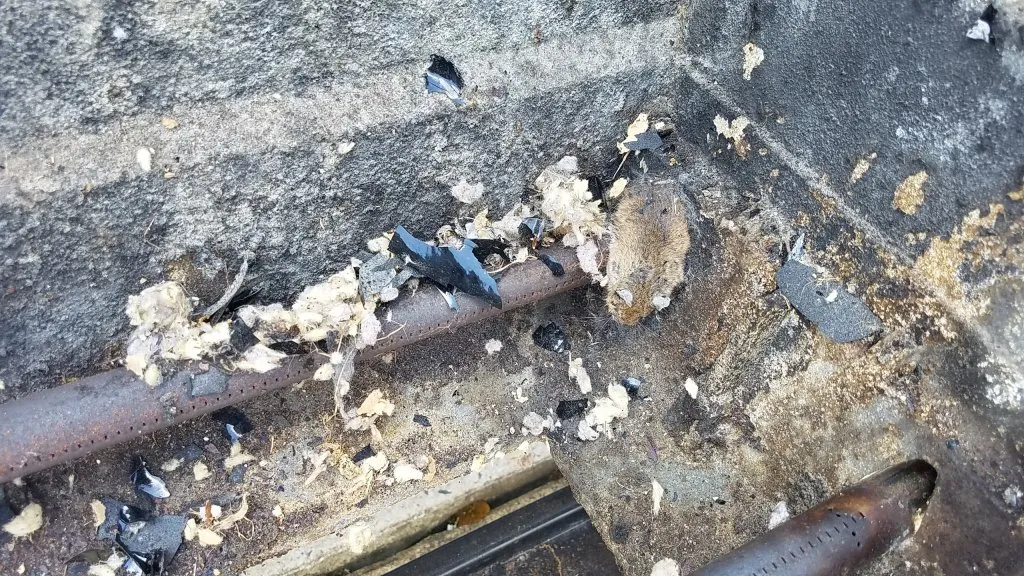
Most of the time I lift the lid and find shredded paper towel, birdseed husks or bits of dog food packed in around the burners. Sometimes it's a neat little ball of fluff wedged in the corner of the firebox. Other times it's just a trail of small, dark, rice-shaped droppings across the grates and the bottom tray.
Here is what else I see on service calls:
- Droppings on the grates, warming rack, flavor bars or drip tray
- A nest in the burner box, under the heat plates, or in the cabinet below a built-in
- Chewed insulation or liner material in the grill head
- Gnawed igniter wires, gas hoses or control panel wiring
- A urine smell when you open the lid or cabinet door
- Burners that light weak, uneven or not at all because something is packed into the tubes
If you also smell gas, stop reading and deal with that first. Shut off the gas at the tank or the supply valve, move away, keep flames and sparks away, and call a pro. Don't try to light the grill to test it. Our guide on what to do when a grill smells like gas covers the steps.
Need the part? Pro Grill can find it
Send us your brand, model and the part you need. We source OEM parts, including ones that aren't listed in our online store.
Ask Pro Grill for a partWant a pro to handle it?
Most companies in our network are dealers or have dealer accounts, so they can usually bring the right part and install it in one visit.
Why do mice move into grills?
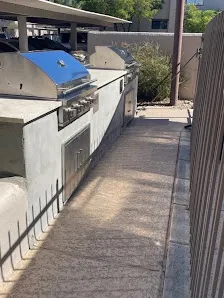
A grill is a dry, enclosed box that blocks wind and stays warm after use. Add a little leftover grease and some crumbs, and it looks like a good spot to a mouse. Built-in grills and outdoor kitchen islands are even better for them, because the cabinet cavity has gaps for gas lines and wiring, and nobody opens it for months.
The grills I see hit hardest are the ones that sit unused for a stretch. Fall into winter is the big one, when mice are looking for shelter. A grill under a loose cover with a bag of charcoal or a stack of pellets nearby is basically a rental listing.
Why shouldn't I just sweep it out?
Because dry droppings and nesting material turn to dust when you disturb them. Rodent droppings, urine and nests can carry hantavirus, and people get it mainly by breathing in dust stirred up from contaminated material. Not every mouse carries it, and the risk varies by region, but you can't tell by looking at a pile of droppings.
The CDC guidance for rodent cleanup is the same thing I tell customers:
- Don't sweep or vacuum dry droppings
- Don't use a leaf blower, compressed air or a pressure washer on them
- Wet the droppings and nesting material with a disinfectant first, then wipe up with paper towels
- Wear rubber, nitrile or vinyl gloves
- Air the area out before you start
A regular shop vacuum is a bad idea too. It pushes fine dust out the exhaust right at face level.
What can I do myself before the pro arrives?
If it's a few droppings on the cooking surface and you see no nest, no chewing and no smell of gas, here is a reasonable first step.
- Shut off the gas at the tank valve or the house supply, and turn all burner knobs to off.
- Put on gloves. Open the lid and any cabinet doors, and let it air out for a while.
- Spray the droppings and any nest material with a disinfectant. The CDC suggests a mix of 1 part bleach to 9 parts water, or a household disinfectant that says it works on viruses. Let it soak for a few minutes.
- Wipe up with paper towels and put everything in a sealed plastic bag. Bag your gloves too, then wash your hands well.
- Leave the grill alone and don't cook on it until it has been properly cleaned.
One warning on bleach. It can pit and stain stainless steel if it sits. Rinse any stainless surface with clean water and dry it right after the soak time.
Stop and call a pro if you see any of these:
- A nest in the burner box, firebox or cabinet
- Heavy droppings, especially in places you can't easily reach
- Chewed hoses, wires or insulation
- A dead rodent inside the grill or island
- Any gas smell at all
I'd rather you not dig around the gas side of the grill yourself. That is where the damage is hardest to spot and the stakes are highest.
What does a professional cleaning involve?
This is the part people don't expect. A rodent cleanup is not a normal grill cleaning with a wire brush. It's a different job with a different order of steps. Our professional BBQ cleaning visits for rodent cases follow roughly this order:
- Gas off and disconnected. The tank or supply is shut off before anything comes apart.
- Protective gear on. Gloves, eye protection and a respirator suited to the amount of debris.
- Wet down, then remove. Nests and droppings get wet with disinfectant before anyone touches them, then get bagged.
- Strip it down. Grates, flavor bars, heat plates, drip tray and burners come out so every surface and corner can be reached.
- Clear the burner tubes. Nests and debris in the venturi tubes (the tubes that feed gas and air to the burners) block flow and can cause fire behind the control panel. They get cleared and checked.
- Wash and sanitize. Anything touching food is washed with hot soapy water, then sanitized. Porous or badly soiled pieces get replaced rather than saved.
- Inspect hoses, wires and valves. Look for bite marks, exposed wire, cracked rubber and anything that has been chewed or soaked in urine.
- Reassemble and leak test. With the gas back on, every connection gets a soapy-water check for bubbles, then a light and burn test.
If you want a sense of the normal, non-rodent routine for comparison, here is our deep clean routine for gas grills. For pricing on the service itself, see what professional grill cleaning costs.
What do mice usually damage, and what does it cost to fix?
Most of the damage is cheap. The reason to look is that some of it affects gas safety. Prices vary by brand and model, and built-in luxury grills run higher than freestanding ones.
- Gas hose: Mice and rats chew rubber. A universal replacement hose for a freestanding grill runs about $30 to $90. Built-in and brand-specific assemblies cost more. See regulator and hose prices.
- Igniter wires and electrodes: Often $15 to $60 for the part. If your igniter went quiet after a mouse visit, check the wires first. Here are igniter part prices.
- Burners: Chewed or clogged burners can run $40 to $200 or more, depending on the grill.
- Ceramic briquettes, heat plates and flavor bars: Cheap to replace and a good idea if they are heavily soiled.
- Insulation and liners: Sometimes a repair, sometimes a reason to look at repair versus replace on an older grill.
Not sure which part you need? Most grills have a model and serial plate, and you can bring that to Pro Grill's parts help so OEM parts can be matched to your grill.
How do I keep mice out of my grill?
Nothing is mouse-proof, but you can make your grill a worse deal than the shed next door.
- Clean the grease and food residue. A greasy drip tray is a snack bar. Follow a seasonal checklist so it doesn't build up.
- Move the food. Birdseed, pet food, charcoal bags and wood pellets stored right beside the grill all invite visitors.
- Check the cover. A cover keeps debris out, but a loose one can make a sheltered pocket. Pull it snug.
- Look underneath and behind. Open cabinet doors and check the grill head and burner box a couple of times a season, especially before winter.
- Seal small gaps. Stainless steel or copper mesh works better than steel wool, which rusts. Don't seal vents or drains. Built-in grills and propane cabinets need airflow, and blocking it creates its own gas safety problem.
- Skip poison bait inside the grill or island. It can leave a dead rodent where you can't reach it, and it puts pets and wildlife at risk. Snap traps placed outside along the walls work better.
- Don't count on smell repellents. Peppermint oil and similar products tend not to work reliably.
One more thing. Don't fire up the grill to burn out a nest. Burning nesting material in a gas grill can start a grease or insulation fire, and it does nothing about the droppings under the burners.
If you'd rather have someone experienced handle it, you can find a verified pro near you. Ask whether they've done rodent cleanups before and whether they leak test the gas connections afterward.
Frequently asked questions
Is it safe to cook on a grill after mice were in it?
Not until it has been cleaned and checked. Anything that touches food has to be washed and sanitized or replaced, and any chewed hose or wiring needs a pro look and a gas leak test first.
Can I use a shop vac or leaf blower to clear out droppings?
No. Both stir fine dust into the air, and dry rodent droppings can carry germs such as hantavirus. Wet the droppings with disinfectant, wipe them up with paper towels, and bag them.
Will burning the grill on high kill off the germs?
Don't rely on it. Burning nest material can start a fire, and heat does not remove droppings or urine from the areas under the burners. Clean it first, then inspect.
How do I know if mice chewed my gas hose?
Look for bite marks, flattened or frayed spots, cracks or exposed fabric. With gas off, check the full length. If you see damage or smell gas, shut off the gas, don't use the grill, and call a pro. Replace damaged hoses rather than taping them.
Do outdoor kitchen islands need special treatment?
Often yes. The cabinet cavity around a built-in grill is a common nesting spot, and gas lines and wiring run through it. A pro can clean the cavity, check for chewing and look at ventilation openings.
Should I use bleach on my stainless steel grill?
Only briefly and with care. A bleach and water mix works as a disinfectant, but bleach can pit and stain stainless steel. Rinse with clean water and dry the surface right after the soak time.