
Why clean the grease out of your grill?
Old grease is the fuel behind most BBQ fires. Here's how it builds up, where it hides, how to clean it out, and when to call a pro.

What can happen if you don't clean the grease out of your grill? A BBQ fire. The video on this page shows what it looks like when a grill with old, left-over grease catches. Below is why it happens, where the grease hides, how to clean it out, and when to hand it to a pro.
BBQ Grease Fires
Without regular maintenance your grill won't run smoothly, and it may not run safely or at the level of cleanliness you'd expect. Safety still comes first. It's common for grill owners to skip cleaning, and we regularly see grills with years of buildup.
When grease isn't cleaned out, heated grease accumulates, eventually liquefies and vaporizes, and that can lead to a grease fire. The video is a good example of what happens when a BBQ isn't cleaned of old grease.
How a grease fire actually starts
Every cook puts fat on the grill. Most of it drips through the grates and lands on the burner covers (flavorizer bars or heat tents), then runs down the cookbox walls toward the grease tray. Some of it never makes it that far. It bakes onto the surfaces and stays there.
Each time you heat the grill, that old layer softens, turns back into liquid, and starts to smoke. Get it hot enough and it gives off vapor that can ignite. Once the grease on the bottom of the cookbox is burning, it feeds itself, because there's a thick layer of fuel right where the heat is.
Here's what makes it worse:
- Layers. Fresh grease sits on top of old, carbonized grease. The old layer holds heat and doesn't clean itself off.
- Heat directly below. The burners sit right under the grease, so it's always in the hottest part of the grill.
- A closed lid. With the hood down, a fire gets heat and fuel, and the grill's own shape keeps it going.
- A full grease tray. If the tray or cup overflows, grease can run onto the cabinet or island floor, or burn in the tray itself.
Flare-up vs. grease fire
A flare-up is a short burst of flame when fat drips onto a hot surface. It usually dies down in seconds when you move the food or close the lid for a moment. Flare-ups happen on every grill.
A grease fire is different. The flames stay after the drippings are gone, you see thick black or gray smoke, or the fire is burning in the bottom of the cookbox or the grease tray. That's burning buildup, not burning food.
Where grease hides in your grill
Most people clean the top of the grates and call it done. The grease that causes fires is lower down.
- Grates. Baked-on residue smokes and flares. Our article on how to clean BBQ grates covers the different materials.
- Burner covers (flavorizer bars, heat tents, ceramic or lava rock). They catch the first hit of grease and get crusty fast.
- Bottom of the cookbox. This is the biggest source. Look for a thick, black, crusty layer, especially in the corners and around the drain slope.
- Grease tray and cup. These fill up and sometimes leak at the seams.
- Inside of the hood. The flaky black stuff is mostly carbon and grease. It can peel off and land on food.
- Burner tubes and ports. Grease and food bits can clog ports, which causes uneven flames. Our guide on hot and cold spots goes into this.
- Under the grill. On a built-in that slides into an island, grease can leak out the back or bottom of the cookbox and collect in the cabinet.
Warning signs your grill is overdue
- Flare-ups that happen every cook, even with lean food
- Thick black or gray smoke instead of thin white smoke
- A rancid or burnt smell when you preheat
- Grease dripping from the bottom or back of the grill
- Flakes coming off the hood onto your food
- Uneven heat or a yellow, lazy flame (see why a gas grill flame turns yellow)
- Rodent droppings or chewed material in the cabinet, since grease attracts pests
If you see more than one of these, the grill needs more than a quick brush.
How to clean the grease out of a gas grill
This is a basic home cleaning. Set aside an hour or two, and wear gloves.
- Turn it off and let it cool. Close the burner valves, shut off the propane at the tank (or the gas supply on a natural gas grill), and make sure everything is cool to the touch.
- Remove the grates and burner covers. Set them aside to soak in hot, soapy water.
- Scrape the cookbox. Use a plastic or brass scraper, or a putty knife, to push loose buildup toward the grease drain. Work from the sides and back toward the front opening. Catch it in a disposable pan or the grease tray.
- Empty and wash the grease tray and cup. Wipe out the cup. Don't pour grease down the drain. Let it cool and throw it out in the trash.
- Clean the burners. Brush the outside of each tube with a soft brush, working along the ports. Don't poke anything big into the ports, and don't soak the burners. Check the ports for blockages.
- Clean the hood. Scrape the flaky areas, then wipe with hot soapy water. Rinse with a damp cloth.
- Scrub the grates and covers. Brush off the loosened residue. Dry everything so it doesn't rust, and oil cast iron.
- Reassemble and check. Put everything back, turn the gas on, and light it. Look for an even blue flame. Then let it run a few minutes with the hood closed to burn off any soap residue.
Don't use steel wool on stainless. It leaves fibers that rust and scratches the surface. Our article on avoiding steel wool explains why. If you're picking tools, see the best grill brushes and our grill brush safety tips, since loose bristles are a hazard of their own.
Does burning it off on high heat work?
Running the grill on high after a cook helps with light residue on the grates. It won't remove a thick layer of grease from the cookbox, and burning heavy buildup is exactly how a grease fire starts. See does setting your grill on high heat kill the bad stuff for more.
How often to clean
It depends on how much you cook and what you cook. A rough guide:
- Every cook: brush the grates while they're warm, and glance at the grease tray.
- Every few cooks or after fatty food: empty the grease tray and cup. Burgers, ribs, and sausage fill it quickly.
- Every season or so: do a full cleaning of the cookbox, burner covers, burners, and hood.
- Before and after long breaks: clean before storing the grill so grease doesn't sit and go rancid. We cover that in how to clean your barbecue for the winter and end-of-summer grill cleaning.
If you cook on it several times a week, move those deep cleanings closer together. For more on routines between cleanings, read grill self-care between Pro Grill cleanings.
What to do if a grease fire starts
- Turn off all the burners. If you can reach the tank or gas shutoff safely, turn that off too.
- Keep the lid closed. Cutting off air helps the fire die down. Don't keep opening it to look.
- Don't use water. Water spreads burning grease.
- Use a fire extinguisher rated for grease (Class B or ABC) only if the fire is small and you're at a safe distance. Keep one near the grill, not inside the cabinet under it.
- Call 911 if the fire spreads to the island, cabinet, siding, or anything else, or if you can't control it quickly. Move people and pets away.
If you ever smell gas, turn the gas off at the source, keep flames and sparks away, and call a pro. Don't try to light the grill.
After a fire
Even a fire that was put out quickly can damage parts. Don't just wipe it down and cook again. Check the hose and regulator for melting or cracking, the knobs and igniter wiring, the burners, and any plastic or rubber parts. Replace anything damaged. You can look up the right part on our parts diagrams by brand and order it from the Pro Grill parts store. If the fire got into the island or cabinet, have it checked before you use the grill.
When to call a pro
A home cleaning handles regular upkeep. Call a pro if:
- The grill has years of buildup and you can't get down to bare metal
- Grease is leaking out of the cookbox into the island or cabinet
- There's been a fire, even a small one
- Burners are clogged, corroded, or light unevenly (see gas grill keeps going out or grill won't light)
- You can't safely remove the parts or don't want to handle gas connections
- The grill is built into an outdoor kitchen and the cookbox is hard to reach
A pro cleaning takes the grill apart, gets the grease out of areas that are hard to reach, checks burners, ignition, and gas connections, and replaces worn parts. The price depends on the grill's size, how many burners it has, how bad the buildup is, whether it has extras like a rotisserie or side burner, and where you live, so we don't quote a number here. For why it's worth it, see why hire a professional to clean your grill. We serve Southern California and Arizona with our own mobile crews. Anywhere else in the US, use find an insured grill pro. You can also call 800-860-6758 or text 888-418-4226.
Keeping grease under control
- Trim excess fat before it goes on the grill.
- Keep the grease tray and cup empty. A foil liner or drip pan makes cleanup easier, as long as it doesn't block the drain or airflow.
- Don't leave food unattended while preheating or cooking fatty cuts.
- Clean the grill before storing it, and cover it once it has cooled.
- Keep a fire extinguisher nearby and know where the gas shutoff is.
- Keep the grill clear of overhangs, fences, and anything that burns.
For more on staying safe, read grilling safety: keep your BBQ fun and fire-free and why grease buildup is a serious risk for your barbecue.
Frequently asked questions
Can a dirty grill really catch fire on its own?
Yes. Heavy grease buildup in the cookbox can ignite from the burners or a flare-up. It doesn't need a stray spark. The more buildup, the more fuel there is.
Is it safe to cook on a grill with old grease?
It's a risk. Besides the fire hazard, old grease smokes, can give food an off taste, and flakes can fall onto your food. Clean first.
What's the safest way to put out a grease fire?
Turn off the burners and the gas, keep the lid closed, and use a Class B or ABC extinguisher if the fire is small. Never use water. Call 911 if it spreads.
How often should I empty the grease tray?
Check it every few cooks and empty it before it fills. After fatty foods like burgers or ribs, empty it sooner.
Can I use a pressure washer or hose to clean the inside?
We don't recommend it. Water can get into burners, valves, and electrical parts, and it pushes grease around instead of removing it. Scrape and wipe, and use soapy water sparingly.
Does a cleaning make my grill safe after a fire?
No. Cleaning removes the fuel, but a fire can damage hoses, regulators, wiring, and burners. Have those checked and replace anything damaged before using it again.
Does the same advice apply to built-in grills?
Yes. Built-ins that slide into an island have the same grease paths, plus the risk that grease leaks into the cabinet. A pro can inspect the cookbox seams and the space around the grill.
FAQ
Can a dirty grill really catch fire on its own?
Yes. Heavy grease buildup in the cookbox can ignite from the burners or a flare-up without any stray spark. The more buildup there is, the more fuel.
What's the safest way to put out a grease fire?
Turn off the burners and the gas if you can reach it safely, keep the lid closed, and use a Class B or ABC extinguisher only if the fire is small. Never use water. Call 911 if it spreads.
How often should I empty the grease tray?
Check it every few cooks and empty it before it fills. After fatty foods like burgers or ribs, empty it sooner.
Can I use a pressure washer or hose to clean the inside of my grill?
We don't recommend it. Water can get into the burners, valves, and electrical parts, and it spreads grease instead of removing it. Scrape and wipe, and use soapy water sparingly.
Is my grill safe to use after a grease fire?
Not until it's checked. Cleaning removes the fuel, but a fire can damage the hose, regulator, wiring, knobs, and burners. Replace anything damaged, and have a pro inspect it if the fire reached the island or cabinet.
More cleaning
See all →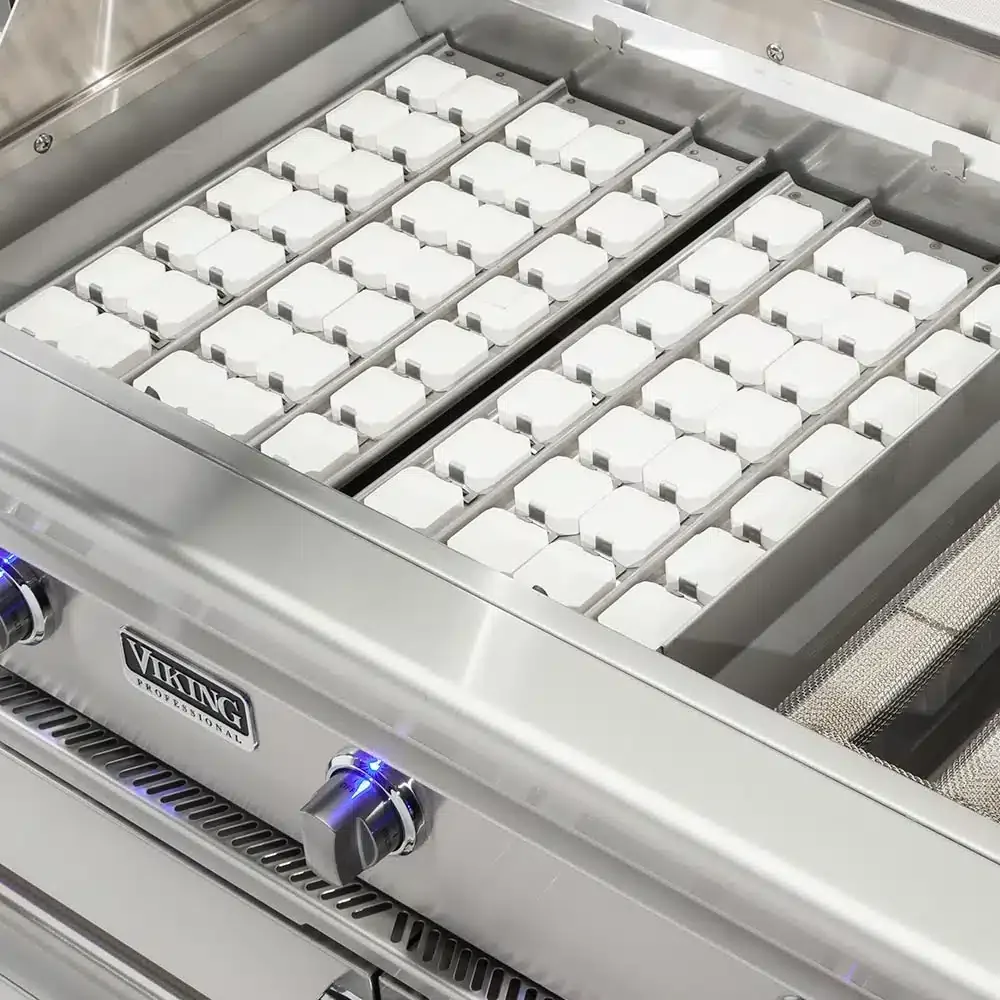
Neglected Grill: Clean, Repair or Replace? A Tech's Triage
Most greasy, rusty, spider-filled grills are not done. Here is how to tell what a cleaning can fix, what needs a part, and what means it's time to re…
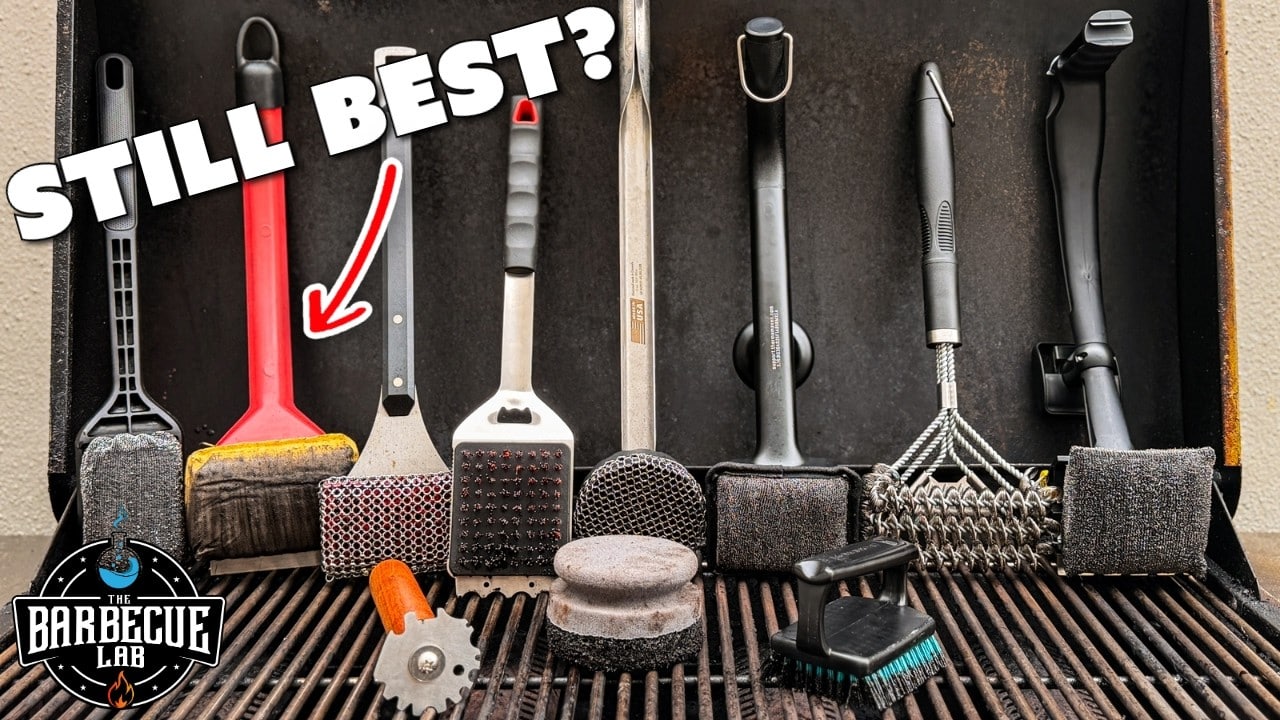
Best Grill Brushes of 2026: Expert Reviews Compared
We read the published grill brush reviews from The Barbecue Lab, Food & Wine, Serious Eats and AmazingRibs, then added what we see in the field. Here…
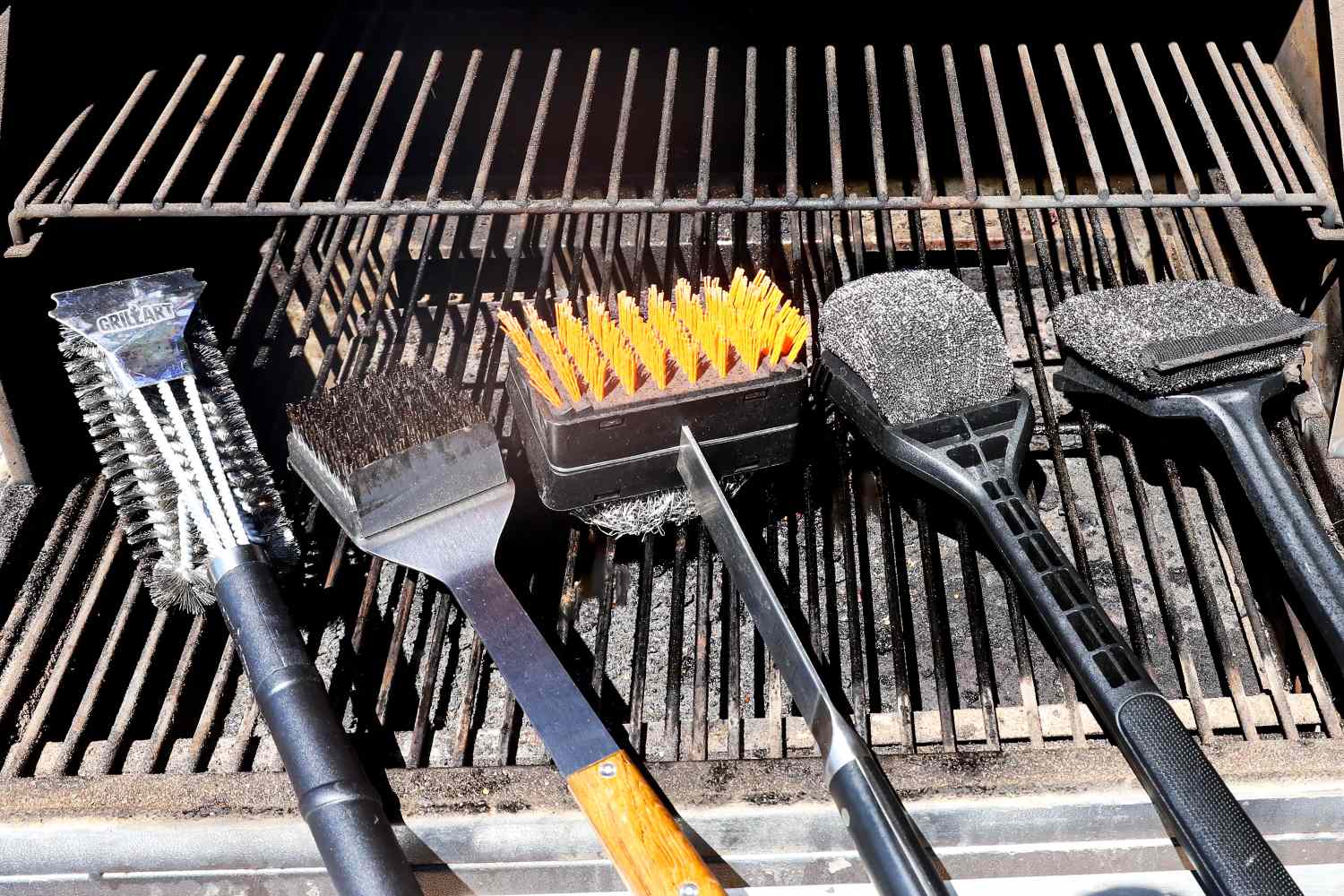
Grill Brush Safety, Cleaning Tips & Alternatives
How to pick and use a grill brush, what the wire bristle risk is, which bristle-free tools work, and how to clean your grates the right way.