
Santa Maria BBQ at Home: Grill Setup, Tri-Tip and Fire Control
Santa Maria-style BBQ comes from California's Central Coast. Here is how to set up a grill for it, time a tri-tip, and run the fire, plus what a built-in gas grill can and can't do.
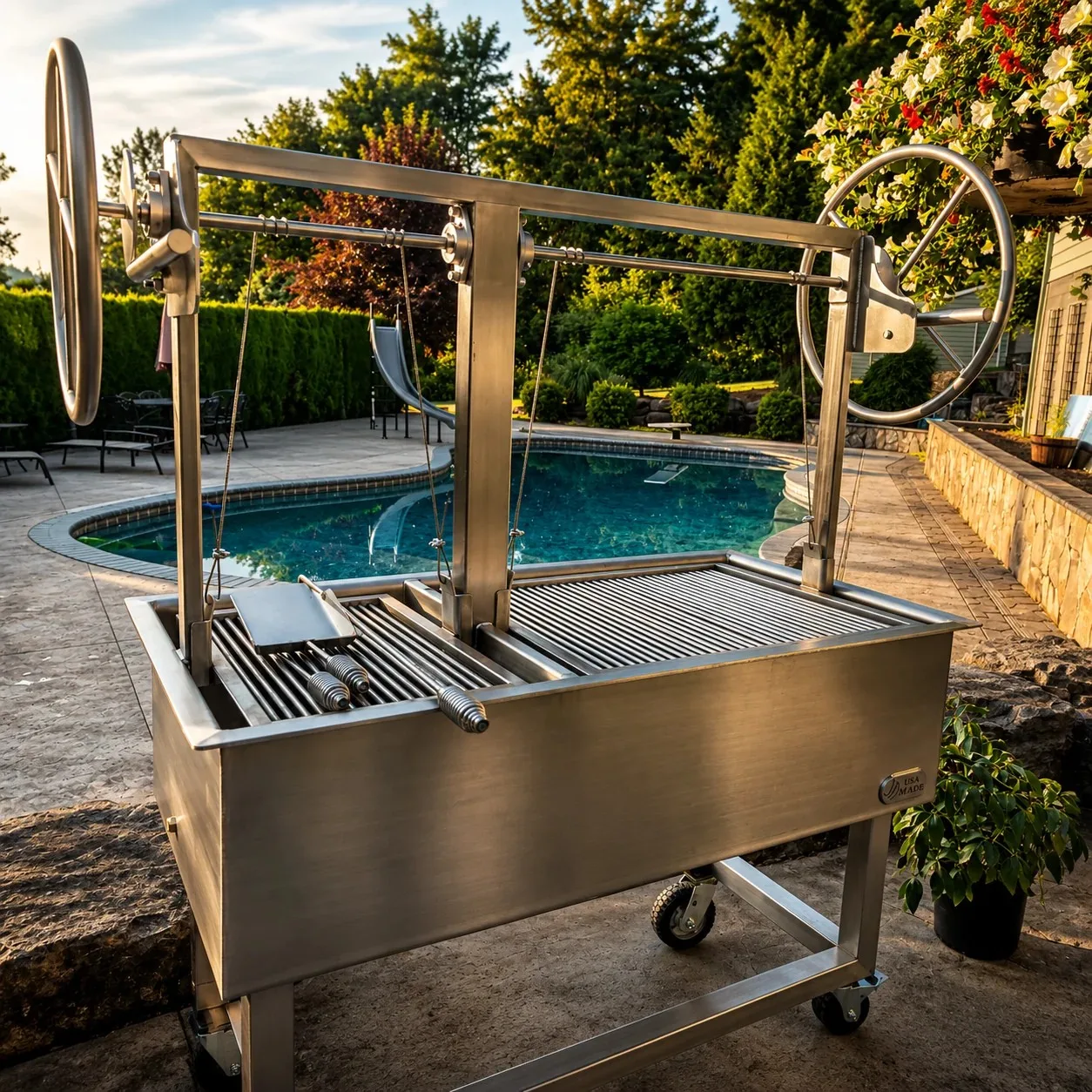
Short answer: Santa Maria-style BBQ is a live-fire method. You burn red oak or charcoal down to coals, cook over them on a grate you can raise and lower, and season tri-tip with a plain dry rub. At home you can get close on a charcoal grill with an adjustable grate. A built-in gas grill can cook a very good tri-tip, but it won't give you the same wood-coal fire.
What a Santa Maria-style setup needs
Three things define the setup:
- A real fire. Red oak burned to coals, or charcoal if oak is hard to find.
- A grate that moves. Traditional pits use a grate on a crank or lever so you can change the distance to the coals in seconds.
- Simple seasoning. Salt, pepper and garlic on the meat, and not much else.
The adjustable grate matters most. Height is your heat control. Close to the coals sears, and higher up cooks more gently. If you can only change one thing about your setup, make it this one.
Setting up a charcoal grill at home
Most backyard charcoal grills have a fixed grate. You can still get the same control by changing the coal bed instead of the grate.
- Start the fire early. Light a chimney of charcoal, or a few split pieces of red oak, about 30 to 45 minutes before you cook. You want glowing coals with no tall flame.
- Build two zones. Pile the coals deeper on one side and spread them thin on the other. The deep side sears and the thin side cooks.
- Keep a reserve. Burn a few extra pieces of oak or a handful of charcoal on the side. Push fresh coals under the meat as the first ones fade.
- Set your distance. With a fixed grate, you have only a few inches to work with, so use the coal bed depth to control it. With an adjustable grate, start around 4 to 6 inches above the coals and move from there.
- Open the vents. Oak and charcoal both need airflow. Bottom vents open for heat, and close them partway to slow things down.
Burn charcoal and wood outdoors only, well away from walls, eaves and overhangs. Never use them indoors or in a garage. They give off carbon monoxide. Let ashes cool fully, ideally for a day, and put them in a metal container before they go in the trash.
The tri-tip: rub, timing and temperature
Tri-tip is a triangular roast from the bottom sirloin. A whole one usually runs 2 to 2.5 pounds, which is a good size for this method.
The rub
Keep it simple. For a 2 to 2.5 pound roast, mix:
- 1 tablespoon kosher salt
- 2 teaspoons coarse black pepper
- 2 teaspoons garlic powder
Trim the fat cap down to a thin layer, then rub the mix over the whole roast. Salt it 40 minutes to a few hours ahead, and leave it uncovered in the fridge if you have the time. If you want to build your own blend for other cuts, see our all-purpose dry rub.
The cook
- Take the roast out of the fridge about 30 minutes before cooking.
- Put it fat side down over the hot coals for about 5 to 8 minutes, until it's browned. Watch for flare-ups. The fat will drip.
- Flip it and sear the other side for another 5 to 8 minutes.
- Move it to the cooler zone, or raise the grate, and cook with the lid on or off as your grill allows. Check the temperature every 5 minutes.
- Pull it at 125°F in the thickest part for medium-rare. It will climb to roughly 130 to 135°F as it rests.
Total time for a 2 to 2.5 pound roast is usually 30 to 45 minutes. Your fire, the weather and the thickness of the roast change that, so go by the thermometer and not the clock. A wireless probe makes this easier. Our meat probe guide covers how to use one.
Resting and slicing
Rest the roast on a cutting board for 10 to 15 minutes, loosely tented with foil. Don't skip this. Slice right away and the juice runs onto the board.
Tri-tip has two grain directions that meet near the bend of the triangle. Cut the roast in two at that point, then slice each half across the grain into thin slices, about a quarter inch.
Fire control: grease, flare-ups and heat
Tri-tip drips fat, and fat on hot coals flares. Some flare-up is part of the flavor, but a roast sitting in open flame will char black before the inside is done.
- Move the meat to the cool zone when flames climb past the grate.
- Raise the grate or spread the coals if the fire is too hot.
- Keep the lid or a sheet pan handy to cut off air if a flare gets out of hand.
- Don't spray water on a grease fire.
We cover this in more detail in How to Control Grill Heat and Stop Flare-Ups.
What a built-in gas grill can and can't do
A built-in gas grill is a different tool. Most built-ins slide into the island, run on propane or natural gas, and hold a steady temperature. That is a real advantage for a roast like tri-tip.
What gas does well:
- Steady, repeatable heat with no fire to tend.
- A hard sear on the high burners, then a move to indirect heat.
- A rotisserie, if your grill has one.
- A smoker box, if yours has one, for a little wood flavor from oak chips.
What gas can't do:
- Match the radiant heat of a bed of oak coals.
- Give you drippings hitting real embers and smoking back up into the meat.
- Raise and lower the grate on a crank. Most built-ins have a fixed grate height, so you change heat with the burner knobs and the zones.
To cook a tri-tip on gas, preheat with all burners on high for 10 to 15 minutes. Sear each side for 3 to 4 minutes, then turn off the burners under the roast, or drop to medium, so the roast cooks over indirect heat at about 350°F. Pull it at 125°F and rest it the same way.
If you cook on a Fire Magic, you're on a well-built, American-made grill that handles this kind of cooking well. If you're comparing it with a Lynx, see our Fire Magic vs. Lynx cost comparison.
Hard searing wears parts
Frequent high-heat searing and fatty drippings are tough on a gas grill. Grease builds up on burners, heat-distribution parts and grates, and ignition parts wear out. The most common problems we see are briquette trays and igniters, then burners.
Here are typical numbers from our shop, so you know what you're looking at:
- A typical Lynx burner is over $500.
- Igniters can cost as much as $60 each.
- A ProSear burner is over $700.
- Labor runs $200 to $500, depending on how complex the parts are to install.
We sell Lynx parts, but not Lynx grills. Many Lynx owners love their grills and want to keep cooking on them, and we're glad to help them do that. We prefer OEM parts. They fit better and last longer, though we'll help if you want a less expensive aftermarket option and one exists.
You can look up part numbers on our parts diagrams and order from the Pro Grill parts store. If you want a tech to look at your grill, an inspection and diagnosis visit is $199, and we give 50% of it back if you do any work with us.
If you ever smell gas near your grill, turn off the gas at the tank or valve, step away, and call a pro. Don't try to light it.
Quick checklist for your first Santa Maria cook
- Fire started 30 to 45 minutes ahead, with a reserve pile on the side.
- Two zones, one hot and one cooler.
- Tri-tip salted ahead, rubbed with salt, pepper and garlic.
- Sear both sides, then finish in the cooler zone.
- Pull at 125°F, rest 10 to 15 minutes.
- Cut at the bend and slice thin across the grain.
FAQ
What is Santa Maria-style BBQ?
It is a live-fire style of barbecue that started on California's Central Coast. It centers on cooking over red oak or charcoal on an adjustable grate, with tri-tip as the classic cut and a simple dry rub.
What temperature should tri-tip be cooked to?
Pull it at 125°F in the thickest part for medium-rare. It will rise to about 130 to 135°F as it rests for 10 to 15 minutes.
Can you make Santa Maria-style tri-tip on a gas grill?
Yes. Sear both sides on high, then finish over indirect heat at about 350°F until it reaches 125°F. You won't get the same flavor as a wood fire, but a smoker box with oak chips can help.
What is the best rub for Santa Maria tri-tip?
Keep it simple. For a 2 to 2.5 pound roast, use 1 tablespoon kosher salt, 2 teaspoons black pepper and 2 teaspoons garlic powder.
How do you slice tri-tip?
Cut the roast in two where the grain changes direction near the bend. Then slice each half across the grain into thin slices.
More cooking
See all →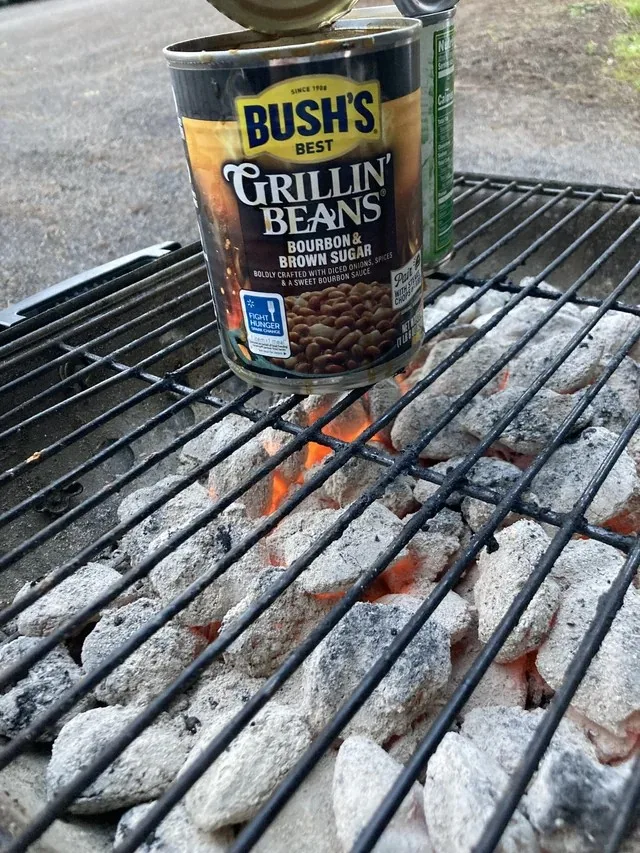
Can You Heat a Can of Beans on the Grill? What's Safe
Heating beans on the grill is fine. Heating them in the sealed can is where the danger is. Here's how to do it right and keep your burners clean.

Apple HomeView Recipes: Follow Pro Grill Recipes Hands-Free
Apple's new HomeView can turn a web recipe into step-by-step cooking with timers set for you. Here's how it works, and how our grill recipes are buil…
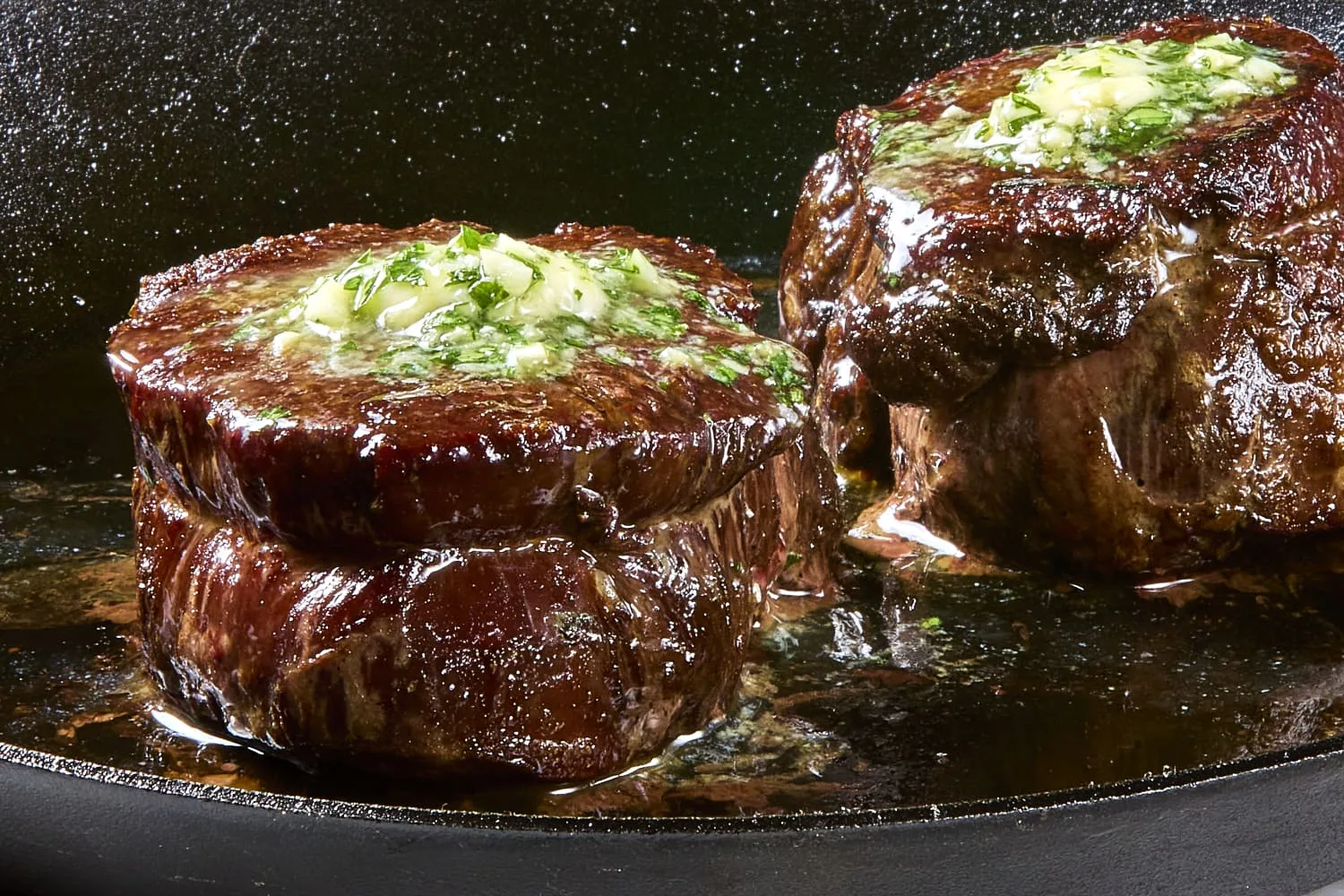
How to Grill a Thick Filet Mignon on a Gas Grill
A 1.5 to 2 inch filet is lean and tender, so it cooks fast and forgives very little. Here is the heat setup, timing and pull temperature we use, from…