Grill Burns and Flare-Ups: What to Do in the First Minutes
Cool the burn, shut off the gas, and keep water away from grease. Here is the order that matters when a grill accident happens, and how to check the grill before you light it again.
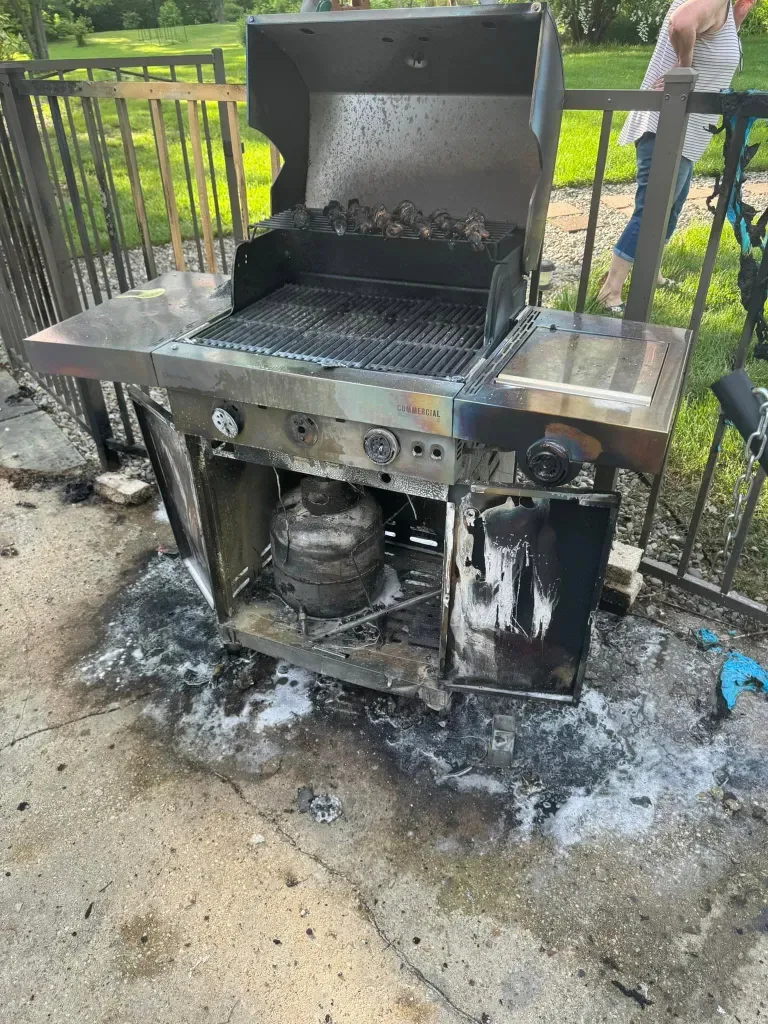
Short answer: Get the person away from the heat, run cool (not ice-cold) water over a minor burn for 10 to 20 minutes, and cover it loosely with something clean. Call 911 for large, deep, or face and hand burns, or if clothing caught fire. For the grill itself, shut off the gas at the knobs and the tank if you can reach it safely, keep the lid closed on a grease fire, and never spray it with water. Don't light the grill again until it has cooled and been checked.
LSM published a story on November 8 about how to help if someone gets into a grilling accident. This article is our own take as grill techs. We service grills, we are not doctors, so treat the first-aid part as basic guidance and let a medical professional make the call when you are unsure.
First 60 seconds: people before the grill
- Move the person back from the grill, the smoke, and any spilled grease.
- If clothing is on fire: stop, drop, and roll, or smother the flames with a blanket. Call 911.
- Take off rings, watches, bracelets, and anything tight near the burn before swelling starts. Don't pull off clothing that is stuck to the skin.
- Start cooling the burn (steps below).
- Hand the grill to a second person if there is one. Turning off the gas can wait a few seconds. A burning person can't.
If you are alone and the flames are small, shut the gas off first only if it takes one second and you won't be reaching through fire.
First aid for a minor burn
A minor burn is red, painful, maybe with a few small blisters, and smaller than the palm of the person's hand.
- Cool running water for 10 to 20 minutes. Cool tap water is right. Ice and ice water can hurt the skin more.
- Leave blisters alone. Don't pop them.
- Skip the home remedies. No butter, oil, toothpaste, or ointments on a fresh burn.
- Cover loosely with a clean, non-stick dressing or a clean cloth. Don't wrap it tight.
- Pain relief: an over-the-counter pain reliever is fine if the person normally takes one and it is safe for them.
- Watch it over the next few days. Spreading redness, pus, increasing pain, or fever means it needs a medical look.
When it's the ER or a 911 call
| Situation | What to do |
|---|---|
| Small red burn on an arm or leg, no deep blisters | Cool it and cover it at home |
| Burn larger than the palm of the hand | Get medical care |
| Burn on the face, hands, feet, groin, or over a joint | Get medical care |
| Skin that looks white, leathery, charred, or numb | Call 911 |
| Burn that wraps around an arm, leg, or finger | Call 911 |
| Clothing caught fire, or the person breathed in flame or smoke (coughing, hoarse voice, soot around the nose or mouth) | Call 911 |
| Child, older adult, or someone with a health condition and any more than a tiny burn | Call a doctor or go in |
If you are debating whether to call, call. Dispatchers can walk you through the next steps while you keep cooling the burn.
Shut off the gas
Once the person is safe, deal with the fuel.
- Turn every control knob to OFF. This stops gas to the burners.
- Close the propane tank valve by turning it clockwise until it stops. This is the step that cuts off the supply.
- Natural gas: close the shutoff valve on the gas line feeding the grill. It is usually a quarter-turn valve, handle crosswise to the pipe means closed. Know where yours is before you need it. On built-in setups it is often inside the island.
- If you can't reach the valve safely, or the fire is at the hose, regulator, or tank, step back and call 911. Don't try to be the hero.
If you smell gas and there is no fire: turn the gas off at the tank or line, keep flames and sparks away, don't light anything, and call a pro or your gas company. If the smell is strong or you hear hissing, move away and call 911.
Grease fire versus flare-up
A flare-up is a short burst of flame when fat drips onto hot burners, heat tents, or ceramic briquettes. A grease fire is when built-up grease in the bottom of the firebox or drip tray is burning and keeps burning on its own. Our article on why grease buildup is a serious risk explains how that happens.
Flare-up
- Move the food to a cooler zone, or take it off.
- Close the lid for a moment. Less air usually settles it.
- Turn the burners down.
- Don't squirt it with a spray bottle. It spreads grease and can send steam at your hand.
Grease fire
- Turn off all burners and, if you can do it safely, the gas at the tank or line.
- Keep the lid closed. That starves the fire of air.
- Never use water. Water on burning grease spreads it and can throw flames at you.
- Small fire in a tray: baking soda can help knock it down. Don't use flour or sugar.
- Fire extinguisher: a dry chemical unit rated for grease (Class B, as on an ABC extinguisher) is the right tool. Stand back and aim at the base.
- Don't move the grill or carry it anywhere while it's burning.
- If it is growing, near the house, or you are not sure, back away and call 911.
Our longer pieces on grilling safety and cleaning out grease go further on prevention. Most bad flare-ups we see start with grease that should have been cleaned out weeks ago.
Check the grill before you light it again
Let everything cool completely. Then go through it with the gas off and, ideally, the tank disconnected or valve closed.
- Hose and regulator: look for melted, cracked, bubbled, or discolored spots. If the hose or regulator got hot, replace it. Don't try to judge it by feel.
- Leak test: brush soapy water on the hose, regulator, and connections, open the tank valve, and watch for bubbles. Bubbles mean a leak. Close the valve and don't use the grill.
- Knobs and valves: they should turn smoothly and click back to OFF. Melted or warped knobs mean heat reached the control panel.
- Burners: look for warped tubes, holes that have burned wider, and blocked ports. Uneven or yellow flames after an incident are a warning. See what flame color means.
- Igniter and wiring: check for melted insulation, cracked electrodes, and loose connections.
- Grease tray and firebox: scrape out all burned-on fat. Leftover grease is what burns next time.
- Island or cart: check for scorching, discolored panels, or damage to the enclosure around a built-in grill. Heat that reached the island can mean the problem is bigger than the grill.
If anything on that list fails, keep the grill off and get it looked at. The same goes for a grill that smells like gas, won't light cleanly, or lights with flames in odd places.
What repairs can cost
Burns and flare-ups often damage burners, igniters, and hoses. We sell parts for Lynx grills (we don't sell Lynx grills), and owners who have them tend to want to fix them up and keep cooking. Here are the numbers we can give you:
- A typical Lynx burner runs over $500.
- Igniters can be as much as $60 each.
- A Lynx ProSear burner runs over $700.
- Labor runs about $200 to $500, depending on how complex the parts are to install.
For other brands, price depends on the part, the model, and how hard it is to get to. Our parts diagrams by brand help you identify what you need, and the parts store has the parts. Fire Magic, Lynx, and most other high-end grills are worth repairing when the damage is limited to burners, igniters, and hoses.
Let a pro look at it
If the fire reached the hose, regulator, valves, or wiring, or you can't tell if the grill is safe, have an insured grill pro check it before the next cook. You can find one near you, or call us at 800-860-6758 or text 888-418-4226.
Find your model on our parts diagrams, tap the part, and order it, or text a photo of the rating plate to 888-418-4226.
FAQ
Should I put ice on a grill burn?
No. Hold the burn under cool running water for 10 to 20 minutes instead. Ice and very cold water can damage the skin further.
What do I do if my grill catches fire?
Turn off all the burners, close the lid, and shut off the gas at the tank or line if you can reach it safely. Don't use water on a grease fire. If the fire is growing, near the house, or at the hose or tank, step back and call 911.
How do I shut off the gas to my grill in an emergency?
Turn the control knobs to OFF, then close the propane tank valve clockwise. On natural gas, close the shutoff valve on the line feeding the grill. If you can't reach it safely, back away and call 911.
When does a grill burn need the ER?
Get medical care for burns bigger than the palm of the hand, burns on the face, hands, feet, groin, or joints, and any burn that looks white, leathery, or charred. Call 911 if clothing caught fire or the person breathed in smoke or flame.
Is it safe to use a grill after a flare-up or grease fire?
Only after it cools and you check the hose, regulator, knobs, burners, and igniter, and clean out the grease. If anything is melted, warped, or leaking, keep it off and have it repaired.