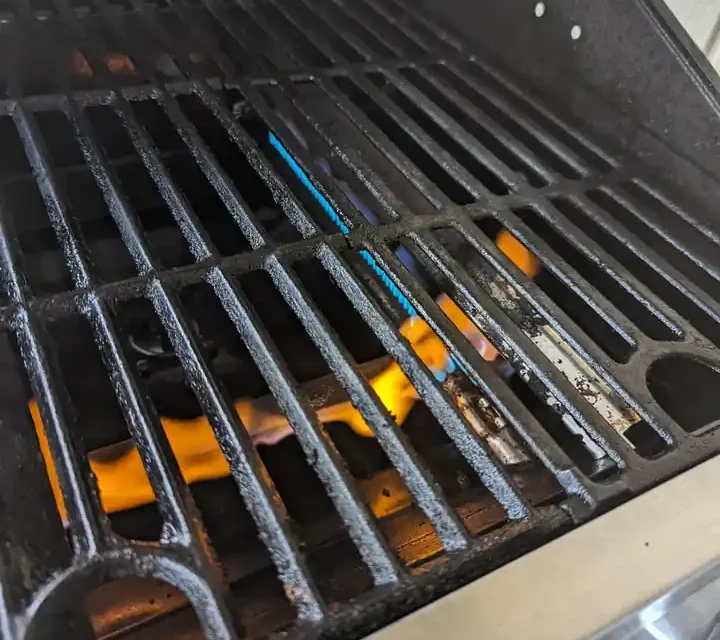
Why Is My Gas Grill Flame Yellow?
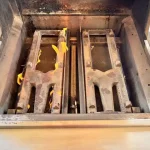
A gas grill flame that suddenly turns yellow, orange or unusually large deserves attention. Occasional yellow tips are not always a problem, but a burner producing tall, lazy yellow flames, black soot or a noticeably different flame pattern may not be mixing fuel and air correctly.
The cause can be as simple as temporary dust around the burner or as significant as an obstructed burner inlet, damaged burner, incorrect fuel component or gas-delivery problem. The safest approach is to compare the flame with the grill manufacturer’s specifications and with the way your grill normally operates.
Common causes include blocked burner ports, spiders or insects inside the burner inlet, grease and debris, restricted airflow, burner misalignment, damaged burners or fuel components that do not match the grill’s intended gas type. A brief yellow tip may be normal on some grills, but persistent yellow flames accompanied by soot or unusual odor should be investigated.
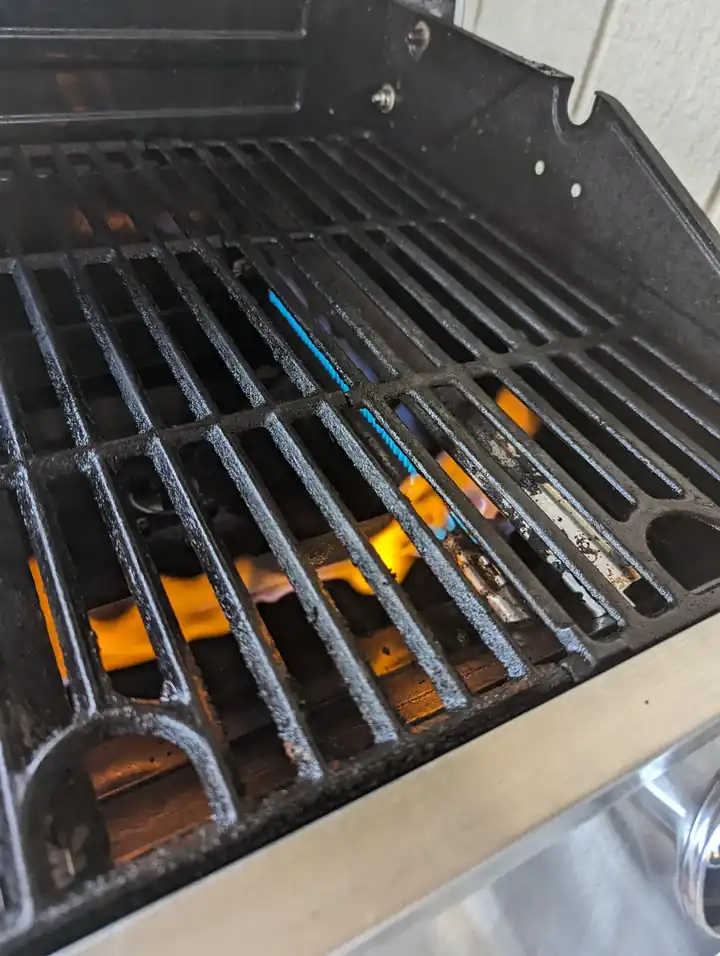
When Should You Shut the Grill Off?
Shut the grill down if flames appear near the burner inlet or control panel, the grill produces heavy black soot, you smell gas, ignition is delayed or the flames behave dramatically differently from normal.
Do not continue operating a grill with a suspected leak, damaged gas component or flame burning outside its intended area. Turn off the appliance and fuel supply according to the manufacturer’s instructions and have the condition evaluated.
What Should a Normal Gas Grill Flame Look Like?
There is no single flame appearance that applies to every gas grill. Burner design, fuel type and manufacturer specifications all matter. However, many properly operating conventional gas burners produce relatively stable blue flames with occasional lighter-blue or small yellow tips.
The flame should generally remain distributed along the burner’s intended ports. Turning the control knob should produce a predictable change in flame height and burner output.
More important than matching an internet photo is noticing a clear change in your own grill:
- Are the flames suddenly much more yellow than before?
- Is one burner different from all the others?
- Are flames missing from part of the burner?
- Is the flame lifting away from the burner?
- Is flame appearing near the burner inlet?
- Is the grill producing soot it did not produce previously?
- Does turning the knob still change burner output normally?
Infrared burners, rear rotisserie burners and other specialized systems may not look like conventional tube burners. Consult the manual before deciding that a specialized burner’s appearance is abnormal.
What Different Gas Grill Flame Colors May Indicate
Mostly Blue Flame
A stable blue flame is typical for many correctly operating conventional gas burners. Small yellow tips may occur depending on the grill and operating conditions.
Persistent Yellow Flame
Tall or lazy yellow flames may indicate insufficient combustion air, burner obstruction, contamination, component misalignment or an incorrect fuel configuration.
Temporary Orange Flame
Dust, airborne particles, salt and other temporary contaminants can sometimes create orange coloration. Persistent orange flames still deserve inspection.
Flame in the Wrong Area
Flame near the control panel, valve or burner inlet is not simply a color issue. Shut down the grill and have the underlying cause evaluated.
What Does a Yellow Flame on a Gas Grill Mean?
Gas grill burners are designed to mix fuel with air before the mixture exits through the burner ports and ignites. When that mixture or the flow through the burner changes, combustion can also change.
A persistent yellow flame may indicate that the burner is receiving too little air, too much fuel for the available air or an uneven mixture. Instead of a compact, stable flame, the grill may produce taller, slower-moving yellow flames.
Yellow flames do not automatically identify one failed part. They are a symptom that can involve:
- Grease or food debris around burner ports
- Blocked burner inlet or venturi passages
- Spiders, insects or nesting material
- Restricted combustion airflow
- Burner misalignment
- Corrosion or structural burner damage
- An incorrect or damaged gas orifice
- Improper propane-to-natural-gas conversion
- Gas pressure or valve problems
- Temporary environmental contaminants
Diagnosis should consider the whole fuel-and-burner system instead of assuming that every yellow flame needs the same adjustment.
Can Blocked Burner Ports Cause Yellow Flames?
Yes. Grease, carbon, food debris and corrosion can partially obstruct the small openings along a burner. These openings are intentionally sized and positioned to distribute the fuel-and-air mixture.
When several ports are blocked, flame may become uneven or concentrate in the remaining open areas. One part of the burner may have a normal flame while another section appears yellow, weak or unlit.
Signs Burner Ports May Be Obstructed
- Only part of the burner lights
- Flame height changes dramatically along the burner
- One section burns yellow while another remains blue
- The grill develops new hot and cold areas
- Ignition becomes slower or less reliable
- Visible grease or debris covers burner openings
Clean burners only according to the grill manufacturer’s instructions. Do not drill, enlarge or reshape burner ports. Making the openings larger changes the way gas is distributed and can permanently damage the burner.
Learn more about BBQ burner cleaning, problems and replacement .
Can Spiders or Insects Cause a Yellow Grill Flame?
Yes. Outdoor gas grills provide protected spaces where spiders and insects can enter, particularly when a grill sits unused. Webs or nesting material can obstruct the burner inlet or venturi where gas mixes with air.
Even a relatively small obstruction can change airflow through the burner. Depending on the grill, that can produce yellow flames, poor ignition, popping sounds, weak heat or flame near the burner’s inlet.
Inspect accessible burner inlet areas only when the grill is off, completely cool and the fuel supply is shut off. Follow the manufacturer’s instructions for removing and reinstalling burners.
If the burner is severely corroded, difficult to access or connected in a way you are not comfortable servicing, professional inspection is the better choice.
Can Restricted Airflow Change a Grill’s Flame Color?
Yes. A conventional gas burner requires the correct mixture of gas and combustion air. Many burners draw air through an inlet or venturi before the mixture reaches the burner ports.
Some grills use adjustable air shutters, while others have factory-set openings or screens that should not be casually changed. An obstruction, incorrectly positioned screen or altered air shutter can change combustion.
Do Not Start Adjusting Air Shutters by Guesswork
A yellow flame may involve airflow, but that does not prove the air shutter is the problem. Burner obstruction, gas pressure, incorrect orifices, burner damage and temporary contaminants can produce similar symptoms.
Before changing a factory adjustment, identify the grill model, confirm the burner is clean and properly positioned and follow the manufacturer’s specifications. Random adjustments can create a different combustion problem without correcting the original cause.
Concerned About Your Grill’s Flame?
Pro Grill can inspect your BBQ’s burners, valves, orifices and ignition components to determine why the flame pattern has changed. We provide mobile grill repair for built-in and freestanding grills.
Can a Damaged Grill Burner Produce Yellow Flames?
Yes. Burners are repeatedly exposed to high heat, moisture, grease and outdoor conditions. Over time, stainless steel, cast iron, brass and other burner materials can corrode or fail.
A burner with a split seam, enlarged ports or irregular corrosion holes no longer distributes gas as designed. Flame may exit through damaged areas, creating an abnormal pattern or unexpected flame color.
Signs a Burner May Need Replacement
- Cracks or split seams
- Large irregular holes
- Ports enlarged by corrosion
- Missing or severely thinned metal
- Warping that prevents proper alignment
- Flame escaping from unintended areas
- Abnormal flame after proper cleaning and diagnosis
Cleaning can remove surface debris from a structurally sound burner. It cannot replace missing metal or restore the original port pattern of a deteriorated burner.
Can the Wrong Fuel Components Cause Yellow Flames?
Yes. Natural gas and propane grills are designed around different fuel pressures and flow requirements. Orifices, regulators, valves or burners may differ depending on the intended fuel.
An incorrect orifice can allow the wrong amount of fuel into a burner. If too much gas enters for the available combustion air, tall yellow flames and soot may result.
This can happen when:
- A grill was improperly converted between propane and natural gas
- The wrong replacement orifice was installed
- A gas orifice was drilled or enlarged
- A replacement valve does not match the grill and fuel type
- The grill is receiving gas pressure outside its specifications
- Fuel components from another model were substituted
Never Enlarge an Orifice to Increase Grill Heat
An orifice is a precisely sized gas-metering component. Drilling or enlarging it can create excessive fuel flow and improper combustion. Fuel conversions and gas-system repairs should follow manufacturer requirements and applicable codes.
Our guide to the main parts of a gas grill explains how the valves, orifices, burners and regulator work together.
Why Is My Gas Grill Flame Orange?
An orange flame can sometimes be caused by temporary contaminants rather than a permanent grill problem. Airborne dust, cleaning residue, salt and other particles may color a flame temporarily.
This is more likely when:
- The flame color changes only briefly
- The burner otherwise has an even, stable pattern
- No black soot develops
- The grill lights and heats normally
- The condition disappears after temporary particles clear
Persistent orange or yellow flames should still be inspected—especially if the condition affects every burner, produces soot or appears after a component replacement or fuel conversion.
Why Are Yellow Grill Flames Creating Black Soot?
Black soot is a stronger sign that combustion is not occurring as intended. Soot can collect on cooking grates, heat shields, food, the inside of the hood and the exterior of cookware.
Possible causes include insufficient combustion air, excessive fuel flow, incorrect orifices, burner obstruction or a fuel-conversion problem.
Do not simply wipe the soot away and continue cooking. Shut down the grill and identify why the burners are producing it. If the condition began after repair work, conversion or component replacement, verify that all installed parts match the exact grill and fuel type.
Why Is Only One Grill Burner Flame Yellow?
When one burner is yellow while the others appear normal, the problem is probably localized rather than affecting the entire fuel supply.
Possible causes include:
- Blocked ports on that burner
- Debris inside its inlet or venturi
- Burner misalignment over the orifice
- Corrosion or structural burner damage
- An incorrect or damaged orifice
- A valve problem serving that burner
- An altered air shutter or intake screen
Compare the problem burner with the surrounding burners after the grill is shut down and cool. Look for obvious differences in positioning, corrosion, port condition and installed components.
Why Are All My Grill Burners Yellow?
If every burner changes at the same time, consider something shared by the entire grill. A whole-grill change can be associated with fuel type, gas pressure, regulator operation, environmental contamination or work recently performed on the common fuel system.
Ask what changed:
- Was the propane cylinder recently replaced?
- Was the grill converted between fuel types?
- Were the valves, manifold or orifices replaced?
- Was the grill recently deep cleaned or reassembled?
- Did the condition appear after construction or dusty weather?
- Has the grill been sitting unused long enough for insects to enter?
A shared symptom across every burner makes it less likely that all burners independently failed at exactly the same time.
Can Cleaning Correct a Yellow Gas Grill Flame?
Cleaning may help when grease, carbon, food debris or insect material obstructs accessible burner ports and air inlets. It can also reveal deterioration hidden beneath accumulated buildup.
At Pro Grill, professional cleaning involves more than brushing the cooking grates. Depending on the grill’s design and condition, accessible cooking components are removed so we can address grease and carbon around the burners, heat-distribution parts and firebox.
Once the buildup is removed, it becomes easier to see cracked burners, enlarged ports, failed trays, damaged electrodes and misaligned components.
Cleaning cannot repair an incorrect orifice, damaged valve, failed regulator or structurally deteriorated burner. A dirty grill with abnormal flames may require cleaning, repair or both.
What Pro Grill Looks For
We start by comparing burners. If only one flame is yellow, we look more closely at that burner, its inlet, orifice, valve and positioning. If every burner changed at once, we consider the shared fuel-delivery system and recent changes to the grill.
This approach matters because “yellow flame” is a symptom—not a complete diagnosis. Adjusting an air shutter or replacing a burner without identifying the cause can waste money and leave the original problem unresolved.
What Should You Check When a Grill Flame Turns Yellow?
Compare Every Burner
Determine whether the condition affects one burner or the entire grill. This is one of the most useful diagnostic clues.
Look for Black Soot
Soot on grates, cookware or the hood indicates that the problem deserves prompt attention.
Inspect After the Grill Cools
With the grill off and fuel supply shut off, look for grease, debris, corrosion, misaligned burners and visible damage.
Consider Recent Changes
Think about recent cleaning, repairs, fuel conversion, propane-cylinder replacement or installation work.
Check the Model and Fuel Type
Confirm that the grill and its replacement fuel components are configured for natural gas or propane as intended.
Follow the Manufacturer’s Specifications
Use the grill’s manual to identify normal flame appearance and permitted burner-maintenance procedures.
What Not to Do With a Yellow Grill Flame
Do Not Drill Burner Ports
Enlarging burner openings changes gas distribution and can permanently damage the burner.
Do Not Enlarge Orifices
Incorrect orifice size can create too much fuel flow and improper combustion.
Do Not Adjust Airflow Randomly
Some shutters are factory set. Changing them without proper diagnosis can create another combustion problem.
Do Not Ignore Soot
Heavy black soot is not just a cosmetic problem. Stop and identify why combustion has changed.
Do Not Use Mismatched Gas Parts
Valves, orifices and regulators should match the grill model, fuel type and manufacturer specifications.
Do Not Continue if Flame Is Misplaced
Flame near the burner inlet, valves or control panel requires shutdown and proper evaluation.
When Should a Yellow Grill Flame Be Professionally Inspected?
Call a grill repair professional when:
- Yellow flames remain after appropriate basic cleaning
- The grill produces black soot
- Flame appears near the burner inlet or controls
- One burner behaves dramatically differently from the others
- Burners have cracks, splits or irregular corrosion holes
- The problem appeared after a fuel conversion
- Valves, orifices or the manifold were recently replaced
- The grill lights with a delayed “whoosh”
- The grill has poor heat along with abnormal flames
- You smell gas or suspect a leak
- You are unsure whether the grill is safe to operate
Pro Grill provides mobile BBQ inspection and repair for many leading built-in and freestanding grill brands. Repairability depends on the grill’s condition and availability of the correct components.
Related Grill Burner and Repair Resources
Frequently Asked Questions About Yellow Grill Flames
Is a yellow flame on a gas grill normal?
Small, occasional yellow tips may be normal on some grills. Persistent tall yellow flames, black soot or a sudden change from the grill’s usual flame pattern should be investigated.
Why did my gas grill flame suddenly turn yellow?
Possible causes include burner obstruction, spiders or insects, restricted airflow, grease buildup, burner damage, misalignment or a problem with fuel-specific components.
Can dirty burners cause yellow flames?
Yes. Grease, carbon and debris can obstruct burner ports or air-intake areas and change the intended fuel-and-air mixture.
Can spiders cause yellow grill flames?
Yes. Webs or nesting material inside burner inlet or venturi areas can restrict airflow and change combustion.
Why is only one grill burner yellow?
A single yellow burner may have blocked ports, a venturi obstruction, misalignment, corrosion, burner damage or a problem with its valve or orifice.
Why are all my grill burners yellow?
When every burner changes simultaneously, consider a shared fuel, gas-pressure, regulator, conversion or environmental issue rather than assuming every burner failed separately.
Why is my grill leaving black soot on food?
Black soot can indicate incomplete combustion caused by insufficient air, excessive fuel, burner obstruction, an incorrect orifice or another fuel-system problem.
Why does my grill flame look orange?
Dust, salt and other temporary airborne contaminants can sometimes color a flame orange. Persistent orange flames or flames accompanied by soot should still be inspected.
Should I adjust the air shutter if the flame is yellow?
Not automatically. First confirm the burner is clean, undamaged, properly positioned and equipped with the correct fuel components. Follow the manufacturer’s specifications before changing an air adjustment.
Can the wrong gas orifice cause yellow flames?
Yes. An incorrectly sized or modified orifice can deliver more fuel than the burner can mix properly with available air.
When should I stop using a grill with yellow flames?
Stop using the grill if it produces heavy soot, smells like gas, lights with a delayed whoosh, has visibly damaged gas components or produces flame near the burner inlet or controls.
Are Your Grill Flames Yellow, Uneven or Producing Soot?
Pro Grill can inspect your BBQ’s burners, valves, orifices, ignition components and fuel-delivery system to identify why the flame has changed. We provide professional mobile grill repair and cleaning at your home.
This article provides general gas grill information. Normal flame appearance and burner designs vary by manufacturer, model and fuel type. Always follow the instructions supplied with your grill. If you smell gas, suspect a leak, experience delayed ignition or see flame near the controls or burner inlet, stop using the grill and have the condition properly evaluated.