


BBQ Grill Valves: Problems, Repair, Ignition Types & When to Replace Them
Gas grill valves are the controls that regulate fuel to your burners, but modern BBQ control systems can be more complex than they appear. Depending on the brand and model, turning a knob may also activate a spark, trigger a flame-assisted ignition system or work with a separate electronic igniter.
Pro Grill repairs and services many major outdoor grill brands. We diagnose valve problems, help identify the correct replacement parts, and can often address valve concerns as part of a broader grill repair. During professional cleaning visits, we also assess accessible components and let customers know when something appears to need additional repair.
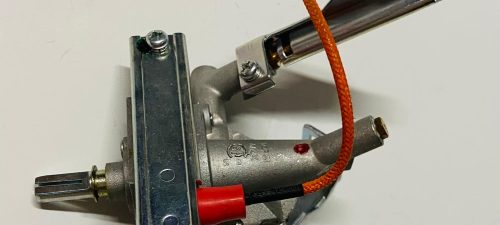
Signs a BBQ grill valve may need attention
Control-valve problems often show up as changes in flame adjustment, burner operation or the feel of the control knob. None of these symptoms by itself proves the valve has failed, but they are reasons to stop guessing and evaluate the grill as a system.
What does a BBQ grill valve actually do?
On a typical gas grill, the main burner control knob is connected to a valve mounted on or integrated with the manifold. When the knob is turned, the valve opens and meters fuel through an orifice toward the burner. Different knob positions change the amount of fuel delivered, allowing the burner to move through its designed range from low to high.
That sounds simple, but the valve works alongside several other components. The regulator or household gas supply determines pressure. The orifice meters fuel into the burner inlet. The burner mixes that fuel with air and distributes flame through the burner ports. The ignition system provides a spark or flame to light the fuel. Heat shields, briquettes or other components then distribute heat above the burner.
This is why one symptom can have multiple causes. A burner that will not light may have a perfectly good valve but a failed electrode. A grill with low heat may have a regulator problem rather than several bad valves. A stiff knob may be damaged even though the valve behind it still works.
For related troubleshooting, see our guide to why a gas grill may not be getting hot enough and our detailed BBQ burner cleaning, repair and replacement guide.
There is more than one type of BBQ grill valve
When people search for a replacement BBQ valve, it is easy to assume that all control valves work the same way. They do not. Grill manufacturers use different valve bodies, stems, manifold connections, orifices, ignition mechanisms and burner arrangements. Even different model generations from the same manufacturer may use different components.
Main burner control valves
These regulate fuel to the primary cooking burners. Multi-burner grills generally have a dedicated control for each main burner.
Side burner valves
Side burners can use different valve and orifice arrangements from the main grill burners and may require model-specific replacement parts.
Infrared / sear burner valves
High-output infrared burners may have different operating requirements than conventional tube burners. A valve or orifice should match the intended burner and fuel system.
Rear rotisserie burner valves
Rear infrared rotisserie burners may have their own valve, ignition and flame-sensing arrangement depending on the grill design.
Valve-and-manifold assemblies
On some grills the valves are serviced individually; on others, replacement may involve a larger manifold assembly rather than one standalone valve.
Valves tied to ignition
Some grill controls mechanically or electrically trigger ignition when the knob is pushed, turned or otherwise operated. That means the control experience can involve both valve and ignition components.
The correct valve is not determined by appearance alone. Stem length, mounting points, manifold connection, orifice configuration, gas type and manufacturer specifications all matter.
Spark, electronic, crossover and flame-assisted ignition
Valve troubleshooting overlaps heavily with ignition because many customers experience both through the same control knob. Depending on the grill, turning or pressing a control can release gas while a separate button creates spark, trigger an electrode automatically, or activate a flame-based ignition system.
Electronic or piezo spark ignition
Many grills use an electrode near the burner to create a spark. The spark may be produced by a battery-powered electronic module or by a mechanical piezo device. If the valve is supplying gas but there is no spark, the problem may be the igniter, electrode, wire, module or ground rather than the valve.
Crossover and cross-light ignition systems
Many gas grills use some form of crossover or cross-lighting system. Instead of every burner relying entirely on its own independent ignition source, the grill may ignite one burner first and then transfer flame to an adjacent burner through a crossover channel, tube, bracket or opening.
The exact design varies considerably by manufacturer. Some grills use dedicated crossover tubes between burners, while others incorporate openings or channels that allow flame to travel from one burner to the next. If the first burner lights normally but another burner does not, the problem may involve the crossover system, burner ports, ignition sequence or gas flow rather than the control valve itself.
Grease, corrosion, carbon buildup or deterioration can sometimes interfere with the path used to transfer flame. This is another reason professional cleaning and inspection can be useful: once accumulated debris is removed, the burner and crossover areas can be easier to evaluate.
Different manufacturers have developed their own versions of these systems. Weber's Crossover® system is one manufacturer-specific example in which an initial burner is ignited and additional burners can then be lit. See an example in Weber's official documentation.
Flame-thrower and flame-assisted ignition systems
Some gas grills use a flame-assisted ignition system rather than relying solely on an electrical spark positioned beside the main burner. These systems release a small, directed ignition flame that helps ignite the main burner when the control is operated.
You may hear these systems described as flame thrower ignition, flame-assisted ignition, gas-assisted ignition, pilot-style ignition or by a manufacturer's proprietary name. The exact construction varies between grill brands and models. Depending on the design, the ignition components may be associated with the control valve, use a separate ignition tube or port, or work together with crossover components.
When this type of system stops working, the valve is only one possible cause. The problem could involve the ignition gas path, burner alignment, an obstructed opening, deterioration, the igniter mechanism or another component in the system. Replacing the main burner valve without first determining how that particular grill's ignition system works can result in replacing the wrong part.
Many manufacturers use their own approach and terminology for flame-assisted ignition. Napoleon's JETFIRE™ system is one manufacturer-specific example that uses a directed jet of flame to ignite an individual burner. See Napoleon's explanation of its JETFIRE ignition system. The important point is not the brand name—it is understanding which ignition design the specific grill uses before diagnosing the valve or replacing parts.
Why proper diagnosis can save money
Replacing a control valve because a burner is weak may sound reasonable, but several other components can create the same symptom. A methodical diagnosis looks at what is happening across the entire grill.
- If all burners are weak, a shared fuel-supply or regulator problem may be more likely than several valves failing at the same time.
- If one burner is weak, the issue may involve that burner's valve, orifice, burner ports or local obstruction.
- If a burner receives gas but will not ignite, the ignition system may deserve attention.
- If flame does not change when the knob is adjusted, valve operation becomes more relevant.
- If the knob spins without properly moving the stem, the knob may be stripped or damaged.
- If a burner is structurally deteriorated, replacing the valve will not correct the burner itself.
Not sure which part is actually causing the problem?
Pro Grill can diagnose grill performance issues and help determine whether the repair involves a valve, burner, regulator, igniter, manifold or another component.
Safe DIY observations before calling for valve repair
You do not need to disassemble a gas manifold to gather useful information. Simple observations can help a technician understand the problem and may reveal that the issue is something basic.
- Confirm whether the problem affects one burner or every burner.
- Observe whether the affected knob turns normally or feels stiff, loose or stripped.
- Follow the manufacturer's lighting procedure and note whether you hear or see ignition activity.
- Compare flame height and behavior between burners without placing yourself over the firebox.
- Confirm the fuel source is available and supply valves are positioned according to manufacturer instructions.
- Look for obvious external damage around the control panel once the grill is off and cool.
- Locate the grill model and serial number if possible; this can greatly help parts identification.
These observations are useful. Opening the manifold, drilling orifices, disassembling valves or improvising gas fittings is a different category of work and is not something we recommend as casual DIY maintenance.
Can BBQ grill valves be cleaned?
External grease and contamination around the control panel can sometimes affect how knobs and controls feel, and routine cleaning around accessible areas can make components easier to inspect. But a gas valve is not something we recommend flooding with degreaser or opening internally simply because the control feels stiff.
During professional grill cleaning, Pro Grill removes grease and buildup from applicable accessible areas of the BBQ. This often gives us a clearer view of burner condition, ignition components, control areas and related parts. If an apparent valve or operational problem becomes noticeable, we can advise the customer that additional diagnosis or repair is appropriate.
Cleaning cannot repair an internally damaged valve, a worn sealing surface, a broken stem or a valve that is otherwise no longer operating correctly. In those cases, the correct replacement component may be needed.
Cleaning your grill? We can assess more than the grease.
During professional BBQ cleaning, we assess accessible grill components and can let you know when something appears to need repair or replacement.
Fuel type matters when replacing valves and orifices
Propane and natural gas do not use identical fuel-delivery setups. Orifice sizing, pressure requirements and manufacturer configurations can differ. A valve or manifold that appears physically similar may still be wrong for the grill or fuel type.
If a grill has been converted from one fuel to another in the past, that history can also complicate diagnosis. A grill with incorrect orifices, an incomplete conversion or mismatched components may exhibit unusual flame or heat behavior that can be mistaken for a bad valve.
When sourcing replacement parts, we prefer to identify the exact manufacturer, model, fuel type and available OEM information whenever possible rather than treating all valves as universal.
From diagnosis to the correct replacement part
If diagnosis points toward a failed valve, the next challenge is identifying the proper component. Premium grills can have several different valves on the same appliance: main burner controls, side burner controls, infrared sear burner controls and rear rotisserie burner controls.
What happens when an older BBQ valve is no longer available?
Discontinued parts are a common challenge on older built-in grills. A premium BBQ can remain structurally sound long after the manufacturer has changed valve designs, manifolds or part numbers. Sometimes a current replacement supersedes the original part; sometimes the complete manifold is the available repair; and sometimes the original component is simply no longer supported.
When that happens, we look at the overall condition of the grill and the practical options. If a correct replacement component exists, repairing the grill may still make excellent sense. If parts are unavailable and multiple major components are deteriorated, replacement of the grill may become more practical.
We do not recommend installing a random valve simply because it physically threads into place. Gas components need to match the appliance's design and intended fuel system.
BBQ valve repair across many major grill brands
Valve and ignition designs vary widely between manufacturers, which is exactly why brand and model identification matter. Pro Grill services many premium and popular outdoor grill brands, and our repair team works with a broad range of valve, manifold, burner and ignition configurations.
We are an authorized dealer and authorized service/warranty resource for certain brands where applicable, while our broader repair work includes many additional manufacturers. Parts availability and repairability depend on the exact grill and model.
Visit our BBQ brands page to explore more of the grill manufacturers we service.
Why valve repair can be worth it on an older high-quality BBQ
A failed valve does not automatically mean the entire grill should be replaced. On a premium built-in grill, the stainless body, hood and firebox may still have years of useful life remaining even though serviceable components such as valves, burners, igniters or briquette trays need replacement.
Repair can be especially worthwhile when the correct parts remain available and the surrounding grill structure is in good condition. Replacing a few worn service components may cost far less than replacing a premium built-in appliance and modifying an outdoor kitchen cutout.
On the other hand, if the grill has severe structural deterioration, a damaged manifold, unavailable parts and several other major failures, complete replacement may be the better long-term decision. Pro Grill provides both BBQ repair and grill replacement sales and installation, so we can help customers understand both paths.
Frequently asked questions about grill valves
How do I know if my BBQ valve is bad?
Possible signs include a seized or difficult-to-turn control, abnormal flame adjustment, a burner that does not respond normally when the knob is moved or a diagnosed gas leak. Other components can create similar symptoms, so diagnosis is important.
Can a BBQ grill valve be repaired?
That depends on the valve and failure. Some control problems are caused by knobs or other components. An internally failed gas valve commonly requires the correct replacement component rather than homeowner disassembly.
Can a bad valve cause low flame?
Yes, but low flame can also involve the regulator, fuel supply, burner, orifice or another component. If all burners are weak, a shared supply issue may be more likely.
Why is only one burner getting low gas flow?
A single affected burner can point toward that burner's valve, orifice, burner condition or a local obstruction. Comparing it with the other burners helps narrow the possibilities.
Why is my grill knob hard to turn?
The issue may involve the knob, valve stem, contamination around the control or the internal condition of the valve. Do not force a seized valve or spray unapproved lubricant into it.
Can Pro Grill replace BBQ control valves?
Yes. Pro Grill provides professional BBQ repair and can replace applicable control valves or related assemblies when the correct parts are available.
Are propane and natural-gas grill valves the same?
Not necessarily. Valve, orifice and pressure requirements can differ between fuels and grill designs. Parts should be matched to the specific appliance and fuel configuration.
What is a flame-thrower ignition system?
Some grills use a small flame or gas-assisted ignition jet to light the main burner rather than relying only on a spark directly at the burner. The exact design varies by manufacturer.
Can a bad igniter seem like a bad valve?
Yes. If the valve supplies gas but the igniter does not produce an effective spark or flame, the burner may not light even though the valve itself is functioning.
Do you look at valves during professional grill cleaning?
Professional cleaning gives our technicians greater visibility into accessible grill components. If an apparent control or operational problem is noticed, we can advise the customer that additional diagnosis or repair may be appropriate.
Is it worth repairing a valve on an old built-in grill?
Often it can be, particularly on a premium grill with a solid body and available replacement parts. The overall condition of the grill and the number of other needed repairs should also be considered.
BBQ parts, repair & maintenance guides
Your grill operates as a complete system. Explore each major component to learn how it works, what can go wrong and how Pro Grill handles cleaning, repair and replacement.
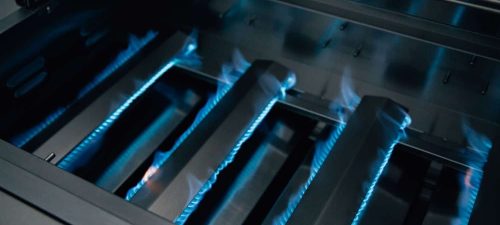 Burners
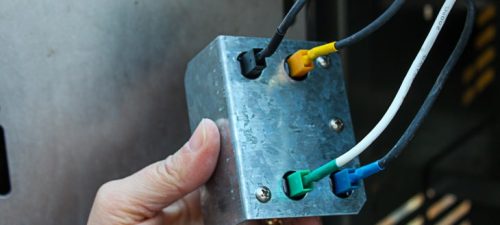 Ignition & Igniters
 Grates
 Briquettes
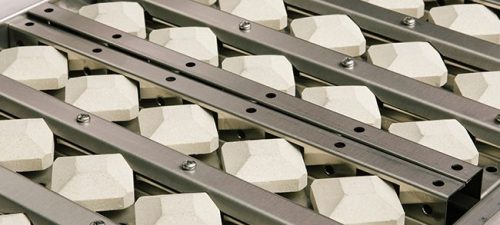 Briquette Trays
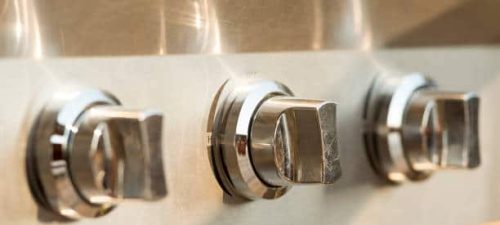 Knobs
Knobs
 BBQ Parts & More
Let Pro Grill diagnose the problem.
Whether the control is stuck, the burner will not adjust normally, ignition has become unreliable or you suspect a valve or manifold needs replacement, Pro Grill can help identify the issue and determine the appropriate repair.