Pro Grill Fire Safety Center

BBQ & Grill Fire Safety

A grill is supposed to put fire under your food—not against your home. This guide combines practical grill-service experience with current guidance from national fire-safety authorities to help homeowners spot the conditions that can turn an ordinary cookout into a fire.

Use this page before grilling season, after a grill has been sitting unused, when you notice unusual flames or gas odor, or anytime you are unsure whether your BBQ needs cleaning, repair or professional inspection.

Important: If you smell gas, see a damaged gas connection, or believe the grill is leaking, turn the gas supply off if it is safe to do so and do not light the grill until the problem has been corrected.
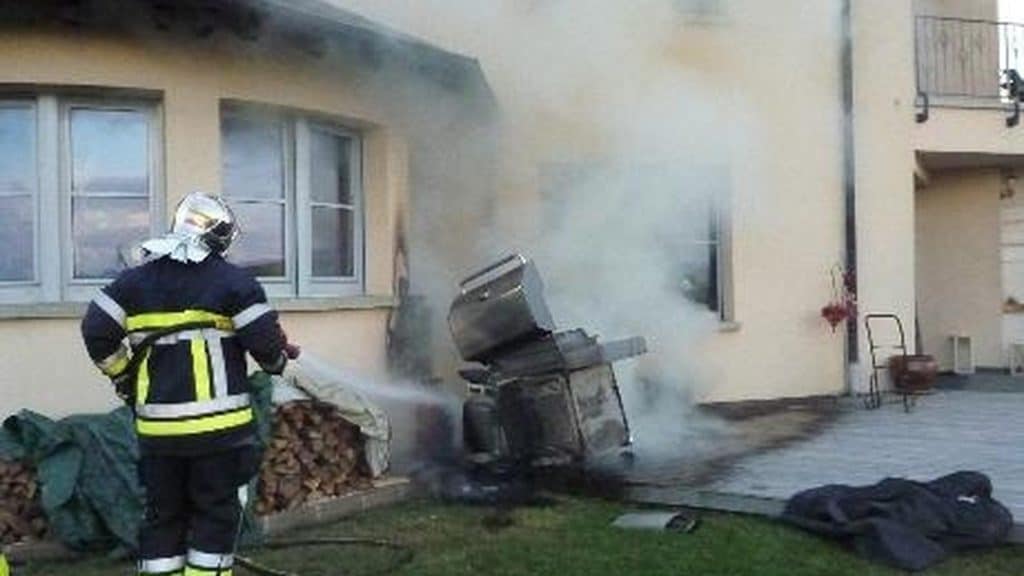
Firefighter responding to an outdoor BBQ grill fire near a home
Grill fires can spread from the BBQ to siding, eaves, railings, outdoor kitchens and nearby combustible materials. Placement, cleanliness and equipment condition all matter.
NFPA Fire research & grilling guidance
U.S. Fire Administration Outdoor fire prevention guidance
CPSC Gas grill & product safety guidance
Pro Grill Cleaning, inspection, repair & maintenance
Why This Matters

Grill Fires Are Not Just a Summer Headline

Grills combine open flame, high heat, grease and combustible fuel in one piece of outdoor equipment. National fire data shows why a few minutes of prevention is worth it.

9,235 Average home fires per year involving gas grills, according to current NFPA grilling-safety data.
21,682 Average annual emergency-department visits for grill-related injuries during 2020–2024, reported by NFPA using CPSC data.
3 ft USFA recommends a 3-foot safe zone around the grill to help protect children and pets.
76% NFPA's 2026 grilling-fire update reports gas grills account for most home grilling fires.
The Failure Chain

How a BBQ Fire Usually Gets a Chance to Start

There is rarely one single issue. More often, several conditions line up at the same time: fuel, heat, grease, damaged components, poor placement or lack of supervision.

1

Grease Accumulates

Grease and food residue collect below the grates, around heat-distribution parts, inside the firebox and in grease-management areas.

2

Flame Reaches the Buildup

High heat, flare-ups or abnormal flame patterns can ignite grease that has been allowed to accumulate.

3

Nearby Materials Become Involved

Siding, railings, eaves, cabinets, towels, covers and vegetation can turn a grill fire into a larger property fire.

4

Gas Escapes Where It Shouldn't

Aging hoses, loose connections, failed components or blocked burner pathways can create dangerous conditions that require correction before the grill is used.

5

The Grill Is Lit Incorrectly

Gas can accumulate when ignition is delayed. USFA guidance specifically says to open a gas grill before lighting.

6

No One Is Watching

A small flare-up can become a serious fire quickly. Stay with a lit grill rather than leaving it unattended.

Interactive Pre-Grill Check

The 60-Second BBQ Safety Check

Check each item you can confidently answer “yes” to. This is a quick screening tool, not a substitute for the grill manufacturer's instructions or a professional inspection.

Checklist completed
0/8
Start with the basics before lighting the grill.
If Something Goes Wrong

Know When to Stop Trying to “Save the Cook”

A grill fire is not the time to improvise. Your first priority is people, not the food or the BBQ.

Do Not

  • Do not pour water onto burning grease or oil.
  • Do not keep attempting to ignite a gas grill if gas may have accumulated.
  • Do not reach through flames to turn controls or move equipment.
  • Do not try to repair a leaking LP tank valve yourself.
  • Do not stay close to a fire that is spreading beyond the grill.

Do This Instead

  • If it is safe to do so, turn off the heat or fuel supply.
  • Keep people away from the grill and nearby structure.
  • If the fire is not small and contained, get away and call 911.
  • Use a fire extinguisher only when conditions are appropriate, you have the correct extinguisher, and you have a clear escape route.
  • Do not use the grill again until the cause of the incident has been corrected.
Watch & Learn

Grill Safety Videos from NFPA

These videos reinforce the same fundamentals we see in the field: placement, inspection, proper ignition and correcting gas-system problems before using the grill.

Learn Some Grilling Safety Tips from NFPA

NFPA demonstrates practical steps for safer outdoor grilling and preventing fires.

Checking Your Gas Grill for Leaks

NFPA explains why gas connections should be inspected before firing up a gas grill.

What We Look For

Fire Safety Is Part Cleaning, Part Equipment Condition

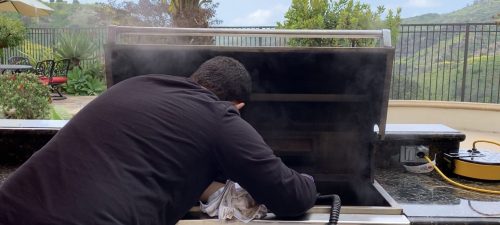
Cleaning is important, but a clean grill with damaged components can still be a problem. A complete approach looks at both grease accumulation and the condition of the grill itself.

Professional BBQ Cleaning

Removes heavy grease, carbon and cooking residue from accessible areas that routine grate brushing does not address.

Explore BBQ cleaning

Grill Inspection

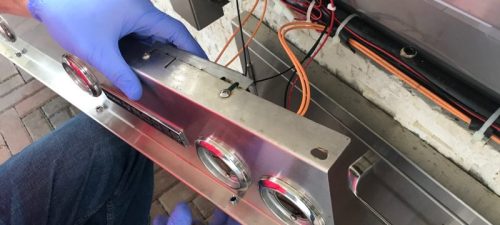
Useful when you are unsure about grill condition, visible deterioration, abnormal operation or whether the unit should be repaired.

Learn about inspections

BBQ Repair

Burners, ignition components, regulators and other serviceable parts can require diagnosis and replacement as a grill ages.

Explore BBQ repair

BBQ Maintenance

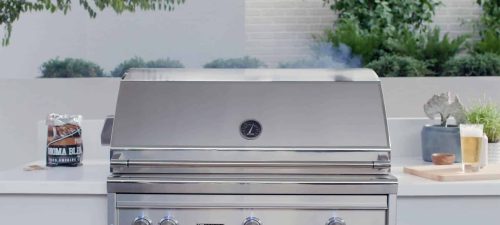
Routine cleaning, inspection and timely replacement of deteriorated components help keep small problems from being ignored.

Read our BBQ maintenance guide
Question 1 of 7 Score: 0
Fire Safety Quiz

Loading question…

Your Result

Grill Safety Score

0/7

Trusted Sources

Where This Safety Guidance Comes From

Pro Grill's role is grill cleaning, maintenance, inspection and repair. For national fire-prevention guidance, we rely on organizations whose job is fire and product safety.

National Fire Protection Association

NFPA publishes grilling fire statistics, research and homeowner grilling-safety resources.

Visit NFPA grilling safety

U.S. Fire Administration

USFA provides practical outdoor fire-prevention guidance, including grill placement, supervision, cleaning and safe zones.

Visit USFA outdoor fire safety

U.S. Consumer Product Safety Commission

CPSC publishes product-safety guidance covering gas hoses, connections, leaks, propane cylinders and charcoal carbon-monoxide hazards.

Visit CPSC grill safety
When Your Grill Needs Professional Attention

Keep Your BBQ Clean, Working Properly & Ready to Grill

Heavy grease buildup, repeated flare-ups, damaged burners, unreliable ignition, unusual flames or visible deterioration are all signs that your grill may need attention. Pro Grill can help with professional BBQ cleaning, inspection, repair, maintenance and replacement.

Safety information on this page is educational and does not replace the grill manufacturer's instructions, applicable fire or building codes, local fire-authority requirements or professional emergency response. Local rules for balconies, multifamily housing and outdoor kitchens can vary. If a fire is spreading, conditions are unsafe or you are unsure whether it can be controlled safely, move away and call 911.

Free Safety Resources for BBQ Grease Fire Safety

Grilling Safety

Social Media Card