


BBQ Briquette Trays: Cleaning, Rust, Repair & Replacement
Briquette trays are easy to overlook, but on grills designed around ceramic briquettes they are a critical part of the cooking system. The trays hold the briquettes above the burners at the intended height and spacing, help create the radiant heat layer, and live in one of the hottest and greasiest areas of the grill.
Over time, BBQ briquette trays can become coated with grease and carbon, rust through, warp, crack at welds, lose clips or supports, or become too weak to hold the ceramic briquettes correctly. Pro Grill cleans and evaluates these components during applicable professional BBQ cleaning services and can advise when cleaning is sufficient or replacement is the better solution.
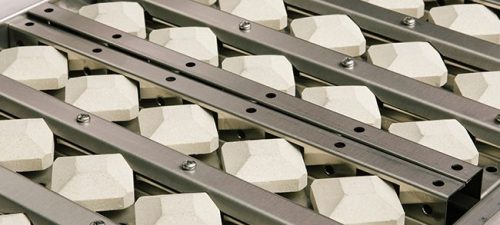
What is a BBQ briquette tray?
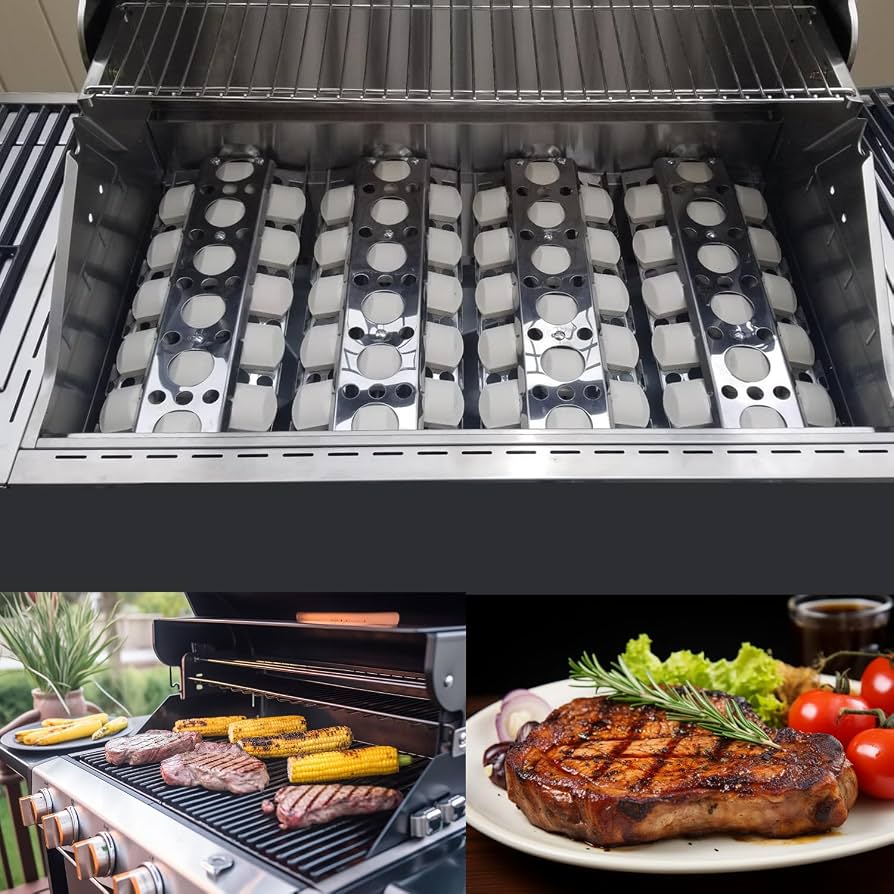
On many premium gas grills, ceramic briquettes do not simply sit loose inside the firebox. They are positioned in a metal tray or radiant assembly above the burners. Depending on the manufacturer, individual ceramic briquettes may be held by clips, tabs, channels, brackets or a formed stainless-steel framework.
The tray's job is more important than merely keeping the briquettes from falling. It positions the radiant material at the distance and orientation intended by the grill manufacturer. That relationship affects how burner heat reaches the cooking grates and how drippings interact with the hot components below.
Why BBQ briquette trays wear out
Briquette trays operate directly over gas burners, so repeated heating and cooling is unavoidable. Add grease, marinades, salt, outdoor humidity and long periods between cleanings, and the metal can eventually deteriorate. The rate depends on tray construction, grill usage and environment.
The briquettes and tray should be evaluated together
A tray can be in poor condition while the ceramic briquettes remain reusable. The opposite can also happen: a strong stainless tray may still be serviceable while its briquettes have cracked, crumbled or gone missing.
That is why we prefer to assess the complete radiant assembly rather than automatically replacing everything. Depending on the grill and parts availability, it may be possible to replace only the ceramics, only the tray, or a complete tray-and-briquette assembly.
Correct assembly matters. If briquettes shift because supports have failed, the heat-distribution layer may no longer resemble the arrangement the manufacturer intended.
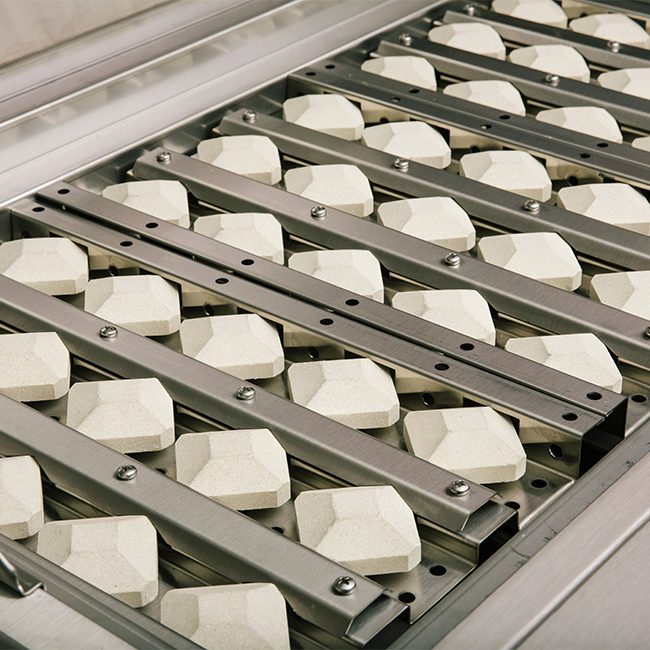
How Pro Grill cleans and evaluates briquette trays
During an applicable professional BBQ deep cleaning, we remove the cooking grates and heat-distribution components so we can reach areas that normal brushing cannot. Briquette trays can be especially deceptive because layers of black carbon and grease may make a structurally sound tray look terrible—or hide significant corrosion until the buildup is removed.
Our technicians clean the components according to their construction and condition. As the residue is removed, we can better inspect the frame, supports, clips, welds and surfaces that hold the briquettes. We also gain access to the burners beneath the trays, which should be evaluated separately.
We are not trying to sell a tray merely because it looks old. If it remains structurally usable after cleaning, that matters. If cleaning exposes thinning metal, holes, broken supports or severe warping, we can explain why replacement may be appropriate.
What is hiding underneath years of grease?
Professional cleaning lets us remove the cooking layers, clean the briquette system and get a much clearer look at the trays and burners underneath.
Briquette trays can collect substantial grease and carbon while also hiding corrosion, weakened supports and other wear underneath the buildup.
Can a rusty briquette tray still be used?
Not all visible oxidation means the same thing. Heat discoloration or light surface oxidation can look dramatic without indicating that the tray is structurally finished. The more important question is how much usable metal remains and whether the tray can still securely support the briquettes.
Deep pitting, flaking corrosion, holes, weakened edges, broken supports and sections that flex because material has disappeared are much more significant. Once corrosion has consumed the structure, no degreaser or cleaning process can put the missing metal back.
Coastal environments can be particularly demanding on outdoor appliances. Salt air, moisture and condensation can accelerate corrosion, especially when grease and debris remain trapped on internal components. Periodic cleaning does not eliminate normal aging, but it makes deterioration easier to identify before a tray completely collapses.
Why a warped briquette tray can affect the grill
A tray does not need to have a hole in it to be problematic. Severe warping can change where the briquettes sit relative to the burners and cooking grids. It can also make the assembly unstable in its supports or cause ceramic pieces to lean, shift or contact areas they were not intended to touch.
Some amount of heat discoloration is expected in a component positioned over a burner. Warping is different: it is a physical change in shape. If the tray no longer sits securely, cannot retain the briquettes correctly or interferes with other grill components, replacement may be the practical solution.
Heat damage should also prompt a broader look at the grill. Unusual flame patterns, excessive localized heat or a deteriorated gas valve or burner can sometimes contribute to cooking complaints. The visible tray may be only one piece of the diagnosis.
Small briquette tray parts can create big problems
Many tray assemblies rely on small metal clips, tabs or formed supports to retain individual ceramic briquettes. These parts repeatedly expand and contract with heat and can become brittle, corroded or damaged during years of use.
A missing clip may allow a briquette to tilt or fall out even though the main tray frame is still strong. Depending on the manufacturer, clips may be individually replaceable, included with replacement briquettes, incorporated into the tray, or unavailable separately.
This is one reason model identification matters. A generic piece of hardware may physically hold a briquette, but it may not be designed for the temperature, dimensions or assembly used by that grill. When possible, use the correct manufacturer-specified or compatible component.
When should a BBQ briquette tray be replaced?
Age alone is not the best test. A well-built tray on a maintained grill can remain usable long after another tray in a harsher environment has failed. We look at physical condition and function.
The tray is coated with grease and carbon but remains solid, correctly shaped and capable of securely supporting its briquettes.
Metal has rusted through, supports are broken, the tray is severely warped, welds have failed or the assembly can no longer hold briquettes correctly.
The tray remains structurally sound but ceramic pieces are crumbling, extensively cracked or missing.
The grill also has low heat, abnormal flames, ignition trouble or burner deterioration that cannot be explained by the tray alone.
How to inspect your briquette trays yourself
If your owner's manual permits removal of the radiant assembly, homeowners can perform a basic visual inspection. The grill should be completely off, cool and disconnected or isolated from its fuel source as instructed by the manufacturer before internal components are handled.
- Photograph the original tray and briquette arrangement before disassembly.
- Lift the assembly carefully; badly corroded trays can be weaker than they appear.
- Look for holes, thinning metal, flaking corrosion and broken welds.
- Check whether the tray sits flat and securely in its designed supports.
- Inspect retaining clips, tabs and channels that hold individual briquettes.
- Check the ceramic pieces for cracking, crumbling or missing sections.
- Look at the burners below for obvious corrosion or blockage.
- Reassemble components exactly as intended by the manufacturer.
For more homeowner maintenance information, visit our DIY BBQ maintenance guide. If the grill has gas leaks, damaged gas components or abnormal flame behavior, stop using it and have it evaluated rather than experimenting with gas-system repairs.
Why keeping the area around the trays clean matters
Briquette trays receive drippings directly from the cooking area. Grease can collect on the ceramic, tray surfaces, firebox and grease-management system. A neglected radiant assembly may therefore be only one part of a larger accumulation problem.
The U.S. Consumer Product Safety Commission recommends regularly cleaning grills according to the owner's manual and cleaning the grease trap to reduce the risk of flare-ups and grease fires. It also recommends inspection of gas hoses and having unresolved gas leaks repaired before the grill is operated.
Why model-specific briquette trays matter
Two trays that look nearly identical in a photo may differ in width, depth, support locations, briquette count, clip arrangement or height above the burner. Those differences can determine whether the assembly actually fits and functions as intended.
When replacing a tray, start with the grill manufacturer and model number. A serial number can also help when manufacturers changed components during a production run. If the original part has been discontinued, there may be a superseding assembly or compatible replacement designed for that model.
We do not recommend choosing a tray only because its outside dimensions are close. Correct positioning over the burner and beneath the cooking grid is part of the grill's design. Pro Grill's BBQ repair and parts service can help identify what has failed and whether an appropriate replacement is available.
Can damaged briquette trays cause uneven heat?
They can contribute. If a tray is warped, missing sections or allowing briquettes to shift, the radiant layer may no longer distribute heat as intended. But uneven heat can also begin below the tray.
A partially blocked, cracked or deteriorated burner can create an uneven flame pattern. Fuel-supply or valve problems can affect output. Dirty or damaged cooking grates can influence how the user experiences the heat at the food.
If the complaint is that the entire grill will not get hot, see our article Why Is My Gas Grill Not Getting Hot Enough?. Diagnosis should follow the heat path rather than replacing the first worn-looking part.
Briquette tray service for many premium BBQ brands
Radiant systems vary considerably by manufacturer and model. Pro Grill works on many premium and popular outdoor grill brands. Some use ceramic briquette trays, while others use different heat-distribution technologies.
Explore our BBQ brands page to learn more about the manufacturers we service.
A failed tray does not necessarily mean you need a new grill
On a quality built-in BBQ, briquette trays are often replaceable wear components. If the firebox, gas system and overall grill remain in good condition, replacing deteriorated trays can be far more practical than replacing the complete appliance.
This is particularly important with built-in outdoor kitchens. Complete grill replacement can involve cutout dimensions, countertop clearances, gas connections and compatibility with the existing island. Repairing worn internal components can extend the useful service life of the grill when appropriate.
If several major systems are deteriorated or parts are no longer available, replacement may become the better investment. Pro Grill can help with both BBQ repair and new BBQ replacement sales and installation.
Not sure whether the trays can be cleaned or need replacement?
Let us evaluate the grill as a complete system. Cleaning can reveal the condition of the tray, briquettes and burners so you can make a better repair decision.
Cleaning can help reveal tray failure before it becomes obvious
One of the challenges with briquette trays is that the cooking grates and ceramic pieces hide much of the metal. A tray can deteriorate for years without being obvious from the top of the grill. Thick grease and carbon can hide even more.
Periodic BBQ maintenance gives you an opportunity to remove these layers, clean the internal system and see what is actually happening. This can help identify a tray that is beginning to thin, a burner developing corrosion or briquettes that are starting to crumble before multiple components fail together.
For shared grills receiving frequent use, Pro Grill also provides service for HOAs, communities, clubhouses, cities and other non-residential BBQ installations.
Frequently asked questions about BBQ briquette trays
What is a briquette tray in a gas grill?
It is the metal assembly that holds ceramic briquettes above the burners on grills designed to use this type of radiant heat system.
Can BBQ briquette trays be cleaned?
Yes, structurally sound trays can often be cleaned as part of professional grill maintenance. Cleaning removes buildup but cannot restore missing or severely corroded metal.
When should a briquette tray be replaced?
Replacement may be appropriate when corrosion has created holes or severe thinning, supports or welds have failed, the tray is badly warped, or it can no longer retain the briquettes correctly.
Can I replace the tray and reuse the old briquettes?
Potentially. If the ceramics remain intact and the correct replacement tray is designed for them, they may remain usable. The parts should be evaluated together.
Can I replace the briquettes without replacing the tray?
Yes, when the tray remains structurally sound and only the ceramic pieces are deteriorated or missing.
Why is my briquette tray rusting?
Repeated high heat, grease, moisture, outdoor exposure and age can all contribute to corrosion. Coastal conditions can be especially demanding on outdoor appliances.
Can a warped tray cause uneven cooking?
It can contribute if the briquettes are no longer held at the intended position or spacing, although burner and fuel-system issues can also cause uneven heat.
What happens when the clips holding the briquettes break?
Briquettes can shift, tilt or fall out. Depending on the grill, clips may be replaceable separately or may be part of the complete tray assembly.
Do all gas grills have briquette trays?
No. Many grills use other heat-distribution systems such as metal flame tamers, ceramic rods or infrared components.
Can I use a universal briquette tray?
Only if it is specifically compatible with the grill. Correct dimensions, support locations, height and briquette arrangement matter.
Does Pro Grill inspect briquette trays during cleaning?
On grills equipped with them, accessible briquette trays are cleaned and their condition can be evaluated during the deep-cleaning process.
Can Pro Grill replace a damaged briquette tray?
When the correct part is available, Pro Grill can help identify and replace worn briquette trays and related BBQ components.
BBQ parts, cleaning, repair & replacement guides
Each component affects another. Explore our growing library of BBQ component guides to understand common problems, cleaning and replacement options.
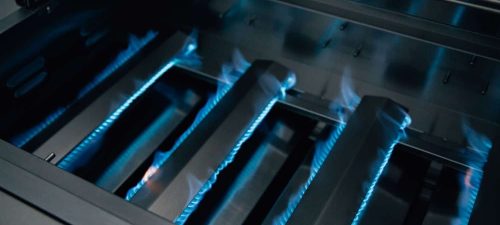 Burners
 Valves
 Ignition & Igniters
 Grates
 Briquettes
 Knobs
Knobs BBQ Parts & More
Find out what condition your briquette trays are really in.
If years of grease and carbon are hiding the internal condition of your grill, Pro Grill can deep clean the BBQ, evaluate accessible briquette trays and related components, and help determine what can remain in service and what may need replacement.