
DIY BBQ Maintenance: How to Maintain Your Grill Safely
Regular BBQ maintenance can help your grill cook better, reduce grease buildup, catch worn parts earlier and potentially extend the useful life of the equipment.
The good news is that many basic grill maintenance tasks can be handled at home. The key is knowing what is safe to do yourself, what deserves caution, and when it makes more sense to call a professional grill cleaning or BBQ repair company.
DIY BBQ Maintenance Checklist
Why regular BBQ maintenance matters
Your grill operates at high temperatures, gets exposed to grease and food residue, and often spends its entire life outdoors. Even a high-quality stainless-steel grill needs regular care.
Routine maintenance can help reduce grease and carbon buildup, maintain more consistent cooking performance, identify deteriorating parts earlier, reduce excessive flare-ups and help protect expensive grill components.
- Reduce grease and carbon buildup
- Keep cooking grids and racks cleaner
- Catch worn components before complete failure
- Keep grease-management areas from becoming overloaded
- Maintain exterior stainless-steel surfaces
- Potentially extend the useful life of the grill
Start with basic maintenance after cooking
You do not need to completely disassemble your grill after every cook. Consistent small maintenance tasks are usually much easier than dealing with years of accumulated grease later.
Take care of the cooking surface
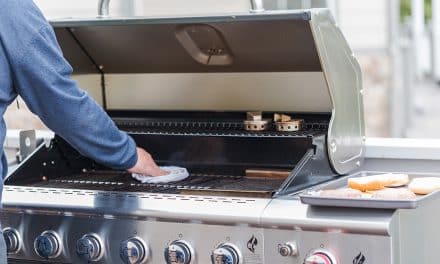
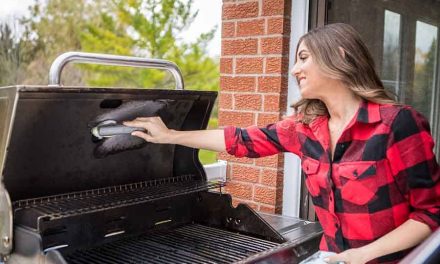
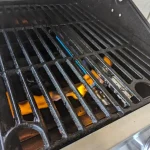
Once you are finished cooking, follow your grill manufacturer's recommendations for cleaning the cooking grids. Removing leftover food residue before it becomes repeatedly baked onto the surface makes future cleaning easier.
While you are there, look around the cooking area for excessive grease, food debris or anything that appears unusual.
Check the grease tray and drip pan
Grease does not disappear after cooking. Depending on the grill design, it may be directed into a tray, pan or other collection system.
Allowing excessive grease to accumulate can create odors, attract pests and contribute to unwanted flare-ups or fire hazards. Make checking the grease-management system part of your normal BBQ maintenance routine.
Maintain exterior stainless steel
Stainless steel is durable, but it still benefits from regular care. Use a cleaner appropriate for your grill's finish and follow the manufacturer's instructions.
When wiping brushed stainless steel, work with the direction of the grain rather than aggressively scrubbing across it. Be cautious with abrasive pads and strong chemicals, which can alter or damage certain finishes.
Look inside the grill — not just at the cooking grids
One of the biggest DIY BBQ maintenance mistakes is assuming that clean cooking grids mean the entire grill is clean.
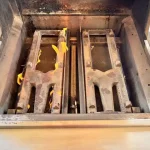
Underneath the cooking surface may be burners, briquette trays, ceramic briquettes, flame tamers, heat shields and other components. Below them is the firebox, where grease and debris can accumulate over time.
Periodically inspect accessible areas for:
- Heavy grease buildup
- Excessive carbon deposits
- Rust or corrosion
- Cracked or deteriorating burners
- Damaged heat shields or briquette trays
- Broken ceramic briquettes
- Loose or deteriorated components
- Areas where grease has accumulated excessively
Has the buildup gone beyond normal DIY cleaning?
Pro Grill provides professional BBQ grill cleaning at your home. Our technicians deep clean applicable areas of the grill to remove accumulated grease, carbon and cooking residue.
Check your grill burners
Burners are among the most important components in a gas grill. When the grill is operating, pay attention to changes in flame, heat and ignition behavior.
Watch for signs such as:
- One section of the grill is much hotter than another
- A burner is difficult to ignite
- Part of a burner does not light
- The grill struggles to reach normal cooking temperatures
- Flame behavior looks different from normal
- Burners appear cracked, severely corroded or structurally deteriorated
Inspect your grill igniters
Depending on the grill, ignition problems can involve batteries, electrodes, wiring, spark generators or ignition modules.
Some grills make battery replacement simple and clearly explain the procedure in the owner's manual. More complicated ignition troubleshooting may be better handled by a BBQ repair technician.
Inspect accessible hoses and gas connections
Before using your grill, visually inspect accessible hoses and connections for obvious signs of damage or deterioration.
Look for
- Cracking
- Abrasion
- Kinks
- Heat damage
- Deterioration
- Loose or damaged components
If you smell gas
Do not continue operating the grill to see whether the problem goes away. Turn the grill off and follow the manufacturer's safety instructions.
A suspected gas leak is not the time to experiment with a DIY repair.
Do not forget what is around and underneath the grill
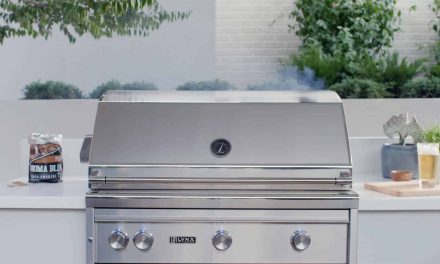
Built-in BBQs are often installed in outdoor islands, which means owners naturally focus on the equipment visible from above.
Keep surrounding storage areas clear of unnecessary combustible materials and do not block ventilation openings designed into the outdoor kitchen.
For ventilation, clearances and installation requirements, follow the installation manual for your specific grill. Different fuel types and manufacturers may have different requirements.
How often should you maintain your BBQ?
There is no single maintenance schedule that fits every grill. A grill used four nights a week needs attention sooner than one used only occasionally.
Consider:
- How frequently you cook: more use means more grease, residue and wear.
- What you cook: fatty foods can create significantly more grease.
- Where the grill lives: weather, coastal exposure and outdoor conditions matter.
- The grill's age: older components often deserve closer inspection.
- Performance changes: ignition, heat and flame changes should not be ignored.
When routine BBQ maintenance becomes a professional deep cleaning
Homeowners can reasonably handle basic tasks such as maintaining cooking surfaces, emptying grease trays, wiping exterior stainless steel and performing visual inspections.
Professional BBQ cleaning goes considerably further. It is designed to address accumulated grease, carbon and residue throughout accessible areas of the grill—not simply make the grates look cleaner.
Professional service may be worthwhile when:
- The grill has not been thoroughly cleaned in a long time
- Grease and carbon buildup are substantial
- You experience excessive flare-ups
- Internal components are difficult to inspect because of buildup
- You purchased a home with an existing built-in grill
- You do not know the grill's maintenance history
- You own a premium grill you want to maintain properly
- You simply do not want to spend hours cleaning a greasy BBQ
Rather have the grill cleaning pros handle it?
Pro Grill comes directly to your home for professional BBQ cleaning. Book your service online or contact our team.
Things we would not recommend casually DIYing
A gas grill is an appliance with fuel-delivery, ignition and heat-management systems. Some maintenance tasks are simple; others deserve more caution.
Suspected gas leaks
Stop using the grill and follow the manufacturer's safety instructions. Do not keep operating it while trying to locate the problem.
Gas valves and manifolds
Unless the manufacturer's instructions specifically describe a homeowner-serviceable procedure that you are qualified to perform, fuel-delivery system work is better left to an appropriate professional.
Regulators
A grill that is not getting hot can have several possible causes. Do not automatically replace or modify fuel-delivery components based solely on an internet diagnosis.
Major disassembly
Taking a grill apart is often easier than putting it back together correctly. If you are unsure how a component is installed or whether removing it affects gas or electrical systems, stop before proceeding.
Modifying grill parts
Do not drill burners, enlarge burner ports, alter gas orifices or modify components in an attempt to make the grill hotter.
When should you call a BBQ repair professional?
Consider professional inspection or repair if:
- The grill will not ignite
- Burners will not remain lit
- The grill is not getting hot enough
- Heat is extremely uneven
- You notice unusual flame behavior
- Burners are visibly deteriorated
- Ignition components repeatedly fail
- Internal parts have collapsed or deteriorated
- The grill's performance has noticeably changed
- You are unsure whether a component should continue to be used
Cleaning cannot repair a failed component. That is why Pro Grill provides both professional BBQ cleaning and BBQ grill repair.
Can regular maintenance help your grill last longer?
Regular cleaning and maintenance can help protect the equipment you already own. When maintenance is ignored, grease continues accumulating, components continue deteriorating and several problems may eventually appear at once.
This is especially important with premium built-in grills. Replacing a quality built-in BBQ can be a substantial expense. Keeping an existing grill clean and addressing worn components as needed may help you get more useful years from it.
DIY BBQ maintenance checklist
Before cooking
- Visually inspect the grill
- Check accessible hoses and connections
- Look for unusual damage
- Confirm the grease area is not overloaded
- Follow the manufacturer's lighting procedure
After cooking
- Clean cooking grids as recommended
- Remove excessive food residue
- Check for grease accumulation
- Turn controls off properly
- Follow manufacturer fuel shutoff instructions
Periodically
- Inspect burners
- Inspect briquette trays or heat shields
- Check ignition performance
- Clean the grease tray
- Inspect grease and carbon buildup
- Look for corrosion or deterioration
When needed
- Replace worn components
- Schedule professional BBQ repair
- Schedule professional deep cleaning
- Evaluate repair versus replacement
Pressure washers, oven cleaner & heavy buildup
Should you pressure wash a BBQ grill?
Be cautious. Grills contain ignition components, wiring, burners, valves and other areas that are not necessarily designed to be blasted indiscriminately with water. Follow the manufacturer's cleaning instructions for your specific grill.
Should you use oven cleaner on a BBQ grill?
Do not assume a chemical appropriate for an oven is appropriate for every BBQ component. Grills may contain stainless steel, cast materials, ceramic components, painted finishes, aluminum and other materials. Follow manufacturer instructions and product warnings.
What if the grill has years of grease buildup?
Heavy baked-on grease and carbon can be extremely time-consuming and messy to remove. It can also hide the condition of components underneath.
Skip the mess.
If your BBQ has reached the point where routine cleaning is no longer enough, schedule a professional grill cleaning with Pro Grill.
Frequently asked questions
Can I maintain my own gas grill?
Yes. Basic maintenance such as cleaning cooking surfaces, emptying grease trays, wiping exterior surfaces and visually inspecting accessible components can often be handled by homeowners. Follow the manufacturer's instructions for your specific grill.
How often should I deep clean my BBQ?
It depends on how frequently the grill is used, what you cook and how quickly grease and carbon accumulate. A frequently used grill will generally require attention sooner than an occasionally used grill.
Why does my grill keep flaring up?
Some flare-ups are normal, particularly when cooking fatty foods. Excessive or persistent flare-ups can be associated with grease accumulation or other conditions that deserve attention.
Should I repair or replace my old grill?
That depends on the grill's age, brand, overall condition, availability and cost of parts, and the extent of needed repairs. Premium built-in grills can sometimes be worth repairing rather than replacing.
Can professional grill cleaning help my BBQ last longer?
Keeping equipment properly maintained and addressing deterioration before it becomes more extensive can help protect your investment and may extend its useful service life.
Does professional cleaning replace grill repair?
No. Cleaning removes accumulated grease and residue; it does not repair failed burners, igniters or other damaged components. A grill may need cleaning, repair or both.
DIY maintenance helps. Professional deep cleaning goes further.
Keep the cooking surfaces maintained, do not let grease trays overflow, inspect accessible components, and pay attention to changes in ignition, heat and flame behavior.
When the grill needs more than routine maintenance, Pro Grill can help with professional cleaning, inspection and repair.