Why Is My Gas Grill Not Getting Hot Enough?
If your gas grill will not get hot enough, heats very slowly or suddenly will not reach the temperature it used to, there are several possible causes—some simple enough to check yourself and others that should be left to a grill repair professional.
This guide walks through the most common reasons a gas grill is not getting hot, safe DIY checks you can make at home, and the signs that it is time to stop troubleshooting and call a pro.
What is your grill actually doing?
Before replacing parts, identify the symptom. A grill that is weak on every burner can point toward a different problem than a grill with one burner that will not heat properly.
Things you can safely check before calling for grill repair
Still not getting enough heat?
If the simple checks do not solve the problem, Pro Grill can inspect your BBQ, identify the likely cause and recommend the appropriate repair.
Why a gas grill may not be getting hot enough
Low propane or restricted fuel supply
Sometimes the problem is simple: the propane cylinder is low, a supply valve is not fully open, or the grill is not receiving the amount of fuel it normally receives.
Start with the basic fuel checks recommended by the manufacturer before replacing components.
The propane regulator may be limiting gas flow
Many propane grills use a regulator designed to control gas pressure. In some situations, a grill can enter a low-flow condition that results in unusually small flames and poor heat.
Some manufacturers provide a specific regulator-reset procedure in the owner's manual. Follow the instructions for your exact grill rather than using a generic internet procedure.
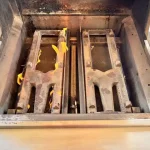
Dirty or deteriorated grill burners
Burner ports can become obstructed, and burners can deteriorate after years of repeated heating and cooling.
A damaged burner may produce uneven flames, weak heat or a section of the grill that does not perform normally.
Clean only according to the manufacturer's instructions. Do not enlarge burner openings or modify the burner.
Heavy grease and carbon buildup
Years of grease, carbon and food residue can accumulate beneath the cooking surface and around heat-distribution components.
Heavy buildup does not always directly explain every low-heat problem, but it can affect grill performance, make components harder to inspect and hide deterioration underneath.
Is the grill dirty and not heating properly?
Sometimes the grill needs more than one thing. Pro Grill provides professional BBQ cleaning and repair, so we can help determine whether the problem is maintenance, a failed component or both.
Damaged briquette trays, heat shields or flame tamers
These components help distribute and manage heat inside many grills. When they are badly deteriorated, collapsed or missing, cooking performance can change noticeably.
A burner may not be lighting completely
If one burner or part of a burner is not igniting, the grill may feel much cooler overall. Ignition problems can involve electrodes, wiring, ignition modules or the burner itself.
Hose, valve, manifold or gas-delivery problems
Problems in the fuel-delivery system can affect how much gas reaches the burners. This is where DIY troubleshooting should become much more cautious.
What if a built-in natural gas grill is not getting hot?
Built-in natural gas grills can have some of the same burner and maintenance issues as propane grills, but the fuel system is different.
Low heat can be related to burner condition, heat-distribution components, fuel supply, valves, installation issues or other components specific to the grill and gas system.
Do not modify gas orifices or fuel-delivery components in an attempt to increase heat. Built-in grills are designed for specific fuels and gas-pressure requirements.
When should you call a BBQ grill repair professional?
Basic checks are useful, but there is a point where continuing to experiment can waste time or create unnecessary risk.
- The grill still has weak heat after basic manufacturer-recommended checks
- Burners are cracked, severely corroded or visibly deteriorated
- You smell gas or suspect a gas leak
- Flames are abnormal or inconsistent
- Only part of a burner lights
- The grill repeatedly enters a low-heat condition
- Ignition components are failing
- The grill has multiple deteriorated internal components
- You are unsure whether a gas component is safe to continue using
Let a grill expert diagnose the problem.
Pro Grill provides professional BBQ and grill repair for built-in and freestanding outdoor grills. We come directly to your home.
Is the problem weak flames, low temperature, or both?
A gas grill that will not get hot enough does not always have the same underlying problem. Sometimes the burners produce obviously weak flames. In other cases, the flames look fairly normal but the grill still struggles to reach the temperature it once did.
That distinction matters because weak flames often point toward a fuel-delivery, regulator or burner-flow issue, while normal-looking flames combined with poor cooking temperature can also involve heat-distribution components, missing parts, damaged internal components, excessive buildup or even an inaccurate lid thermometer.
If the flame itself looks weak
Check the basic fuel supply first. For propane grills, confirm there is adequate fuel in the cylinder and that the tank valve is operating normally. For natural-gas grills, confirm the appliance is connected and the supply valve is positioned according to the manufacturer's instructions.
If the flame looks normal but the grill is still cool
Look at the rest of the cooking system. Briquette trays, flame tamers, heat shields and other internal components help distribute heat. If those parts are severely deteriorated, missing or out of position, the grill can cook very differently even when the burners themselves are operating.
Why a propane grill may suddenly stop getting hot
Propane grills can sometimes develop a low-heat condition after the tank has been changed, the cylinder valve has been opened too quickly, or the regulator senses what it interprets as abnormal gas flow. Many grill owners describe the result as a grill that suddenly will not get hotter than 250 to 350 degrees even though it worked normally before.
Some grill manufacturers publish a specific procedure for resetting the regulator or clearing a low-flow condition. If your owner's manual includes one, follow that procedure exactly. Do not assume every regulator works the same way.
Why replacing the regulator first can be a mistake
A low-temperature grill can also be caused by burners, valves, hoses, fuel supply, internal buildup or other components. Replacing the regulator without confirming the cause can waste money and leave the original problem unresolved.
Why built-in natural-gas grills can have low heat
Natural-gas grills do not use the same portable cylinder and regulator arrangement found on most propane grills, but they can still experience low-heat problems. Common possibilities include burner deterioration, restricted gas flow, valve issues, installation problems, incorrect gas pressure or components that are not matched to the intended fuel type.
One of the most important things to understand is that propane and natural gas are not interchangeable without the correct manufacturer-approved components and conversion procedure. Orifices, gas pressure and other parts may differ depending on fuel type.
If your built-in natural-gas grill has always struggled to reach temperature, the issue may be related to the original installation rather than normal wear. If it used to heat normally and no longer does, deterioration, maintenance or a component failure may be more likely.
How deteriorated burners can reduce grill heat
Gas grill burners live in one of the harshest environments inside the appliance. They are repeatedly heated, cooled, exposed to grease, moisture and outdoor conditions, and eventually many burners deteriorate.
A burner with blocked ports may not distribute flame evenly. A burner with severe corrosion or structural damage may produce irregular flames or fail to deliver heat across the cooking surface the way it once did.
Signs a burner may need attention
- Part of the burner does not light
- Flames are noticeably weaker in one section
- The grill has developed severe hot and cold spots
- The burner has visible cracks, splits or large corrosion holes
- The burner repeatedly fails to ignite correctly
- The grill takes much longer than normal to preheat
Surface cleaning can help when ports are obstructed by ordinary debris, but a structurally deteriorated burner usually needs replacement rather than more cleaning.
Not sure if the burners are dirty or worn out?
Pro Grill can inspect the grill, clean heavy buildup and identify components that appear to need repair or replacement.
Can insects cause a gas grill to have low heat?
Yes, depending on the grill design. Outdoor gas appliances can attract spiders and insects, and debris can collect in burner tubes or venturi areas. If airflow or gas flow is disrupted, burner performance can change. The U.S. Consumer Product Safety Commission's gas grill safety guidance specifically recommends checking venturi tubes for blockage from insects, spiders or food drippings.
This does not mean every low-heat problem is caused by insects, but it is one reason grill manufacturers often include burner and venturi inspection in their maintenance instructions.
If your manufacturer explains how to safely remove and inspect a burner, follow those instructions carefully. If the burner is difficult to access, heavily corroded or connected in a way you are not comfortable servicing, professional inspection is the safer choice.
Briquettes, heat shields and flame tamers matter more than you may think
Burners create the flame, but they are not the only parts responsible for how heat reaches the food. Many grills use ceramic briquettes, briquette trays, flame tamers or heat shields to spread heat, protect burners and vaporize drippings.
When these components collapse, rust through, warp or go missing, the grill may develop uneven heat, increased flare-ups or a noticeably different cooking pattern.
This is especially common on older premium built-in grills where the burners may still function but the heat-distribution system has deteriorated after years of use.
If replacement parts are available, restoring these components can sometimes make a significant difference in how the grill cooks without replacing the entire appliance.
What if the grill is hot but the thermometer is wrong?
Sometimes the grill may be producing more heat than the lid thermometer suggests. Built-in analog thermometers can become inaccurate over time, and their location in the hood does not necessarily represent the exact temperature at the cooking grate.
If the grill seems to cook normally but the temperature reading suddenly appears much lower than expected, compare the reading with an appropriate independent grill thermometer rather than assuming the burners have failed.
If the independent temperature is also low, continue troubleshooting the grill itself. If the cooking temperature is normal but the hood gauge is not, the thermometer may simply need replacement.
Can cold weather or wind make a gas grill run cooler?
Outdoor conditions can affect preheat time and cooking temperature. Strong wind can remove heat from the grill and may interfere with normal burner performance. Cold weather can also increase the amount of time required to preheat.
However, weather should not be used to explain away a major change in performance. If the same grill previously reached normal temperatures under similar conditions and now cannot, a maintenance or equipment issue is more likely.
Always use outdoor grills in locations and clearances permitted by the manufacturer. Do not improvise wind barriers that could block required ventilation or create unsafe heat around combustible materials.
Can a dirty grill cause low heat?
It can contribute to performance problems, especially when buildup is heavy enough to obstruct burner areas, interfere with heat-distribution components or make it difficult to identify deteriorated parts.
Grease and carbon buildup can also contribute to flare-ups and uneven cooking. That said, a professional cleaning cannot repair a failed regulator, damaged valve or structurally deteriorated burner.
This is why a dirty grill that also has a performance problem may need both cleaning and repair. Removing the heavy buildup first can make the internal condition easier to evaluate and help distinguish a maintenance issue from a mechanical failure.
Heavy buildup inside the grill?
Pro Grill provides professional deep cleaning at your home. If we also identify a repair concern, our team can help explain the next step.
What not to do when your grill will not get hot
When a grill suddenly loses heat, it is tempting to start replacing or modifying parts until something changes. That approach can become expensive and, when gas-system components are involved, unsafe.
Do not drill burner ports larger
Enlarging burner openings changes the way the burner was designed to distribute gas.
Do not enlarge gas orifices
Gas orifices are sized for specific fuel and pressure requirements. Modifying them can create an unsafe appliance.
Do not bypass a regulator
Regulators are part of the fuel-control system. A suspected regulator problem should be diagnosed, not defeated.
Do not keep testing a grill that smells like gas
If you smell gas or suspect a leak, stop using the grill, shut it down according to the manufacturer's instructions and have the condition addressed before operating it again.
Do not assume every low-heat problem needs a new grill
Many quality grills can be repaired. Burners, ignition parts, briquette trays, heat shields and other components are often replaceable when parts remain available.
What should you check first when a gas grill is not getting hot?
A logical order can save time and help prevent unnecessary parts replacement.
A low-heat grill does not automatically need replacing
Burners, igniters, briquette trays, heat shields and other components wear over time. On many quality grills, replacing the failed component can make more sense than replacing the entire BBQ.
Replacement may become more practical when the grill has structural deterioration, unavailable parts or several major failures at the same time.
Frequently asked questions
Why is my gas grill only getting to 300 degrees?
Possible causes include low fuel, restricted gas flow, a regulator issue, dirty or damaged burners, incomplete burner ignition or other component problems. Start with the manufacturer-recommended basic checks before replacing parts.
Why are the flames on my gas grill so low?
Low flames can be associated with fuel supply, regulator operation, burner obstruction or other gas-flow problems. If the condition persists after basic checks, professional diagnosis is appropriate.
Can dirty burners make a grill run cooler?
Obstructed or deteriorated burners can affect flame distribution and heat output. Clean burners only according to the grill manufacturer's instructions.
Should I replace my grill regulator if the grill is not hot enough?
Not automatically. Low heat can have several causes. Follow the manufacturer-approved troubleshooting procedure first and avoid replacing gas-system components based on guesswork.
Can professional grill cleaning fix a low-heat grill?
Cleaning can remove grease and buildup and make components easier to inspect, but it cannot repair a failed burner, regulator, valve or ignition component. Some grills need cleaning, repair or both.
Why does my gas grill take so long to preheat?
Slow preheating can be related to fuel supply, regulator operation, burner condition, weather, internal buildup or deteriorated heat-distribution components. Compare current performance with how the grill normally operated under similar conditions.
Why is only one side of my gas grill getting hot?
A single cold section often points toward a localized burner, ignition or heat-distribution problem rather than a whole-grill fuel issue.
Can a clogged burner cause low flame?
Yes. Obstructed burner ports or debris in burner tubes can affect flame distribution. Follow the manufacturer's burner-cleaning instructions and do not enlarge burner openings.
Can spiders cause grill burner problems?
Spiders and insects can sometimes enter burner or venturi areas on outdoor gas grills and contribute to restricted airflow or gas flow. Follow the manufacturer's inspection procedure for your grill.
Can bad briquette trays make my grill cook poorly?
Yes. Severely deteriorated briquette trays, flame tamers or heat shields can change how heat is distributed across the cooking surface.
Can the grill thermometer be wrong?
Yes. Hood thermometers can become inaccurate over time. If the grill appears to cook normally but the gauge reads unusually low, compare it with an appropriate independent thermometer.
When should I stop using a gas grill that is not heating correctly?
Stop using the grill if you smell gas, suspect a leak, see damaged gas components or observe a condition that appears unsafe. Follow the manufacturer's safety instructions and have the grill evaluated before using it again.
Stop guessing and let a grill pro take a look.
If your BBQ is not heating properly after the basic DIY checks, Pro Grill can help diagnose the problem, repair worn components and professionally clean the grill when needed.