
Grill Not Getting Gas With a Full Propane Tank? What to Check
A full tank and no flame usually points to the regulator's flow limiter or a hose problem, not an empty tank. Here is how to check each part in the order a tech would.
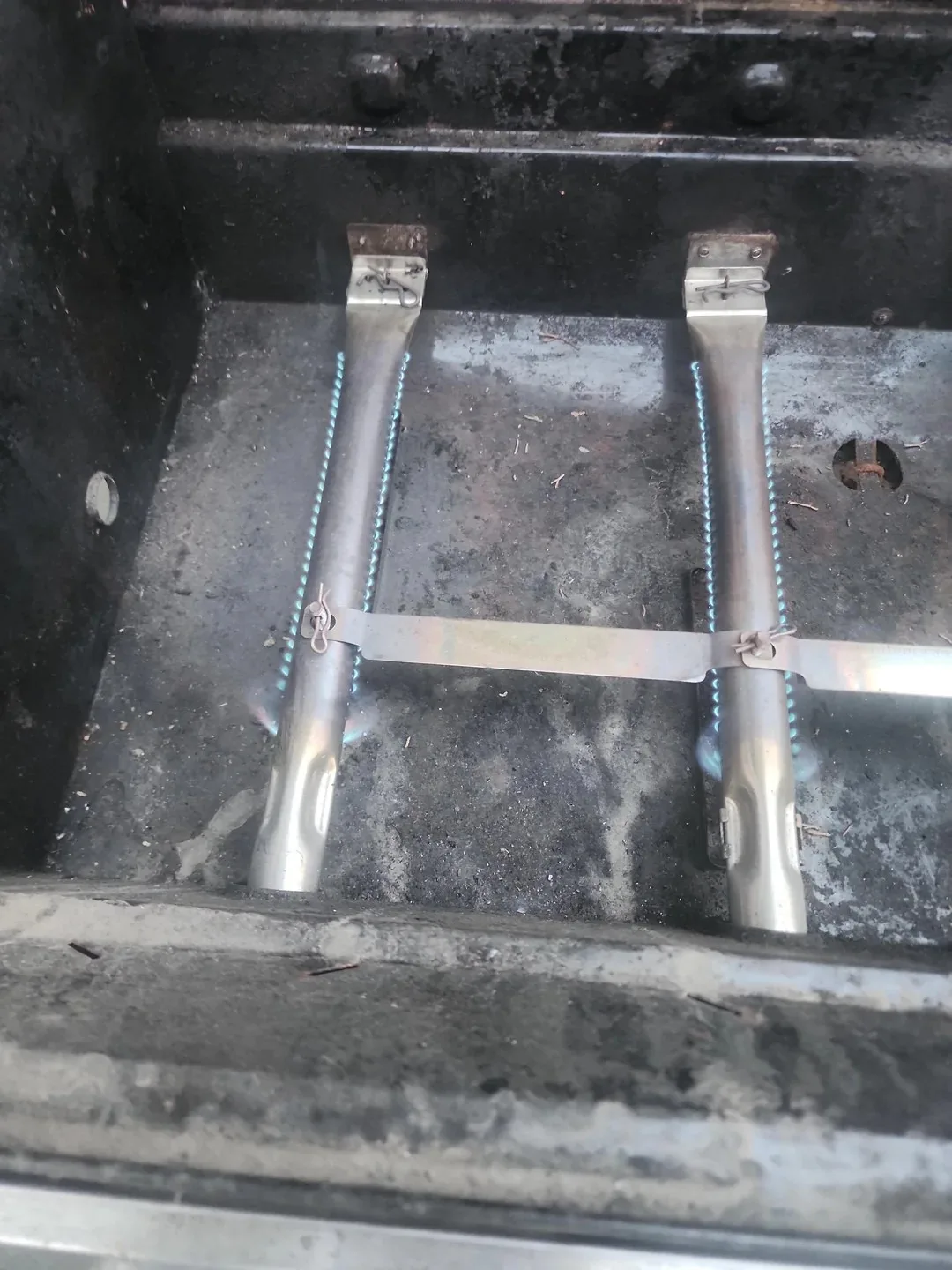
Short answer: if the tank is full but the burners won't light or the flame stays tiny, the cause is usually the regulator's built-in flow limiter (sometimes called the bypass or safety valve) tripping. The fix is a reset, which takes about five minutes. If a reset doesn't work, look for a kinked or damaged hose, a loose or cross-threaded tank connection, or a regulator that has failed.
Safety first: if you smell gas
If you smell gas at any point, turn the tank valve off, move away, keep flames and sparks out of the area, and don't use the grill. Call a pro. If the smell is strong or you can hear hissing you can't stop, leave the area and call your gas supplier or 911 from a safe distance. Don't test for leaks with a lighter or match, ever.
What you're seeing and what it usually means
| Symptom | Most likely cause |
|---|---|
| Click, click, no flame, no gas smell | Flow limiter tripped, tank not really full, or a closed tank valve |
| Flames come on but stay about an inch high, even on High | Regulator in bypass mode (the most common one) |
| Grill never gets past 250 to 300 degrees | Same as above, or a weak regulator |
| Gas smell near the tank or hose | Leak at a connection or a cracked hose. Shut off and see the safety note above |
| Hissing from the regulator | Failing regulator. Shut off the tank and replace it |
Step 1: Confirm the tank really has gas
Don't trust a tank that "feels heavy." A standard 20 lb tank has its empty weight stamped on the collar as TW (tare weight), usually around 17 to 18 lb. Add up to about 20 lb of propane and a full tank weighs roughly 37 to 38 lb on a bathroom scale. Also confirm the tank valve is open, turned counterclockwise until it stops.
A tank swap at an exchange cage is fine, but exchange tanks are sometimes filled low. If you just swapped and the grill acts up, try the reset below before you blame the grill.
Step 2: Look over the hose and connection
With everything off and the tank valve closed, trace the hose from the tank to the grill.
- Kinks and pinches. A cart door, a tank tray, or a hose resting on a hot firebox panel can flatten it.
- Cracks, brittle spots, or soft spots. Flex it gently and look for cracking, especially near the fittings. Sun and heat age rubber and braided hoses.
- Damaged threads or a worn tank connector. Look at the plastic nut on the regulator and the tank valve threads. A cross-threaded or worn nut can seat badly.
- Debris in the connection. Spider webs and dirt at the fittings cause trouble more often than you'd think.
Tighten the tank connection by hand only. Don't use a wrench on a plastic nut. If the hose or connector is damaged, replace it. Don't tape or patch it.
Step 3: Leak test before you do anything else
Mix about half dish soap and half water. Open the tank valve slowly, with all burner knobs off. Brush the soapy water on the tank valve, the regulator fittings, and both ends of the hose. Growing bubbles mean a leak.
Close the tank valve right away if you see bubbles. Disconnect, reseat the connection, and test again. If it still bubbles, the part needs replacing before the grill gets used. Rinse the soap off when you're done.
Step 4: Reset the regulator (fixes most of these)
Most propane regulators have a flow-limiting device. If the tank valve is opened quickly, or there's a small leak, or the burners were left on, the device clamps down and lets only a trickle through. The grill then looks like it's starved for gas. Resetting it clears the limiter. Check your owner's manual too, since a few brands vary slightly.
- Turn every burner knob to Off, including side burners and rotisserie burners.
- Close the tank valve fully.
- Disconnect the regulator from the tank.
- Leave the lid open and wait a minute or two. Some manuals also have you set the knobs to High for a moment to bleed the line, then back to Off. Follow yours.
- Reconnect the regulator to the tank, hand-tight.
- Open the tank valve slowly, all the way, over a few seconds. Opening it fast is what trips the limiter in the first place.
- Wait 30 to 60 seconds for pressure to settle.
- With the lid open, light the grill the way the manual says. Start with one burner, then bring the others on.
If the flames now run full height and blue, you're done. Leak test the connection once more if you disturbed it.
Step 5: The tank's own safety valve
Modern tanks have an overfill protection device (OPD) on the valve, and the tank connector has an internal excess flow feature. It's the same idea as the regulator limiter. A fast open or a sudden surge can make it restrict flow. The reset above usually clears it too.
If you tried the reset and it still doesn't flow, swap in another tank if you can. A different tank that works means the first tank's valve is the problem, and the exchange cage or fill station can deal with it. Don't try to repair a tank valve yourself.
When the regulator itself is bad
A regulator that fails the reset needs replacing. Signs include:
- Flames stay low every time, even after multiple resets
- Hissing or a gas smell from the regulator body
- Rust, corrosion, or a damaged vent cap
- A regulator left exposed to rain and sun for years
Regulators and hoses are usually sold together and matched to the grill. You can find the right one by brand on our parts diagrams and order it at the Pro Grill parts store. We sell parts for Lynx as well as the brands we service, though we don't sell Lynx grills. Match the connector type and hose length to the original so it fits your cart or island.
Built-in grills on a plumbed line
Many built-in grills run on a hard-piped natural gas or propane line to the island, not a portable tank. In that case the hose is a short flex line behind the grill, and the shutoff valve sits somewhere in the island. Check that the shutoff is open. If a regulator sits on the line, it can trip the same way after a gas outage or work on the home's gas supply. Don't disconnect plumbed gas fittings yourself. Have an insured pro do it.
If the gas is fine but the grill still won't cooperate
Once gas is reaching the grill and the flames are full size, the problem moved. Go to our guides on grills that won't light and gas grills that aren't getting hot. Weak ignition is often a bad igniter or electrode. Igniters can run as much as $60 each. Burned-out burners are costlier: a typical Lynx burner is over $500, and a ProSear burner is over $700. Labor generally runs $200 to $500 depending on how complex the parts are to install.
When to call a pro
Call someone if you smell gas that you can't trace to a fitting you can fix, if the hose or regulator is damaged, or if a reset and a replacement regulator still don't give you a full flame. A professional visit to inspect and diagnose is $199, and we give 50% back if you do any needed work with us. If you're outside our Southern California and Arizona area, find an insured grill pro near you.
Find your model on our parts diagrams, tap the part, and order it, or text a photo of the rating plate to 888-418-4226.
FAQ
Why is my grill flame so low with a full propane tank?
The regulator's flow limiter has most likely tripped, which restricts gas to a trickle. Turn everything off, disconnect the regulator, reconnect, open the tank valve slowly, wait about a minute, then relight.
How do I reset a propane regulator?
Turn all burners off, close the tank valve, disconnect the regulator, wait a minute or two, reconnect hand-tight, and open the tank valve slowly. Wait 30 to 60 seconds before lighting with the lid open.
Can a kinked or old hose stop gas from reaching the grill?
Yes. A pinched hose can restrict flow, and a cracked one can leak. Replace a damaged hose rather than patching it, and leak test the new connections with soapy water.
How can I tell if a propane tank is really full?
Weigh it. A 20 lb tank weighs about 37 to 38 lb full, and its empty weight is stamped on the collar as TW. A tank that weighs close to the TW is empty.
Is it safe to test a propane leak with a flame?
No. Brush on a 50/50 mix of dish soap and water and look for growing bubbles. If you smell gas, shut the tank valve off and call a pro.
More troubleshooting
See all →
Gas Grill Keeps Going Out? 9 Reasons Your Grill Won’t Stay Lit
A grill that lights then dies is getting enough gas to start but not to stay stable. Here are nine common causes, with signs to help you narrow down …
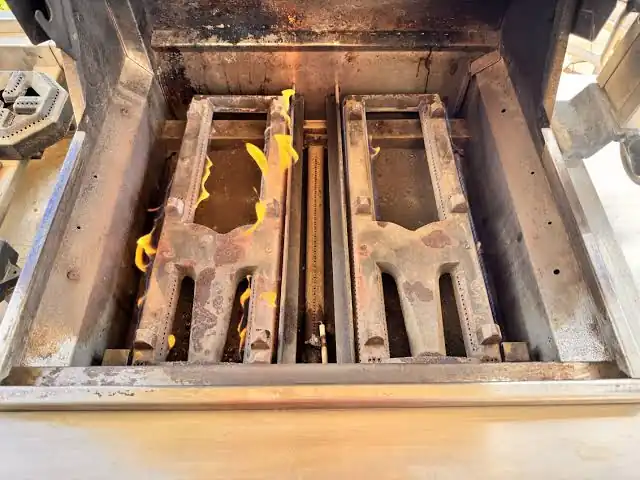
Grill Heating Unevenly? Causes of Hot & Cold Spots
Hot and cold spots usually trace back to the burners, clogged ports, briquette trays, heat shields or grease. Here is how to find which one is causin…
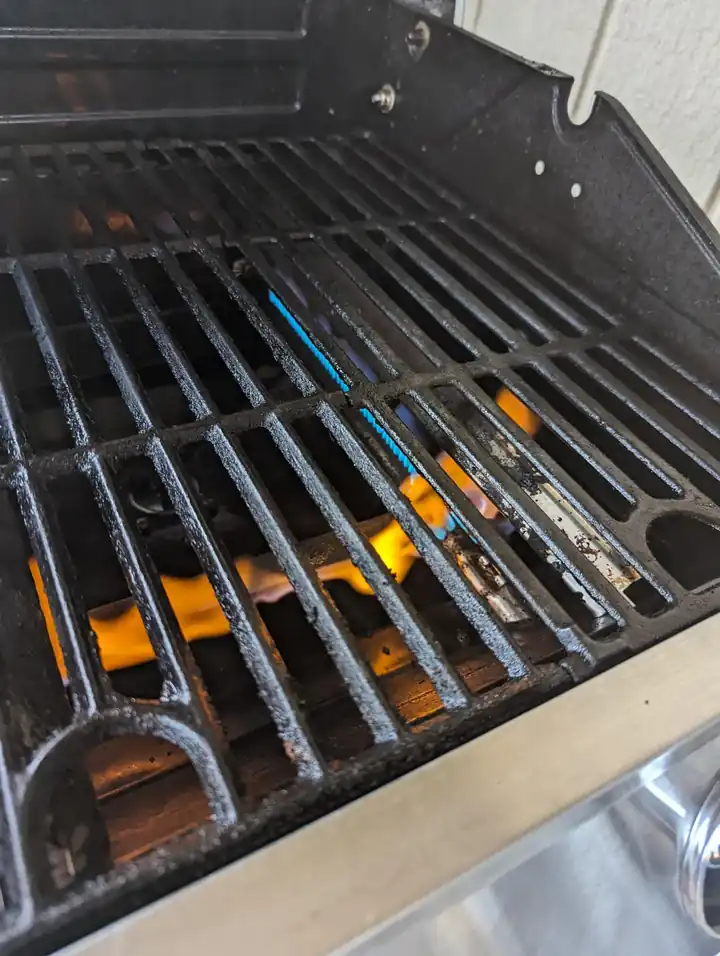
Why Is My Gas Grill Flame Yellow? What the Flame Color Means
Yellow or orange flames usually mean the burner isn't mixing gas and air properly. Here's what each flame color means, the common causes, and when to…