
When to Replace Your Grill Burner: A Tech's Checklist
Most burner complaints are dirt or adjustment. Here is how to tell those from a burner that is actually worn out, and what replacing one involves.
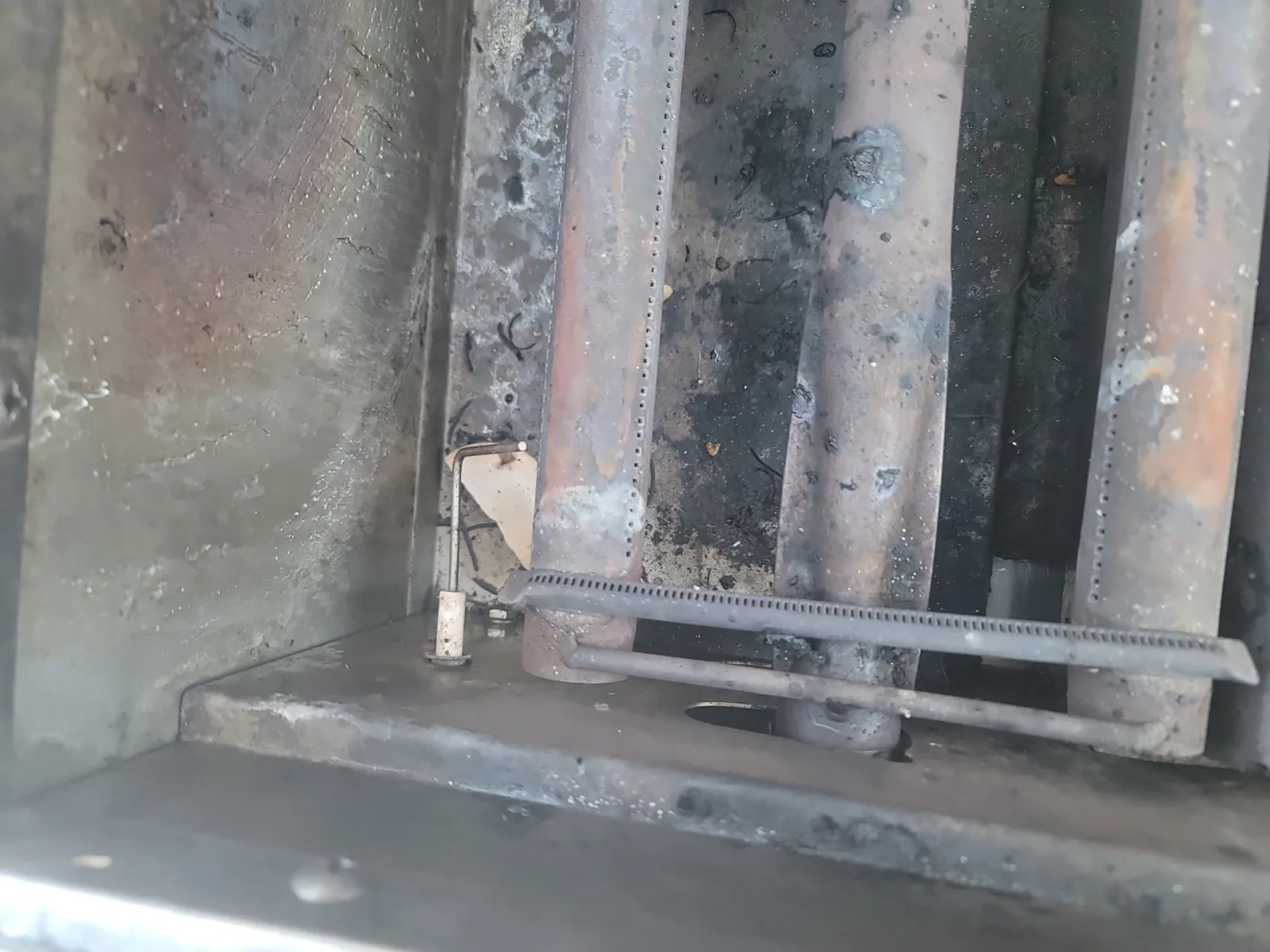
Short answer: replace a burner when the metal itself is failing. That means rust-through, cracks, ports that have eaten away or won't clear, or a flame that stays uneven or lifts off after a good cleaning and a pressure check. If the burner is intact and the problem is debris, a yellow flame, or a loose air shutter, cleaning and adjusting is the right fix. If you smell gas at any point, turn off the gas at the tank or supply valve, step away, and call a pro.
Rule out cleaning and adjustment first
Most flame complaints we see are not a dead burner. Spider webs in the venturi tubes, grease and carbon over the ports, and a misadjusted air shutter all cause weak, noisy or uneven flames, and all of them are fixable without buying parts.
- Yellow, lazy flame: usually an air shutter or a blocked tube. Our article on why a gas grill flame turns yellow covers the shutter and the causes.
- Hot and cold spots: often grease, a bad briquette tray, or a regulator problem. Start with the general causes of uneven heating before you blame the burner.
- Burner won't light: check the igniter first. In our experience, briquette trays and igniters fail more often than burners do. Burners come next.
Clean the burner, clear the ports, reseat it over the gas valve, and relight. If the flame is still wrong, keep reading. A cleaning can only remove buildup. It will not repair metal that has corroded or cracked.
The tech's checklist: signs a burner is done
Let the grill cool, shut off the gas, and take out the grates and heat-distribution parts so you can see the burners. Then go through these.
1. Rust-through
Look at the underside and the sides, not just the top. Surface rust on a stainless or brass burner can be cleaned. Holes, flaking layers, or metal that crumbles when you press it with a screwdriver tip mean the burner is finished. Gas and flame will come out where they shouldn't.
2. Cracks and warping
Check along the weld seams and around the ends. A hairline crack can open up when the burner heats and sends flame out the side. A burner that has bowed or twisted won't sit flat, and the flame pattern will show it.
3. Ports that are cracked, enlarged or won't clear
Hold a flashlight at an angle and look down the port rows. Ports should be small, round and evenly spaced. If some are blown out into slots, rusted shut, or bridged by crusted corrosion that a port tool won't break loose, the burner can't give an even flame anymore. Don't drill or enlarge ports to fix it. That changes the gas-to-air mix and makes things worse.
4. Uneven flame that stays uneven
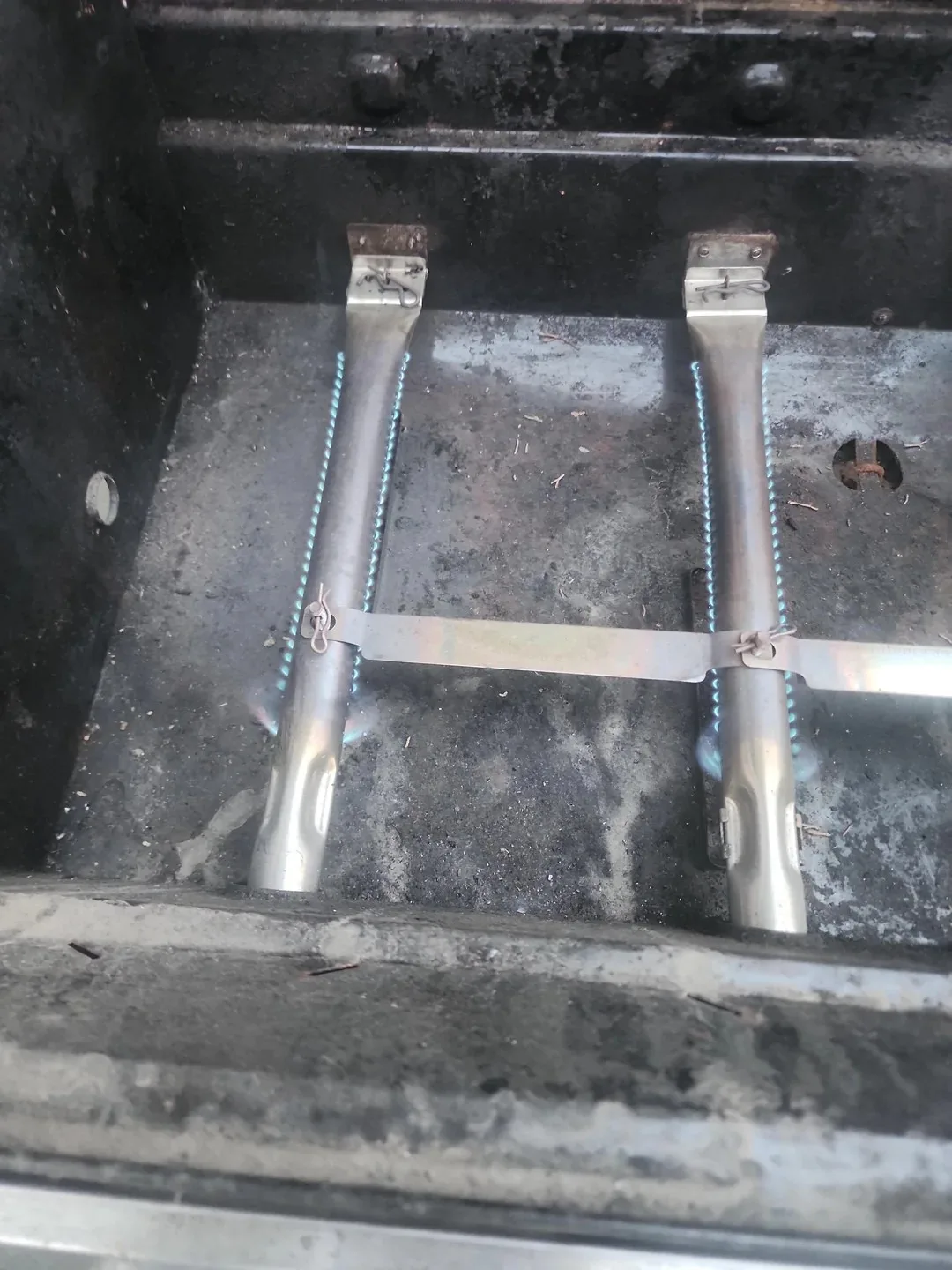
Light the burner in the dark or in shade and look at it. After a proper cleaning, you want a steady flame along the whole length. Dead sections, tall flames next to short ones, or flame that comes out of the seam instead of the ports points to damage inside or along the tube.
5. Flame lifting off the ports
A flame that floats above the ports or blows away from them is often a gas pressure issue, such as a regulator or a partly closed tank valve. Check those first. If pressure is fine and the burner is clean and properly seated, a lifting flame on one burner can mean the ports or tube have changed shape from corrosion.
6. Burner-tube corrosion
The tube is the part that runs from the valve to the burner head. Pitting, flaking or thin spots near the venturi end are common, especially where grease and moisture sit. A weak tube can leak gas before the burner head looks bad. Gas leaks at the tube are a reason to stop using the grill until a pro checks it.
Quick comparison
| What you see | Likely fix |
|---|---|
| Grease or carbon over ports, otherwise solid metal | Clean |
| Yellow flame, popping, or flame at the shutter | Adjust shutter, clear tube |
| Burner won't light but flame is even once lit by hand | Igniter or electrode |
| Surface rust only, no holes | Clean and watch it |
| Holes, cracks, flaking metal | Replace |
| Ports rusted shut or blown out | Replace |
| Uneven flame after cleaning and pressure check | Replace |
| Corroded or pitted burner tube | Replace |
What replacing a burner involves
The job is simple in concept. Shut off the gas, disconnect the supply, remove the grates and trays, unfasten the burner, lift it off the valve, and fit the new one. After that, the connections get a leak test with soapy water and the flame gets checked.
How long it takes depends on how the burner is held in. Some are screwed down, and if those screws are rusted, removal takes longer. Not every grill uses screws, though. Some burners just pull out. So the time varies from a quick swap to a long fight with seized hardware.
Parts are the other variable. We carry some burners on the truck, but no one can carry every burner for every brand. Often we inspect first, work out exactly which burners you need, and then either come back with them or mail them to you. If you want to check your model before you call, our parts store and brand parts diagrams help you match the part.
Replace burners with the right fit for your grill. A burner that is the wrong length or has a different port layout will burn unevenly even when it is brand new.
OEM or aftermarket
We prefer OEM burners. They fit better and last longer. If you want a less expensive option and an aftermarket burner exists for your grill, we will help you with that. We just won't tell you it lasts as long as the original, because in our experience it usually doesn't.
If one burner has rusted through, the others have lived in the same grease, moisture and heat. Look at them all before you buy one. It is often cheaper to do the job in one visit than to come back for the next one.
What drives the cost
Three things set the price: the burner itself, how many you replace, and the labor.
- The part: burner prices vary a lot by brand. A typical Lynx burner is over $500, and a ProSear burner is over $700. We sell Lynx parts, though not Lynx grills.
- Igniters: if the real problem is the igniter, parts can run as much as $60 each, far less than a burner.
- Labor: labor can run $200 to $500, depending on the complexity of the parts being installed. Rusted screws, tight access, and burners that have to come out in a specific order all add time.
- Inspection: a professional visit to inspect and diagnose is $199. We give 50% back if you do any work with us, and that includes work on your grill or a new grill purchase.
An inspection first often saves money. We can tell you which burners are bad, whether the igniter or tray is the real culprit, and whether the firebox is sound enough to put money into.
When a new grill is the better call
Burners are bolt-in parts. The firebox is the grill. So the decision often comes down to the shell.
- Holes in the firebox: this is the clearest sign that the grill is near the end of its life. We don't recommend repairing a hole in a firebox, and we don't do it, including welding small holes in stainless. Stop using the grill and call a pro.
- Burners that cost hundreds of dollars each: if you need several, and the firebox is already tired, the total can approach the price of a new grill.
- Multiple parts failing at once: burners, trays, igniters, and valves all worn out together means the grill has had its run.
On high-end grills, we recommend replacing parts if the firebox is in good shape. A well-built grill with a solid shell is worth keeping, and parts are what keep it going. Many of our customers with Lynx grills want to fix them up and keep using them. If the firebox is solid, that is often the right call.
If your grill is neglected and you can't tell where it falls, our tech's triage for neglected grills walks through the whole-grill decision. If you do decide to replace, our white glove installation covers removal, install, haul away, and a walk-through on how the new grill works.
What to do next
Take a flashlight and run the checklist above. If the burners are solid and just dirty, a professional cleaning can help them burn more evenly, though it won't repair damaged parts. If you find holes, cracks, or corroded tubes, get a pro to look before you cook on it again.
Pro Grill works in Southern California and Arizona. Our locations page shows where we do cleanings and repairs. You can also call 800-860-6758 or text 888-418-4226.
Find your model on our parts diagrams, tap the part, and order it, or text a photo of the rating plate to 888-418-4226.
FAQ
How do I know if my grill burner needs to be replaced?
Look for rust-through, cracks, ports that are rusted shut or blown out, a corroded burner tube, or a flame that stays uneven after cleaning and a pressure check. If the metal is solid and just dirty, cleaning usually fixes it.
How much does it cost to replace a grill burner?
It depends on the brand and the labor. A typical Lynx burner is over $500, a ProSear burner is over $700, and labor can run $200 to $500 depending on the complexity of the parts. An inspection visit with Pro Grill is $199, with 50% back if you do work with us.
Can I replace a grill burner myself?
Some burners pull straight out, and others are held by screws that may be rusted in place. The bigger risks are buying the wrong part and skipping the leak test. If you do it yourself, shut off the gas first and check every connection with soapy water afterward.
Is it worth replacing burners on an old grill?
It is if the firebox is in good shape, especially on a high-end grill. If the firebox has holes, or the burners cost hundreds of dollars each, a new grill is usually the better call.
Should I use OEM or aftermarket burners?
We prefer OEM because they fit better and last longer. If you want a less expensive option and an aftermarket burner exists for your grill, we can help with that.
More troubleshooting
See all →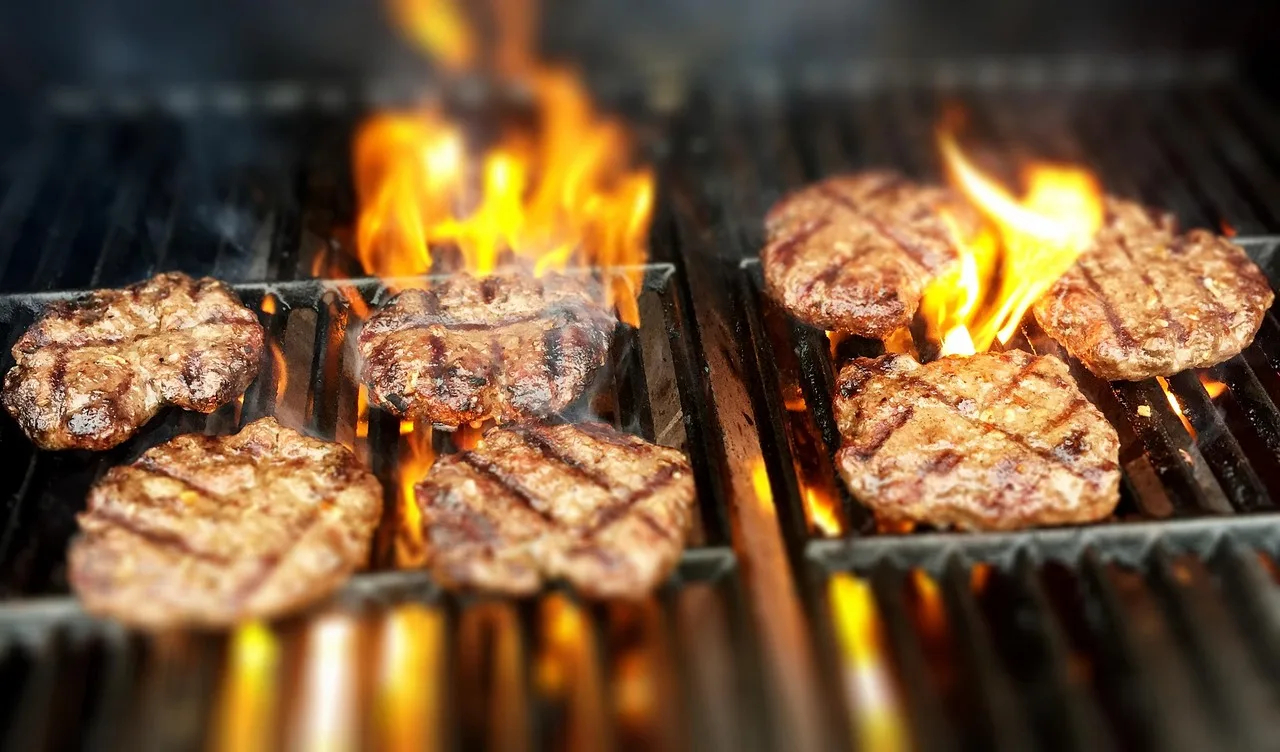
How to Control Grill Heat and Stop Flare-Ups
Flare-ups are almost always a grease problem, a burner or heat tent problem, or fatty food over a hot flame. Here is how to bring the heat down mid-c…
Grill Not Getting Gas With a Full Propane Tank? What to Check
A full tank and no flame usually points to the regulator's flow limiter or a hose problem, not an empty tank. Here is how to check each part in the o…
Gas Grill Keeps Going Out? 9 Reasons Your Grill Won’t Stay Lit
A grill that lights then dies is getting enough gas to start but not to stay stable. Here are nine common causes, with signs to help you narrow down …