


BBQ Burners: Cleaning, Problems, Repair & Replacement
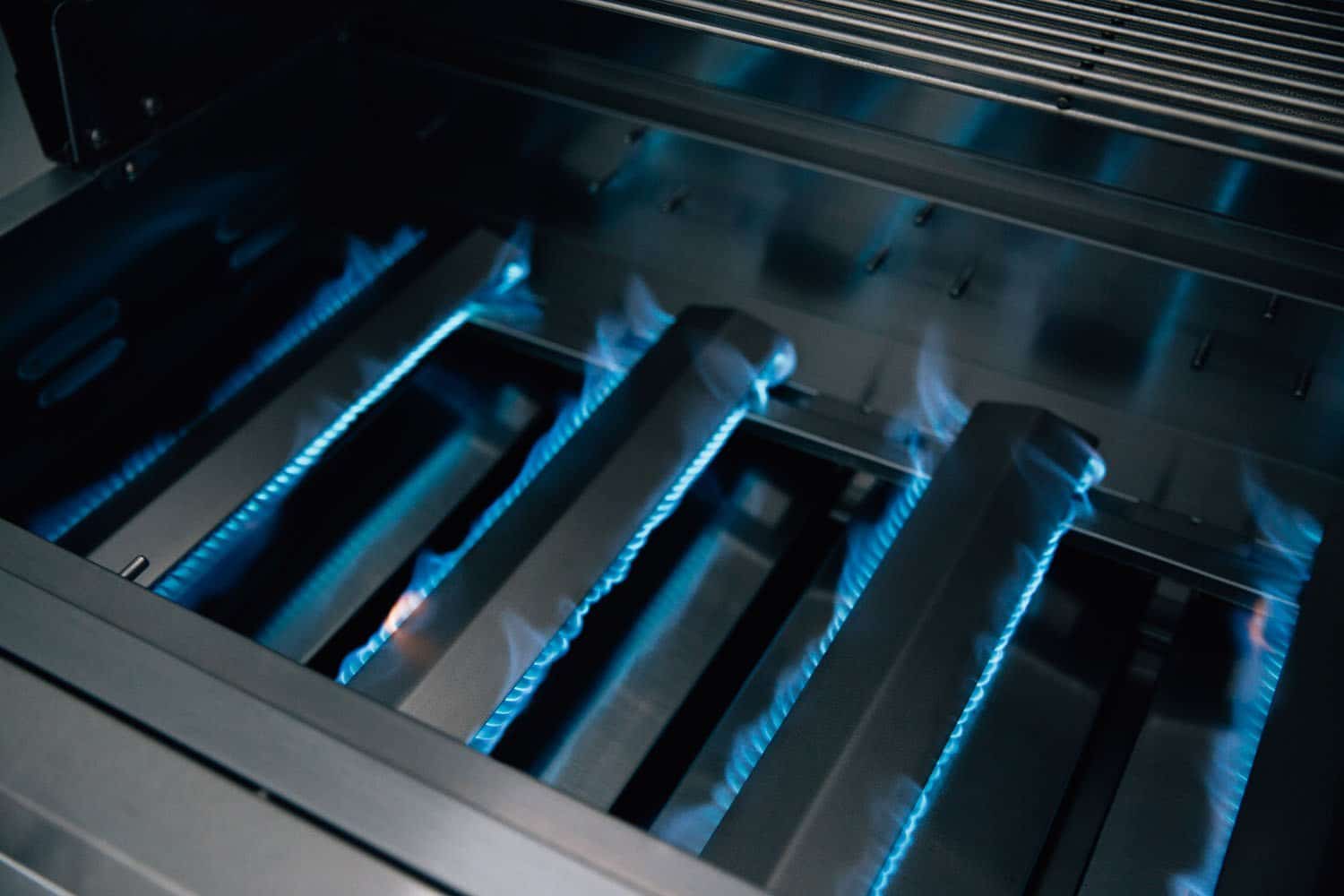
The burners are the heart of a gas grill. They take fuel from the valve and orifice, mix it with air, distribute that mixture through precisely designed ports and create the flame that ultimately heats your food. When burners become clogged, corroded, cracked, split or structurally worn, the grill may heat unevenly, struggle to reach temperature or fail to light correctly.
Pro Grill assesses accessible burner condition during professional BBQ cleaning visits. We clean applicable burner surfaces and surrounding areas, look for blockage and deterioration, and advise customers when a burner appears too damaged to remain in service. When replacement is needed, our repair team can help identify and install the correct burner for many major grill brands.
Signs your BBQ burners may need cleaning, diagnosis or replacement
Burner problems usually become noticeable through changes in ignition, flame pattern, heat or cooking performance. The symptom is useful, but it is only the beginning of diagnosis.
Understanding the burner helps explain why so many different problems look alike
Gas reaches the burner through the grill's fuel-delivery system. A control valve regulates the flow, and an orifice meters fuel into the burner's inlet or venturi area. Air mixes with the gas before the mixture exits through burner ports and ignites.
That means the burner sits at the intersection of several systems. If the gas supply is too low, the burner may appear weak. If an orifice is incorrect, combustion may be abnormal. If the air-intake area is obstructed, the fuel-air mixture can change. If the ignition system fails, gas can reach a healthy burner without lighting.
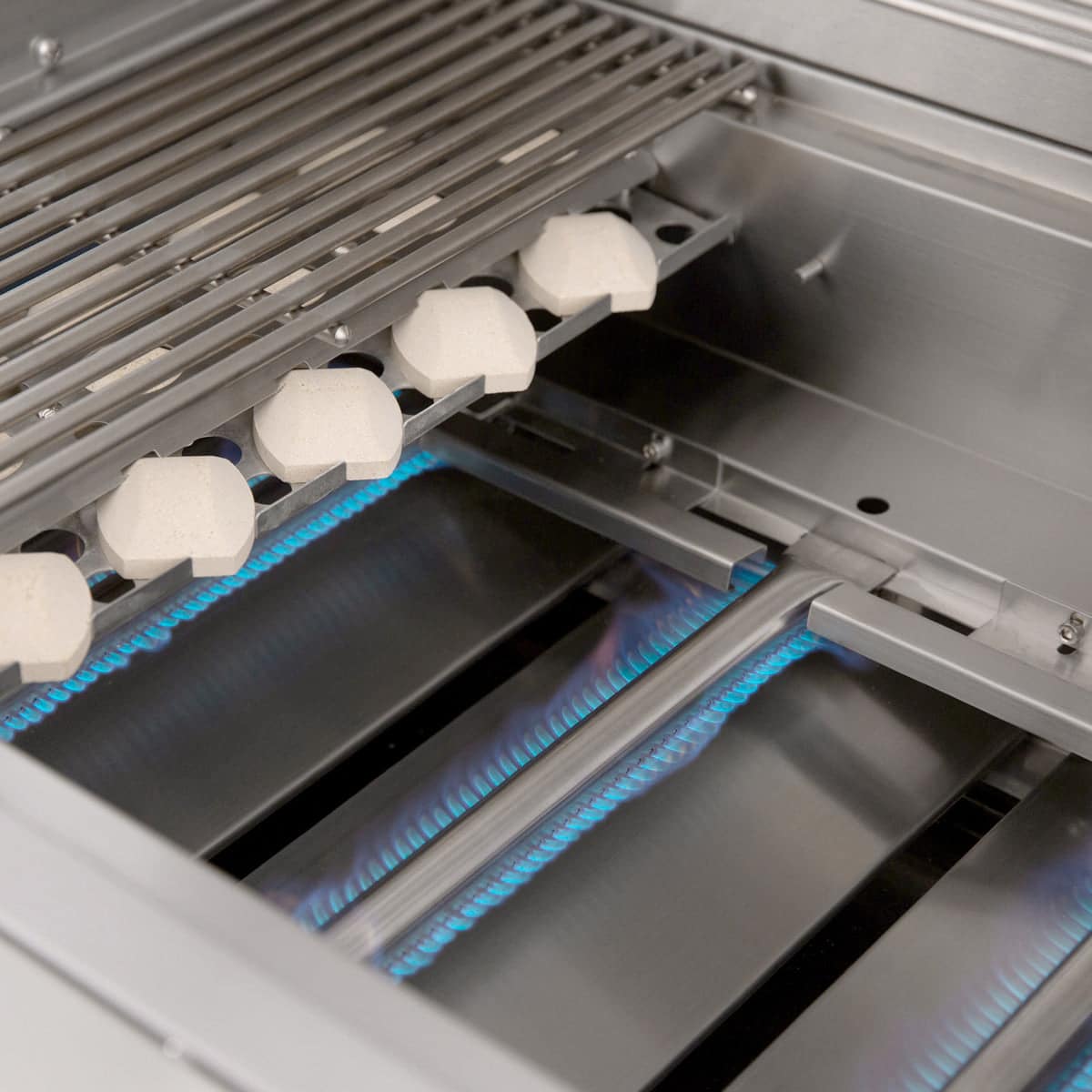
Above the flame, the grill may use ceramic briquettes, briquette trays, metal heat shields, ceramic rods or another radiant system before heat reaches the cooking grates.
Not all gas grill burners are the same
“BBQ burner” is a broad term. Manufacturers use several materials and shapes, and the burner installed in one model may be completely different from another burner made by the same brand.
Common on many gas grills. Tubular designs may be straight, curved, U-shaped or formed to match the cooking area.
Substantial cast components used on many premium grills. Their heavier construction can provide long service life, but they still face heat, grease and corrosion.
Found on some grills and older designs. Cast iron can be durable but is susceptible to oxidation and material loss when exposed to moisture and age.
Some premium or legacy grill designs use brass burner components. Replacement requires model-specific identification rather than substituting a generic tube.
Infrared sear and rear rotisserie systems use specialized burner surfaces, ceramics, screens or emitters and should not be cleaned like a conventional tube burner.
Outdoor-kitchen side burners may use rings, caps or high-output burner assemblies with their own ignition and gas-control systems.
Burner material matters, but so do the port pattern, venturi design, mounting points, valve/orifice relationship and height within the grill. A burner that simply fits into the firebox is not necessarily the correct replacement.
What are the small holes in a BBQ burner?
The many small openings along a burner are intentionally engineered gas ports. They distribute the fuel-air mixture along the burner's length so flame develops in the pattern intended by the manufacturer.
Over time, food debris, grease, corrosion products and environmental contamination can partially block ports. On some burner designs, this produces a section that will not light or a noticeably uneven flame pattern. But burner ports are not meant to be made larger simply because the flame seems weak.
Weber's burner-maintenance guidance recommends cleaning across burner portholes and specifically warns against using sharp objects such as pins or nails that can push debris into the burner or alter the ports. See Weber's burner-tube cleaning guidance.
Spiders, insects and debris can obstruct burner air passages
Many burners have an inlet or venturi section where gas entering from the orifice mixes with combustion air. Because outdoor grills may sit unused for long periods, these areas can attract spiders and insects or collect debris.
The U.S. Consumer Product Safety Commission has specifically advised grill owners to check tubes leading into burners for blockage from insects, spiders and food grease. CPSC's gas-grill fact sheet also recommends checking the venturi tube at least annually for blockage. Review CPSC's gas-grill safety guidance.
Some burner designs use air-shutter screens or insect screens at the inlet. These areas can often be cleaned externally according to the owner's manual. Weber, for example, recommends a soft-bristle brush for its applicable air-shutter screens and notes that they are factory set rather than something owners should casually readjust. See one manufacturer's air-shutter maintenance guidance.
The manufacturer example is less important than the principle: identify how your specific burner receives combustion air, keep accessible intake areas clear according to the manual, and avoid changing factory adjustments without a valid service reason.
How we approach BBQ burners during a professional grill cleaning
One reason burner problems can go unnoticed is that the burners are hidden below the cooking grids and heat-distribution components. Years of grease and carbon can make the internal grill difficult to assess until those layers are removed.
During an applicable Pro Grill deep cleaning, we remove or clean the cooking components necessary to access the firebox and burner area. We clean accumulated residue around accessible burner surfaces and inspect the burners while they are exposed. The exact cleaning method depends on burner material, construction and condition.
Book the cleaning and let us look at the burners while the grill is apart.
A deep cleaning can remove the buildup hiding the internal components and give us a much clearer view of burners, briquette trays, ignition parts and the firebox.
What can a homeowner safely check and clean?
There are useful maintenance steps homeowners can perform without disassembling the grill's gas controls. Always begin with the grill off and completely cool, and follow the owner's manual for your specific model.
- Remove accessible cooking components only as permitted by the manufacturer.
- Inspect burner surfaces for heavy buildup, obvious corrosion, cracks or irregular holes.
- Clean burner ports using the method and brush type specified by the manufacturer.
- Brush across ports rather than driving sharp objects down into them.
- Avoid striking or bending nearby ignition electrodes.
- Inspect accessible burner-air intake or insect-screen areas for debris.
- Photograph component orientation before removal so everything goes back correctly.
- Compare flame behavior across burners after correct reassembly and according to the manufacturer's operating instructions.
For broader homeowner upkeep, see our DIY BBQ Maintenance guide. Routine DIY maintenance and a professional deep cleaning can complement one another rather than being either/or choices.
Can a dirty burner be cleaned, or does it need replacement?
A burner may be cleanable when...
It is structurally sound but has ordinary surface buildup, loose debris or accessible port obstruction that can be addressed according to manufacturer guidance.
- No major cracks or splits
- No severe material loss
- Burner shape remains intact
- Ports have not significantly deteriorated
- Replacement is not otherwise indicated
Replacement may make more sense when...
The burner has deteriorated beyond what cleaning can correct.
- Large corrosion holes have developed
- The burner is cracked or split
- Ports have enlarged from deterioration
- The burner is warped or structurally compromised
- Flame distribution remains abnormal after appropriate cleaning and diagnosis
Burner replacement should be based on the correct manufacturer, model and part whenever possible. A burner that physically fits is not necessarily the correct burner for the grill.
Burner issues we commonly diagnose
Burner flame is weak
Weak flames can be caused by burner obstruction or deterioration, but they can also involve propane regulator operation, fuel supply, valves, hoses, orifices or other gas-system components. Replacing the burners without diagnosis may not solve the problem.
If your grill will not reach normal temperature, see our related guide: Why Is My Gas Grill Not Getting Hot Enough?
One side of the grill is hotter than the other
A partially obstructed or deteriorated burner can create uneven flame distribution. However, damaged briquette trays, missing ceramic briquettes, warped heat shields or other radiant components can also change how heat reaches the cooking surface.
Only part of the burner lights
Blocked burner ports, internal debris, corrosion or problems with the cross-lighting path can prevent flame from traveling across the burner normally. The ignition source may be working correctly even though the entire burner does not light.
The burner receives gas but will not ignite normally
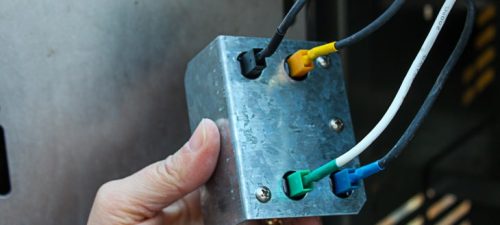
The burner may not be the failed component. Electrode position, spark strength, wiring, ignition modules, flame-assisted ignition components and the condition of ports near the ignition point can all matter. Our Ignition & Igniters guide covers this system in detail.
The burner has holes that were not there originally
Do not confuse manufactured burner ports with irregular holes caused by deterioration. Corrosion can eventually remove enough metal that the flame exits areas never intended to carry flame. Cleaning cannot replace missing burner material.
The flame suddenly looks or behaves differently
A noticeable change in flame height, distribution or location deserves investigation. Obstructed ports, blocked air intake, an orifice issue, fuel-supply conditions or burner damage can all contribute. Compare behavior across burners and use the manufacturer's specifications rather than assuming one flame appearance is universal.
Flame appears near the front or inlet of the burner
Flame burning where the gas and air enter the burner is not a condition to ignore. Shut the grill down safely and have the cause evaluated. Burner obstruction, alignment and fuel-air conditions can be involved.
The burner takes too long to light
Delayed ignition can involve burner ports, the ignition source, crossover components, gas delivery or alignment. Repeatedly allowing gas to accumulate while attempting ignition is not an appropriate troubleshooting method. Stop and correct the underlying problem.
Can dirty or damaged burners make a grill run too cool?
Yes, but burners are only one possible cause. Partially obstructed ports or severe burner deterioration can reduce or distort flame distribution. However, a grill with low heat across every burner may point toward a shared fuel-supply condition, propane regulator behavior, gas pressure, installation issue or another upstream problem.
If only one burner is weak while the others operate normally, the diagnosis can focus more narrowly on that burner's valve, orifice, venturi, ports and physical condition. If all burners became weak at the same time, replacing every burner would be an expensive way to discover the real problem was elsewhere.
We created a dedicated troubleshooting article for this search: Why Is My Gas Grill Not Getting Hot Enough?. That guide covers multiple causes rather than treating every low-temperature complaint as a burner failure.
What causes one side of the grill to cook hotter than the other?
Uneven burner flame is one possibility, particularly when ports are obstructed or part of the burner has deteriorated. But the flame then passes through another layer of components before heat reaches the food.
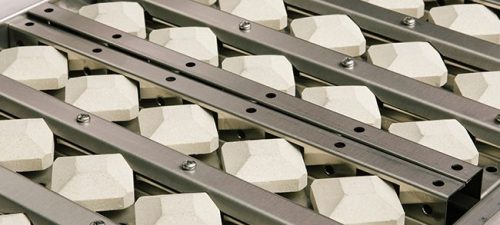
A damaged briquette tray, missing ceramic briquettes, burned-through heat shield or incorrectly positioned radiant component can create hot and cold areas even when the burner itself is producing a reasonable flame.
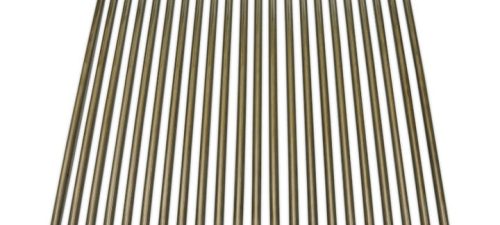
Likewise, heavily coated or physically deteriorated cooking grates can affect the way users experience heat at the surface. A good diagnosis follows the heat from gas supply to burner flame, through the radiant system and finally to the cooking grid.
When a burner problem looks like an igniter problem
A burner can be structurally sound but fail to light because the ignition source is not reaching the fuel-air mixture. Conversely, an electrode can spark perfectly beside a burner whose ports near the ignition point are obstructed.
Some multi-burner grills also use crossover or cross-light systems that transfer flame from one burner to another. If the primary burner lights but the adjacent one does not, the problem may involve the cross-light path, burner ports, alignment or deterioration rather than the main ignition module.
Flame-assisted ignition designs add another variation. In those systems, a small ignition flame or gas-assisted mechanism helps light the main burner. Different manufacturers implement this differently, so model-specific understanding is more useful than assuming every grill uses the same spark-electrode arrangement.
For a deeper breakdown of piezo systems, electronic modules, batteries, wires, electrodes, crossover systems and flame-assisted ignition, visit our BBQ Ignition & Igniter Repair guide.
What should you pay attention to when looking at burner flames?
The exact normal flame appearance varies by grill and fuel type, so manufacturer guidance should be the reference. More useful than chasing one universal flame color is noticing a meaningful change from the grill's established normal behavior.
- Is flame distributed along the burner rather than missing large sections?
- Does one burner look dramatically different from the others?
- Does flame remain where it is designed to burn rather than appearing near the control or burner inlet?
- Does adjusting the knob produce a reasonable change in burner output?
- Did the abnormal behavior begin suddenly after storage, cleaning, fuel work or component replacement?
How long do BBQ burners last?
There is no universal burner lifespan. Material quality, grill design, frequency of use, climate, grease exposure, cleaning habits and whether the grill is protected from weather all affect longevity.
Coastal installations can be especially demanding because salt and moisture accelerate corrosion. A grill used several nights every week also experiences far more thermal cycling than a grill used monthly. Premium cast stainless burners may age differently from thin stamped or tubular components.
Regular cleaning cannot stop metal from aging forever, but it can remove material that hides deterioration and help owners notice problems sooner. That matters because a burner can continue operating even as corrosion changes its port pattern or weakens the structure.
Rather than replacing burners on an arbitrary schedule, inspect their condition and performance. A ten-year-old burner that remains structurally sound is a different situation from a much newer burner that has cracked or burned through.
Why the correct replacement burner matters
Burner replacement should start with the manufacturer and model number, and the serial number can be helpful when designs changed during production. Dimensions matter, but they are not enough by themselves.
A correct burner must align with the valve and orifice, sit in the intended supports, position ignition components correctly and produce the flame pattern the grill was designed around. Tube diameter, port configuration, venturi shape and mounting points can all differ.
A new burner cannot fix every fuel-delivery problem
The burner receives fuel through the valve and orifice. If a control valve is not regulating normally or an orifice is incorrect, obstructed or part of an improper fuel conversion, the burner may behave abnormally even when it is brand new.
This is especially important when a grill has been converted between propane and natural gas. Fuel conversions can involve manufacturer-specific orifices, regulators, valves or other components. Drilling or enlarging orifices to increase burner output is not an appropriate repair.
Our BBQ Grill Parts & More guide covers regulators, manifolds, orifices, hoses, wiring, rotisserie parts, heat shields and many of the other systems that can influence burner performance.
Burner maintenance is also gas-grill safety maintenance
Outdoor grills combine fuel, ignition and high heat. CPSC has long advised checking burner tubes and venturis for insect or grease blockage, inspecting hoses for deterioration and correcting gas leaks before trying to light the appliance. Read CPSC's gas-grill safety recommendations.
That makes routine burner inspection more than a performance issue. Blockage, incorrect alignment, damaged fuel components and leaks should be addressed rather than worked around.
BBQ burner cleaning and replacement across many grill brands
Burner construction varies dramatically across manufacturers and product generations. Pro Grill works on many premium and popular outdoor grill brands, including grills with tubular stainless burners, cast stainless burners, infrared systems, side burners, rear burners and other manufacturer-specific designs.
Visit our BBQ Brands page to learn more about the manufacturers we service. Exact repairability depends on the grill model and availability of the correct burner or related components.
Bad burners do not automatically mean you need a new BBQ
Burners are replaceable service components on many grills. If a premium built-in BBQ has a solid firebox, functional manifold and available parts, replacing deteriorated burners can be far more practical than replacing the entire appliance.
That is particularly true in an outdoor kitchen. A complete grill replacement must fit the existing cutout, clearances and utility connections. Restoring burners, trays, igniters, grates or other wear components may extend the useful life of a grill without modifying the island.
Replacement of the entire grill becomes more relevant when burner failure is only one part of widespread deterioration: a damaged firebox, unavailable gas components, multiple failing systems and repair costs that no longer make sense.
Pro Grill offers both professional BBQ repair and BBQ replacement sales and installation, so customers can evaluate both paths.
Burners look rough? Let us clean first and see what is really there.
Years of grease and carbon can hide the underlying condition. Professional cleaning can reveal whether burners are simply dirty, structurally worn or only one part of a larger repair need.
Why burner inspection belongs in long-term BBQ maintenance
Burners rarely fail on a convenient schedule. Corrosion develops gradually, ports become obstructed, ignition areas collect debris and related parts age alongside them. Regular BBQ maintenance makes it easier to spot these changes before the grill becomes unusable.
Professional deep cleaning is particularly useful because it involves removing layers that normally hide the burner system. This can expose deterioration in burners, briquette trays, ignition components and the firebox at the same visit.
For high-use shared equipment, Pro Grill also services HOAs, communities, cities, clubhouses, resorts and other non-residential BBQ installations where burner condition and reliable operation are especially important.
Frequently asked questions about grill burners
Can BBQ burners be cleaned?
Yes, when the burner remains structurally sound. Cleaning may remove accessible grease, debris and port obstruction according to the manufacturer's instructions. Cleaning cannot repair cracks, large corrosion holes or missing metal.
How do I know if my BBQ burner is bad?
Possible signs include severe corrosion, cracks, splits, large irregular holes, continued partial ignition, abnormal flame distribution or deterioration that remains after appropriate cleaning and diagnosis.
Can clogged burners cause low heat?
Yes. Obstructed ports or air passages can affect burner performance, but low heat may also involve valves, regulators, fuel supply, orifices and other components.
Why does only half of my burner light?
Possible causes include obstructed burner ports, internal debris, burner deterioration, crossover problems, ignition positioning or gas-flow issues.
Can spiders cause BBQ burner problems?
Yes. Spiders and insects can nest in burner inlet or venturi areas. CPSC recommends checking burner tubes for these types of obstructions.
Should I poke burner holes with a needle?
Do not enlarge burner ports. Follow the manufacturer's cleaning method; some manufacturers specifically warn against inserting sharp objects into burner openings.
Why is my burner flame uneven?
Port blockage, corrosion, fuel-air problems, valve or orifice issues can all affect flame distribution. Heat-distribution parts above the burner can also create uneven cooking even when flame is reasonable.
Does Pro Grill inspect burners during cleaning?
We assess accessible burner condition during applicable professional grill cleaning visits and can advise when cleaning, further diagnosis or replacement appears appropriate.
Can Pro Grill replace BBQ burners?
Yes. Pro Grill provides BBQ repair and can help identify and replace applicable burners for many major brands when the correct parts are available.
Are all BBQ burners interchangeable?
No. Burner dimensions, material, port pattern, venturi shape, valve/orifice relationship, mounting points and ignition alignment can vary significantly.
How long should BBQ burners last?
There is no universal lifespan. Material, grill quality, climate, use, grease exposure and maintenance all affect burner life.
Do I need a new grill if my burners are rusted?
Not necessarily. Burners are replaceable on many grills. The decision depends on burner condition, parts availability and the condition of the rest of the appliance.
Can a burner problem cause my grill not to ignite?
Yes, but ignition failure can also involve electrodes, modules, wires, valves, orifices, fuel supply or crossover components. Diagnosis should separate ignition from fuel-delivery problems.
Can damaged briquette trays make a good burner seem weak?
They can affect how heat reaches the cooking grates. A complete diagnosis should look at burner flame and the radiant system above it.
BBQ parts, cleaning, repair & replacement guides
Your burners are only one part of the system. Explore the other major components to understand how they interact, what can go wrong and when cleaning or replacement makes sense.
 Burners
 Valves
 Ignition & Igniters
 Grates
 Briquettes
 Briquette Trays
 Knobs
Knobs BBQ Parts & More
Let Pro Grill clean, diagnose and repair your BBQ.
Whether your burners are dirty, clogged, corroded, split, producing uneven flames or simply not delivering the heat they used to, Pro Grill can help determine what the grill actually needs.