How to Clean BBQ Grates: The Right Way for Stainless Steel, Cast Iron & Porcelain
Clean BBQ grates make cooking easier, help remove old food and grease, and give you a chance to spot deterioration before it becomes a bigger problem. But the right cleaning method depends on what your grates are made from.
This guide covers practical DIY grill-grate cleaning, deeper buildup, rust, different grate materials, what to avoid, and one important point many grill owners miss: clean grates do not necessarily mean you have a clean grill.
First, know what kind of grill grates you have
There is no single cleaning method that is ideal for every cooking grate. Before reaching for a scraper or cleaner, identify the material and check the care instructions for your specific grill.
When in doubt, use the cleaning method specified by the grill manufacturer. Material, coating and construction matter more than a generic internet cleaning trick.
How to clean BBQ grates after normal cooking
Routine cleaning should be simple. The goal is to remove food residue before it becomes layer after layer of baked-on material.
Be careful with metal wire-bristle grill brushes
This deserves special attention. Loose wire bristles from grill-cleaning brushes can detach, remain on the cooking surface and later become embedded in food.
The U.S. Consumer Product Safety Commission urged consumers in 2026 to stop using recalled metal wire-bristle brushes and switch to non-wire alternatives after major recalls involving detached bristles and ingestion injuries.
The USDA Food Safety and Inspection Service also advises checking grill surfaces carefully for loose bristles if a wire brush is used and notes that consumers can consider other grill-cleaning methods.
Non-wire options can include appropriate nylon tools used at the temperatures specified by their manufacturer, grill stones or blocks where appropriate, scrapers designed for the grate, and other bristle-free cleaning systems. Always make sure the tool itself is suitable for your grate material.
How to clean stainless steel BBQ grates
Stainless-steel cooking grids are common on higher-end grills because they are durable, relatively easy to maintain and can handle repeated heating and cooling. They still benefit from regular cleaning.
Remove residue before it becomes heavy buildup
Follow your grill manufacturer's recommended preheat and grate-cleaning procedure. Removing ordinary residue regularly is easier than trying to strip away months of cooked-on grease later.
For stubborn grease and cooked-on food
Allow the grates to cool as directed, remove them only if your grill manual permits it, and use a cleaner and scrubber approved for the material. Rinse or wipe away cleaning-product residue as directed before returning the grates to service.
How to clean cast iron grill grates
Cast iron holds heat extremely well, but bare cast iron requires different care from stainless steel. Moisture and damaged seasoning can contribute to rust.
Remove ordinary cooking residue with a tool appropriate for cast iron and follow the grill manufacturer's instructions. Avoid leaving bare cast iron wet for extended periods. If the manufacturer calls for oiling or seasoning after cleaning, use its recommended procedure.
What if cast iron grates are rusty?
Light surface rust may sometimes be removable, depending on the condition of the grate. Heavy scaling, deep deterioration, cracks or major material loss may mean replacement is a better option.
Do not automatically treat porcelain-coated cast iron like bare cast iron. If a cast-iron grate has an enamel coating, the care requirements can be different.
How to clean porcelain-coated BBQ grates
Porcelain enamel creates a protective cooking surface over the underlying metal. The priority is cleaning without unnecessarily damaging that coating.
Avoid assuming that a tool appropriate for bare stainless steel or cast iron is automatically appropriate for porcelain enamel. Follow the grate manufacturer's instructions, particularly when selecting brushes, scrapers and abrasive pads.
Inspect older porcelain grates for chips, exposed metal and corrosion. Once the coating has substantially deteriorated, cleaning cannot restore the original protective surface.
How to remove burnt-on food and grease from grill grates
If ordinary cleaning no longer removes the buildup, the grates may need a deeper cleaning. Start with the least aggressive method appropriate for the grate material rather than immediately reaching for the strongest chemical in the garage.
- Confirm the grate material and coating
- Check the grill manufacturer's cleaning instructions
- Use a cleaner labeled as appropriate for that surface
- Give the product the specified dwell time rather than over-scrubbing
- Use an appropriate non-damaging scrubber or scraper
- Remove cleaning residue according to product instructions
- Allow components to dry as required before reinstallation
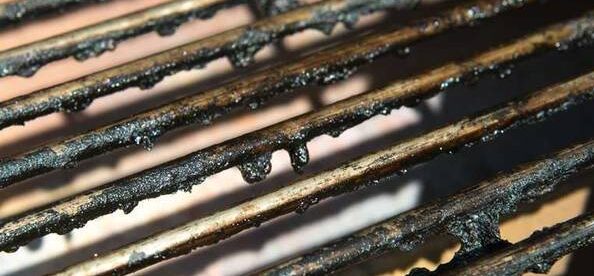
Years of baked-on carbon can be much more difficult than normal food residue. At some point, the time, mess and effort involved in DIY cleaning may outweigh the benefit of doing it yourself.
Grates covered in years of buildup?
Pro Grill professionally deep cleans BBQ grills at your home. And unlike a quick grate cleaning, our service addresses accumulated grease and carbon throughout applicable accessible areas of the grill.
Should you soak BBQ grates?
That depends on the grate. Soaking removable stainless-steel grates may be acceptable when permitted by the manufacturer and compatible with the cleaner being used. Bare cast iron is a different story because prolonged water exposure can encourage rust.
Porcelain-coated grates also deserve care because damaged coatings can expose the underlying metal. Before soaking any cooking grid, check the instructions for your specific grill.
Can BBQ grates go in the dishwasher?
Do not assume they can. Grill grates can be large, greasy and made from materials or coatings that are not suited to dishwasher detergents or prolonged moisture. Manufacturer instructions should decide this one.
Can you pressure wash grill grates?
A pressure washer may sound convenient, but it is rarely necessary for routine grate maintenance and can create a mess while forcing grease and debris into surrounding areas. If the grates are still installed, indiscriminate pressure washing can also expose ignition, electrical and gas-system components to water.
Use a controlled cleaning method designed for the cooking surface instead.
Can you use oven cleaner on BBQ grates?
Do not assume an oven cleaner is safe for every grill grate. Products vary in chemistry, and grates vary in material and coating. A chemical suitable for one surface may damage another or require very specific rinsing and handling.
Check both the grill manufacturer's instructions and the cleaning product label. If either one says the product is not appropriate for your cooking surface, do not use it.
What about dish soap?
For removable grates and materials where the manufacturer permits washing, mild soap can sometimes be useful for grease. Again, bare cast iron and certain coated surfaces may require different care, so avoid treating every grate identically.
What about vinegar or baking soda?
Household cleaning mixtures are popular online, but "natural" does not automatically mean ideal for every grill surface. Use methods compatible with the material and follow manufacturer guidance rather than experimenting with an expensive set of cooking grids.
How often should you clean BBQ grates?
Cooking grates deserve attention much more frequently than the entire grill needs a deep cleaning. Food residue is easiest to manage when it is removed routinely instead of being reheated over and over.
Frequency depends on how often you cook, what you cook and the grate material. Someone grilling fatty foods several nights a week will naturally create more residue than someone using the BBQ occasionally.
Make a quick grate inspection part of every cook. If you see heavy residue, corrosion, damaged coatings or deterioration, address it rather than simply cooking over it again.
Clean BBQ grates do not mean you have a clean grill
This is probably the most important distinction in this entire guide.
The cooking grates are the part you see and touch most often, but they are only the top layer of the BBQ. Underneath them may be burners, ceramic briquettes, briquette trays, heat shields, flame tamers and the firebox itself.
Grease and cooking residue can accumulate below the grates even when the cooking surface looks spotless.
- Grease can collect in the firebox
- Drip trays can become overloaded
- Briquette trays and heat shields can deteriorate
- Burners can become obstructed or corroded
- Carbon can build up on internal surfaces
- Old residue can contribute to odors, smoke and excessive flare-ups
That is why routine DIY grate cleaning and a professional BBQ deep cleaning are two different things.
Your grates are clean. What about everything underneath them?
If the inside of your grill has accumulated heavy grease and carbon, Pro Grill can take care of the dirty work. Our professional BBQ cleaning service goes far beyond brushing the cooking grids.
When should BBQ grates be replaced?
Cleaning can remove residue, but it cannot reverse structural deterioration. Replacement may make sense when grates are deeply corroded, cracked, badly warped, losing substantial material or have a porcelain coating that has extensively failed.
For premium grills, replacement cooking grids may be available without replacing the entire appliance. Pro Grill also provides BBQ repair services and can help identify worn components elsewhere in the grill.
A practical BBQ grate cleaning routine
When should you call a professional grill cleaner?
Routine grate cleaning is one of the BBQ maintenance tasks most homeowners can handle themselves. Professional cleaning becomes more valuable when the problem extends beyond the cooking surface.
Consider professional BBQ cleaning when:
- The grill has years of grease and carbon buildup
- The firebox is heavily coated in residue
- You experience frequent excessive flare-ups
- You purchased a home and do not know the grill's maintenance history
- Internal components are difficult to inspect because of buildup
- You own a premium built-in grill you want to maintain
- The grill needs cleaning plus inspection or repair
- You simply do not want to spend hours doing an extremely messy job
You can also read our DIY BBQ maintenance guide for additional homeowner maintenance tips, or visit our BBQ Fire Safety Center for grill-safety information.
Frequently asked questions
What is the easiest way to clean BBQ grates?
For routine residue, clean the grates regularly using the method and tool recommended by the grill manufacturer. Frequent light cleaning is generally easier than allowing layers of food and grease to repeatedly bake onto the surface.
Should I clean grill grates before or after cooking?
Follow the manufacturer's procedure for your grill. It is also smart to inspect the cooking surface before every cook so food is not placed over old debris or loose cleaning-tool material.
How do I clean stainless steel grill grates?
Use a grate-cleaning method appropriate for stainless steel and follow the manufacturer's instructions. For heavier buildup, use an approved cleaner and non-damaging scrubber after the grates have cooled as directed.
How do I clean cast iron grill grates?
Remove cooking residue with a method suitable for cast iron, avoid prolonged moisture exposure on bare cast iron, and follow manufacturer instructions for oiling or seasoning when applicable.
How do I clean porcelain-coated grill grates?
Use tools and cleaners suitable for porcelain enamel and avoid unnecessarily damaging the coating. Inspect older grates for chips, exposed metal and corrosion.
Are wire grill brushes safe?
Wire bristles can detach and remain on grill surfaces, creating an ingestion hazard. Major wire-bristle grill brush recalls occurred in 2026, and CPSC urged consumers affected by those recalls to stop using the products and switch to non-wire alternatives.
Can I soak grill grates overnight?
It depends on the material. Prolonged soaking can be inappropriate for bare cast iron and may not be recommended for some coated grates. Check the manufacturer's care instructions first.
Why are my grill grates still dirty after brushing?
Repeated cooking can create baked-on grease and carbon that ordinary maintenance does not remove. A deeper cleaning may be necessary, but the method should still be appropriate for the grate material.
Does cleaning the grates clean the whole BBQ?
No. Grease and carbon can accumulate below the cooking surface around burners, heat-distribution components, the firebox and grease-management system. Grate cleaning is only one part of overall BBQ maintenance.
Let Pro Grill handle the deep cleaning.
Keeping your cooking grates clean is good routine maintenance. When grease and carbon have built up throughout the rest of the BBQ, professional cleaning can go much further.