Grill Brushes: How to Choose, Use & Clean Your Grill
A grill brush may be one of the simplest tools around your BBQ, but choosing the right one matters. Learn about wire grill brushes, bristle-free alternatives, proper grate cleaning, common mistakes and important grill brush safety concerns.
For generations of backyard cooks, cleaning the grill has often meant grabbing a grill brush, scraping the cooking grates and getting ready for the next meal. But today's grill owner has far more choices than the traditional metal wire grill brush.
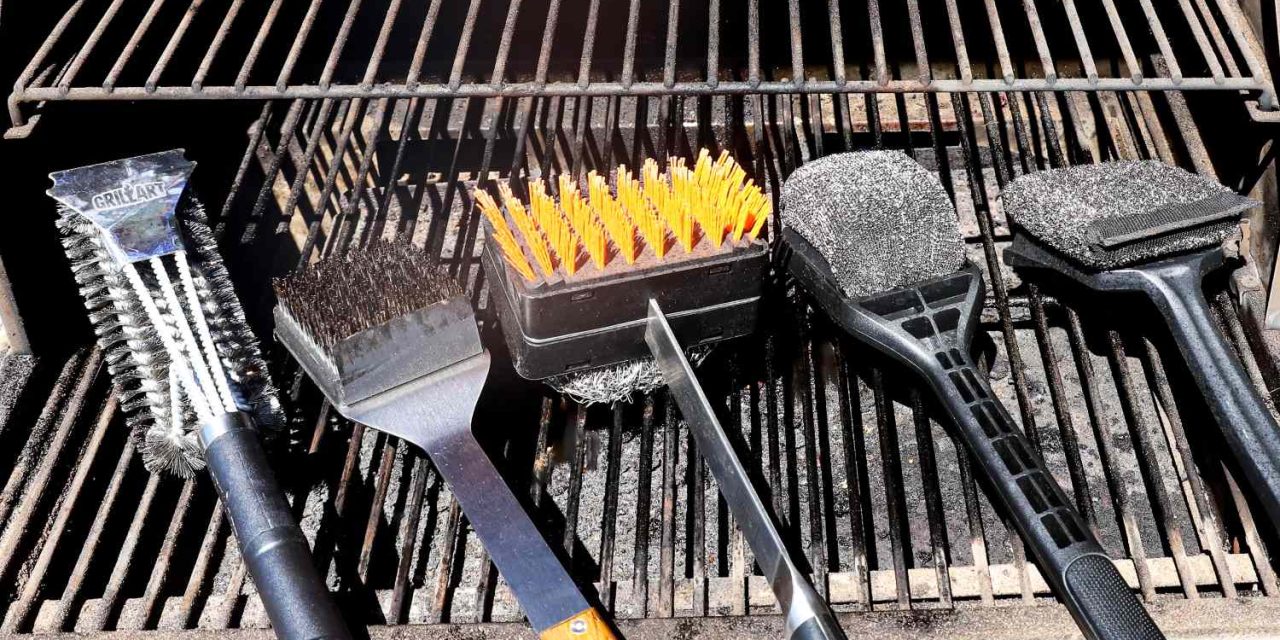
Walk through the grilling section of a store or search for a grill brush online and you may find wire bristles, nylon bristles, stainless-steel coils, chainmail-style cleaners, wooden scrapers, steam-cleaning tools and other designs that all promise to clean a dirty grill.
So which grill brush should you use? Does it matter whether your grates are stainless steel, cast iron or porcelain coated? Is it better to clean a grill when the grates are hot or cold? And with growing concerns about loose metal bristles, should you still use a traditional wire grill brush at all?
At Pro Grill, we work with outdoor grills every day. A grill brush is useful for routine maintenance, but it is important to understand what a brush can—and cannot—do. It is also important to choose a cleaning method appropriate for your particular grill.
Meet the Official Grill Brush of Pro Grill.
After working on thousands of outdoor grills and seeing the tools customers use between professional cleanings, we decided it was time to put our name behind one grill brush we genuinely believe in.
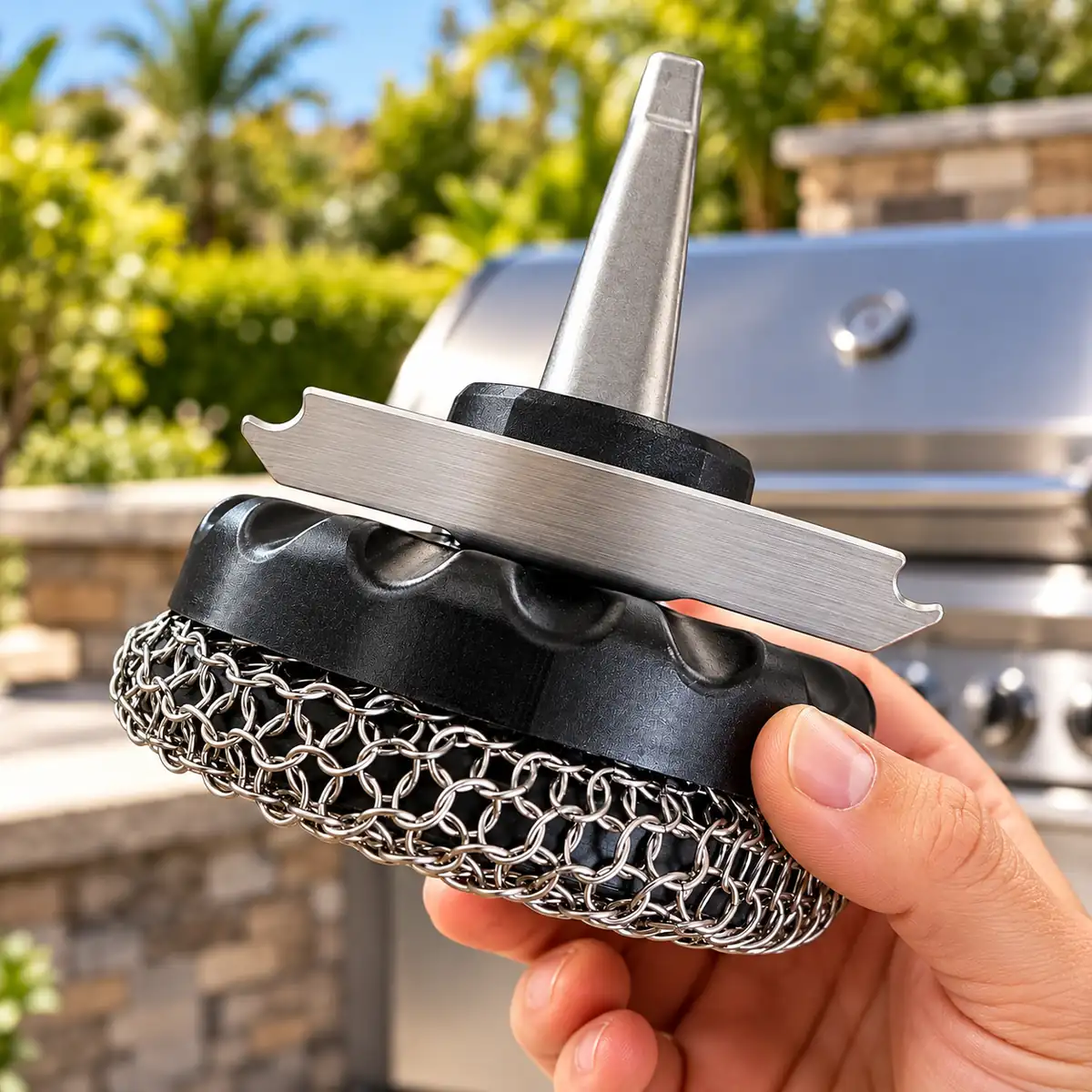
Pro Grill chose the Smarter Scrubber because it brings together the things that mattered most to us: a bristle-free design, durable construction and thoughtful U.S. manufacturing.
It is the brush we are comfortable using ourselves, sharing with family and friends and recommending to Pro Grill customers.
What Is a Grill Brush?
A grill brush is a hand tool designed primarily to remove cooked-on food, grease and carbon residue from BBQ cooking grates. Most have a long handle that keeps your hand away from the cooking surface and a cleaning head made from some type of abrasive material.
Traditional grill brushes commonly use clusters of short metal wire bristles. As the brush is moved back and forth over the grates, those bristles scrape residue from the cooking surface. Some brushes also include a metal scraper for heavier deposits.
Newer grill cleaning tools approach the same job differently. Instead of individual wire bristles, they may use continuous metal coils, nylon, woven metal, replaceable cleaning pads, steam-assisted heads or shaped pieces of wood.
Although all of these products may be described as a grill brush, they do not necessarily work the same way or belong on every type of cooking grate.
What Is the Best Grill Brush?
There is no single best grill brush for every grill.
A better question is: What is the best grill brush for your particular cooking grates?
The construction of the grate matters. Heavy stainless-steel rods can tolerate cleaning methods that may not be appropriate for a more delicate coated surface. Cast iron also has different care requirements, especially when maintaining its seasoned surface.
Before choosing a brush, check the grill manufacturer's cleaning and care instructions. That should take priority over a generic recommendation printed on the packaging of a cleaning tool.
Look for a well-built cleaning tool that is appropriate for your grate material, gives you enough handle length to maintain control, reaches the areas you actually need to clean and can itself be inspected and maintained. Given the concerns surrounding detached wire bristles, grill owners should also consider whether a bristle-free or non-wire design can do the job.
Types of Grill Brushes
The term “grill brush” now covers several very different types of products. Understanding the basic designs makes it easier to choose a cleaning tool instead of simply buying whichever brush is hanging closest to the grills.
Wire Bristle Grill Brush
Individual metal bristles provide aggressive scraping action and have traditionally been one of the most common designs. The primary concern is the possibility of individual bristles detaching from the brush.
Nylon Grill Brush
Nylon brushes use non-metal bristles and are commonly intended for cleaning a cooled grill. Because nylon can be affected by high heat, follow the tool manufacturer's temperature and use instructions.
Coiled Grill Brush
These cleaners typically use continuous metal coils instead of rows of individual short wire bristles. Their shape can provide effective scraping while eliminating the traditional individual wire-bristle design.
Chainmail Grill Scrubber
The Smarter Scrubber uses welded stainless-steel chainmail backed by food-grade silicone rather than conventional individual wire bristles. This is the design Pro Grill chose for the first grill brush we have ever officially endorsed.
Wood Grill Scraper
Wooden paddles scrape the tops of cooking grates without wire bristles. With repeated use, grooves can gradually form in the wood corresponding to the position of the grate bars.
Steam Grill Brush
Steam-style cleaning tools use water and heat to help loosen residue. Designs vary considerably, so the manufacturer's directions for both the brush and grill should be followed.
Grate Cleaning Tools
Some tools clean individual grate rods or use chainmail, scrapers and other shapes rather than a conventional brush. These can be useful when access around individual rods matters.
Wire Grill Brush vs. Bristle-Free Grill Brush
For many years, the traditional wire grill brush had an obvious advantage: stiff wire bristles could quickly attack stubborn material on hot cooking grates.
But effectiveness is not the only consideration.
The concern with traditional wire brushes is that an individual bristle can separate from the brush. Because that piece of wire is extremely small, it can remain on the cooking grate and may later transfer to food.
Bristle-free designs eliminate that particular individual-wire bristle construction, although they have their own tradeoffs. A coil may not reach every narrow area. A wooden scraper takes time to conform to a particular grate. A nylon brush may need to be used on a cool surface. Some steam cleaners require replaceable heads.
| Grill Brush Type | Potential Advantage | Consideration |
|---|---|---|
| Wire Bristle | Aggressive scraping action | Individual metal bristles can potentially detach |
| Nylon | No metal wire bristles | Generally intended for cool-surface cleaning; follow manufacturer directions |
| Metal Coil | Bristle-free design with scraping ability | Shape may not reach every part of every grate |
| Wood Scraper | No wire or synthetic bristles | May require repeated use to form to grate pattern |
| Steam Tool | Uses moisture to help loosen residue | Cleaning heads require care and eventual replacement |
How to Use a Grill Brush
How you should use a grill brush depends on the type of brush and the grill manufacturer's recommendations. A wire brush designed for use on a warm cooking surface should not automatically be treated the same as a nylon brush intended for a cooled grate.
Start by reading the instructions for both your grill and the cleaning tool.
For routine grate cleaning, the basic goal is to loosen and remove food residue from the surfaces that contact food without damaging the cooking grate.
- Allow the grill to reach the temperature or condition recommended for the cleaning tool you are using.
- Use controlled strokes rather than violently forcing the brush against the grates.
- Work across the cooking surface systematically so you do not continually move loosened residue from one area to another.
- Pay attention to the spaces around the grate rods and edges of the cooking surface.
- Inspect the grate after cleaning for remaining debris or anything that does not belong on the cooking surface.
- Inspect the cleaning tool itself for deterioration before putting it away.
Should You Brush a Grill When It Is Hot or Cold?
This depends on the cleaning tool.
Some metal grill cleaning tools are designed to work while the grates are warm because heat can help soften certain food and grease deposits. Other cleaning tools—especially many nylon brushes—are intended to be used on a cool surface.
Do not assume every grill brush is heat resistant.
If the manufacturer says a cleaning tool is for cold cleaning, let the grill cool before using it. Using a product outside its intended temperature range can damage the cleaning head and may also damage the grill surface.
The Grill Manufacturer's Instructions Matter
Before aggressively scraping a cooking grate, identify what the grate is made from. Stainless steel, cast iron and coated grates can have different maintenance requirements. The owner's manual for your grill should be the first reference for approved cleaning methods.
How Often Should You Clean Your Grill Grates?
Cooking grates should receive routine attention rather than being allowed to accumulate layer after layer of food residue. Exactly how often they need cleaning depends on how frequently the grill is used and what you cook.
Fatty foods, sauces and marinades can leave substantially more residue than other foods. A grill used several times each week will naturally need more frequent attention than one used a few times per year.
Routine grate cleaning is easiest when buildup is addressed before it becomes a thick, hardened layer.
But there is an important distinction: cleaning your grill grates is not the same as cleaning your entire grill.
A Grill Brush Does Not Deep Clean Your BBQ
This is one of the biggest misconceptions we see around grill maintenance.
You can brush your cooking grates every time you cook and still have a very dirty grill underneath them.
Food, grease and carbon can accumulate below the cooking surface, around heat-distribution components, on briquette trays or flame tamers, in drip areas and throughout accessible areas of the firebox.
A grill brush primarily addresses the surface where the food sits. It does not automatically remove years of accumulated material from the rest of the BBQ.
That is where a more thorough professional grill cleaning service is different from routine brushing.
Pro Grill's cleaning process addresses accessible internal cooking areas and components rather than simply brushing the top of the cooking grates. Cleaning can also expose visible wear or deterioration that was previously hidden underneath heavy buildup.
How Often Should You Replace a Grill Brush?
There is no universal replacement schedule that applies to every grill brush. How quickly a cleaning tool wears depends on its construction, how frequently it is used, how aggressively it is used and how it is stored.
Instead of relying only on the calendar, inspect your grill brush regularly.
Signs that a grill brush or cleaning tool may need replacement include:
- loose, bent or missing bristles;
- a cleaning head separating from the handle;
- significant rust or corrosion;
- cracks or deterioration in the handle;
- worn or damaged cleaning coils;
- damaged pads or cleaning surfaces; and
- any part of the tool beginning to break apart.
If a product is subject to a safety recall, however, do not wait until it looks damaged. Follow the recall instructions.
Are Wire Grill Brushes Safe?
This question has become much more important for grill owners.
The specific concern with a traditional metal wire grill brush is not simply that the brush becomes worn. The concern is that an individual wire bristle can detach, remain on the cooking surface and potentially become attached to food.
A small wire can be difficult to see against a dark cooking grate, especially around grease, carbon and other cooking residue.
If swallowed, a sharp metal bristle can lodge in the throat or digestive tract and may require medical treatment.
Why Wire Bristles Are Being Reconsidered
The concern over metal wire grill brushes is no longer based only on isolated anecdotes. Federal product-safety actions have involved millions of wire grill brushes after reports of bristles separating from cleaning heads.
The U.S. Consumer Product Safety Commission has publicly urged consumers to stop using metal wire bristle grill brushes and switch to non-wire alternatives.
Why Is a Loose Grill Brush Bristle Difficult to Spot?
Consider the size of one wire in a grill brush.
Now imagine that tiny wire sitting parallel to a stainless steel grate, wedged between grate rods or lying in dark cooking residue.
It may not be obvious.
That is part of what makes this issue different from a large piece of a broken cooking tool. A loose wire bristle can be small enough to escape a casual visual inspection.
For anyone who has been using a traditional wire grill brush, inspect both the brush and cooking surface carefully. If the brush appears to be losing bristles, stop using it.
What Can You Use Instead of a Wire Grill Brush?
There are now numerous ways to clean grill grates without using a traditional brush made from individual metal wire bristles.
That does not mean every alternative is automatically right for every grill. You still need to consider the grate material, cleaning temperature and manufacturer's instructions.
1. Nylon Grill Brush
A nylon grill brush is one of the most straightforward alternatives because it retains the familiar brush shape without metal wire bristles.
Many nylon brushes are designed for cleaning cooled grates. That means they should not simply be substituted for a metal brush while the grill is extremely hot.
2. Bristle-Free Metal Coil Brush
Coiled grill cleaners use continuous metal loops or coils to scrape residue rather than hundreds of short individual wire bristles.
They can be a useful choice for people who prefer the feel of a metal cleaning tool but want to avoid the conventional wire bristle design.
3. Wood Grill Scraper
A wooden grill scraper is simple: a flat piece of suitable wood is pushed across the grates to remove residue.
With use, grooves can develop that correspond to the position of the cooking grate rods. The result is a tool shaped to a particular grill.
4. Steam-Assisted Grill Cleaner
Steam and water-assisted tools use moisture combined with heat to loosen material on the cooking surface.
These products come in several designs, including cleaning heads that absorb water and release steam against a heated cooking grate.
5. Individual Grate Cleaning Tools
Some cleaning tools are shaped to scrape around individual grate rods instead of covering a large area at once.
They can take longer to use but may provide better access around the sides of individual cooking rods.
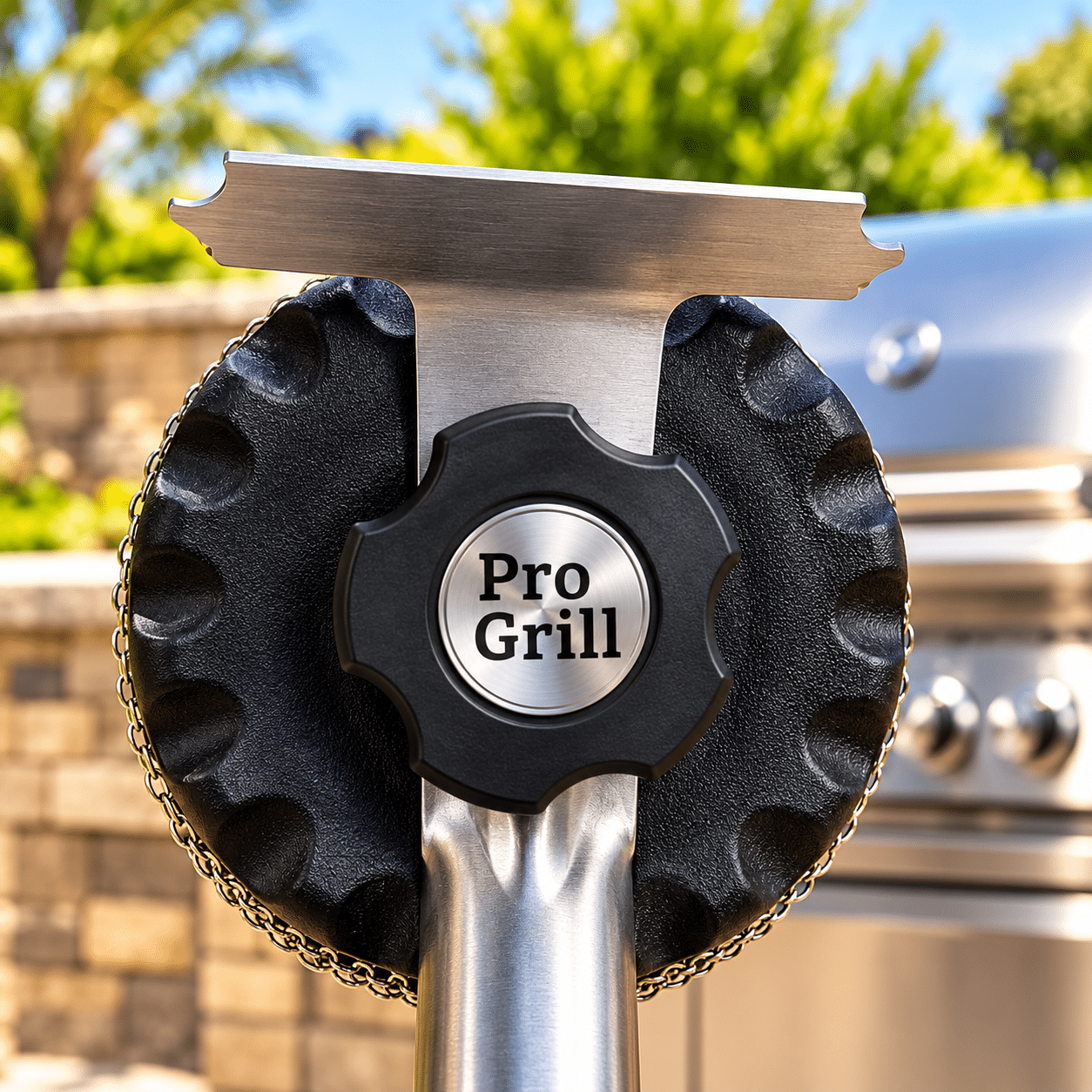
Why Pro Grill Chose a Chainmail Scrubber
We wanted to move away from conventional loose wire bristles without giving up the durable scrubbing action grill owners expect. The Smarter Scrubber uses food-safe welded stainless-steel chainmail backed by food-grade silicone, and its removable head can also be used to clean cast-iron cookware.
BUY SMARTER SCRUBBER — $59.99Is a Bristle-Free Grill Brush Better?
If your primary concern is avoiding loose individual wire bristles, then a genuinely bristle-free design eliminates that specific construction.
That does not mean every bristle-free grill brush is equally effective.
A brush should still clean the particular grates on your grill without causing unnecessary damage. A bulky coil cleaner might have difficulty reaching narrow spaces. A wood scraper may not immediately fit the grate profile. A poorly maintained steam cleaning head can become dirty itself.
The goal is not to find a cleaning tool that sounds safest or most powerful in an advertisement. It is to use a well-designed tool appropriately and maintain it in good condition.

The Barbecue Lab Tested 11 Bristle-Free Grill Brushes.
In its video “We Found the Best Grill Brush (And It's Not What You Think)”, The Barbecue Lab tested 11 bristle-free grill brushes side by side on real, dirty grill grates.
Can You Clean a Grill Without a Grill Brush?
Absolutely.
A grill brush is a tool, not a requirement for owning a BBQ. Depending on the manufacturer's recommendations, scrapers, approved cleaning pads, non-wire cleaning tools and other methods may all be available.
For extensive internal buildup, however, changing brushes will not solve the larger problem.
If grease and carbon have accumulated throughout the interior, consider a deep grill cleaning rather than trying to reach every internal component with a handheld grate brush.
Major Grill Brush Recalls & the Growing Wire-Bristle Concern
The safety discussion surrounding wire grill brushes has become especially significant because several extremely large recalls have involved well-known grill and cooking brands.
We intentionally put this information farther down this guide because the subject is bigger than any one manufacturer. Understanding the underlying issue is more useful than simply memorizing a list of recalled products.
Still, the scale of the recalls deserves attention.
| Brand | Approx. Units Recalled | Reported Detached-Bristle Incidents / Reviews | Reported Ingestion Cases Seeking Treatment |
|---|---|---|---|
| Weber | 3.2 million | 38+ | 4 |
| Nexgrill | 10.2 million | 68+ | 5 |
| Cuisinart | 3.625 million | 54+ | 3 |
| Combined | 17+ million | 160+ | 12 |
Weber Grill Brush Recall
The U.S. Consumer Product Safety Commission announced a recall of approximately 3.2 million Weber metal wire bristle grill brushes because small metal bristles could detach from the brush and remain on the grill or food.
The recall includes Weber models 6277, 6278, 6463, 6464, 6493 and 6494.
CPSC reported that Weber was aware of at least 38 reports or reviews involving detached bristles, including four reports in which consumers swallowed metal bristles and sought medical treatment.
The remedy offered through the recall is a replacement with a cold-cleaning nylon bristle grill brush.
Nexgrill Grill Brush Recall
Approximately 10.2 million Nexgrill metal wire bristle grill brushes were recalled because the bristles could detach and create an ingestion hazard.
The affected model numbers listed by CPSC are 530-0024, 530-0024G, 530-0034, 530-0039, 530-0041 and 530-0042.
CPSC reported at least 68 reports or reviews involving wire bristles detaching. Five reports involved consumers swallowing metal bristles and seeking medical treatment to remove them from the throat or digestive tract.
Consumers with an affected brush are instructed to stop using it and follow the recall process for a refund.
Cuisinart Grill Brush Recall
The Cuisinart grill brush recall was expanded to include approximately 3.625 million metal wire bristle grill brushes. The CPSC states that all Cuisinart wire bristle grill brushes are included in the recall.
The recalled brushes include multiple designs and models, with some brushes also sold as components of larger grilling tool sets.
CPSC reported at least 54 reports or reviews involving detached wire bristles, including three reports in which consumers swallowed bristles and sought medical treatment.
Consumers are instructed to stop using affected brushes and follow the recall instructions for the available refund or credit remedy.
View the official Cuisinart grill brush recall at CPSC.gov →
What Should You Do If Your Grill Brush Has Been Recalled?
Do not continue using a recalled brush simply because it still looks good.
Follow the instructions in the official CPSC recall notice for your specific product. The remedies differ by manufacturer, so the process for one brand should not be assumed to apply to another.
If you have previously used a wire grill brush, inspect the cooking surface carefully for any foreign material before putting food on the grill.
Use the official CPSC recall information linked above rather than relying solely on an old retailer listing, social-media post or photograph. Recall details and remedies can be updated.
What Pro Grill Recommends
For routine grate cleaning, Pro Grill now has a specific recommendation: the Smarter Scrubber is the Official Grill Brush of Pro Grill. It is the first grill brush we have ever officially endorsed.
We chose it because we wanted to eliminate the conventional loose wire-bristle design while still offering customers a durable, useful grill scrubber we would be comfortable using around our own families. Its cleaning surface is made from food-safe welded stainless-steel chainmail backed by food-grade silicone.
The Smarter Scrubber was developed by JJGeorge's John Youngblood with Destin Sandlin of Smarter Every Day. Their work included engineering, prototyping and developing manufacturing equipment as they worked toward producing the product in the United States.
For best performance and longevity, the Smarter Scrubber should not be used on a blazing-hot grill or exposed directly to extreme high heat. As with any cleaning tool, follow the grill manufacturer's care instructions for your particular grate material.
New Protection Plan Members Get One FREE.
New Pro Grill Protection Plan members in our local service market receive the Smarter Scrubber at no additional cost when they join. Not a member? You can order the Smarter Scrubber online for $59.99.
Does Your Grill Need More Than a Brush?
A grill brush handles routine surface cleaning. Pro Grill provides professional grill cleaning when grease, carbon and debris have accumulated deeper inside the BBQ. If your grill will not light, is not heating correctly or has deteriorated components, we can also diagnose and repair the problem.
More Grill Cleaning & Maintenance Resources
Grill Brush Frequently Asked Questions
What is the best grill brush?
The best grill brush depends on your grill grate material and the manufacturer's cleaning instructions. Grill owners can choose among nylon brushes, bristle-free metal coil cleaners, wood scrapers, steam-cleaning tools and other designs. Because of concerns involving detached metal wire bristles, many grill owners are considering non-wire alternatives.
Are wire grill brushes safe to use?
Traditional wire grill brushes can shed individual metal bristles. If a bristle remains on the cooking grate, it can potentially transfer to food and create an ingestion hazard. Large recalls involving Weber, Nexgrill and Cuisinart wire grill brushes have highlighted this concern.
What can I use instead of a wire grill brush?
Alternatives include nylon grill brushes, bristle-free metal coil cleaners, wood grill scrapers, steam-assisted cleaners and other grate-cleaning tools. Always make sure the cleaning method is appropriate for your grill's cooking surface.
Should I use a grill brush on a hot grill?
It depends on the brush. Some metal cleaning tools are designed for warm grates, while many nylon brushes are intended for cold cleaning. Follow the instructions supplied with the cleaning tool and the grill manufacturer's recommendations.
How often should I replace my grill brush?
There is no universal replacement interval. Inspect the brush regularly and replace it when the cleaning head, bristles, coils, pads or handle show deterioration. If the brush is subject to a recall, stop using it and follow the recall instructions regardless of its appearance.
Can I clean my grill without a grill brush?
Yes. Depending on the grill manufacturer's recommendations, other options can include approved scrapers, cleaning pads, wooden tools, steam cleaners and bristle-free grate-cleaning tools. Professional grill cleaning is also available for buildup deeper inside the BBQ.
Does a grill brush clean the whole grill?
No. A grill brush primarily cleans the cooking grates. Grease, carbon and food residue can accumulate below the grates and around internal components where routine brushing does not reach.
What should I do if wire bristles are falling out of my grill brush?
Stop using the brush. Inspect the cooking surface carefully before preparing food and replace the cleaning tool. If you believe the brush may be subject to a recall, check the current CPSC recall information for the product.
Are bristle-free grill brushes effective?
They can be. Effectiveness varies by design and grill grate. Metal coils, steam cleaners, wooden scrapers and individual grate cleaners work differently, so the best option depends on the cooking surface and the type of residue being removed.
What grill brush does Pro Grill recommend?
Pro Grill recommends the Smarter Scrubber, a bristle-free grill scrubber made with welded stainless-steel chainmail backed by food-grade silicone. It is the first grill brush Pro Grill has officially endorsed and is the Official Grill Brush of Pro Grill.
Sources & Further Reading
- U.S. Consumer Product Safety Commission — Weber Metal Wire Bristle Grill Brush Recall
- U.S. Consumer Product Safety Commission — Nexgrill Metal Wire Bristle Grill Brush Recall
- U.S. Consumer Product Safety Commission — Cuisinart Grill Brush Recall
- U.S. Consumer Product Safety Commission — Statement on Wire Grill Brush Safety
- Bon Appétit — Grill Brush Testing & Bristle-Free Cleaning Options