Grease buildup is one of the most important things to watch inside a BBQ grill. Every time you cook burgers, steaks, chicken, sausages or other foods, grease and drippings can fall below the cooking surface and collect inside the grill.
A small amount of fresh grease during cooking is normal. The problem begins when grease is allowed to accumulate over many grilling sessions.
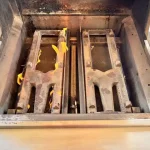
Old grease can collect inside the firebox, on heat-distribution components, around briquette trays and inside grease-management areas. When the grill heats up again, that accumulated material can smoke, produce unpleasant odors, contribute to repeated flare-ups and provide additional fuel if a grill fire develops.
That is why grease buildup in a grill is not simply a cleanliness issue—it can become a serious fire risk.
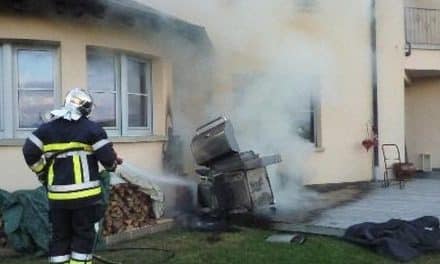
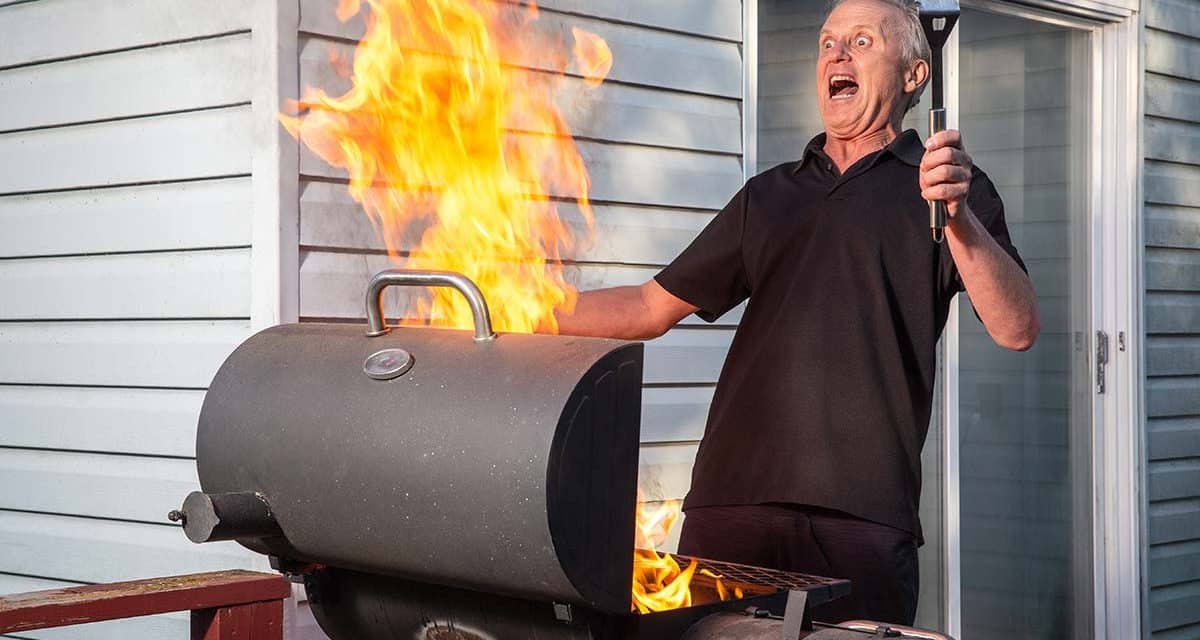
Excessive grease buildup inside a BBQ can ignite. Grease and cooking residue can accumulate beneath the grates, inside the firebox and throughout grease-management areas. Warning signs can include heavy smoke during preheating, old grease odors, frequent flare-ups and visible pools or layers of grease inside the grill.
Where Does All the Grease Go When You Grill?
It is easy to assume that most grease simply burns away while you are cooking.
Some certainly burns when it reaches a hot surface or flame, but much of it does not disappear.
As food cooks, fats and juices drip through the cooking grates. Depending on the design of your grill, those drippings may land on:
- Ceramic briquettes
- Briquette trays
- Heat shields
- Flame tamers
- Burner-area surfaces
- The bottom of the firebox
- Drip pans
- Grease trays and collection systems
A properly designed grill directs some of those drippings toward its grease-management system. But grease and carbonized residue can still accumulate on surfaces throughout the interior.
This means a BBQ can have relatively clean cooking grates while containing substantial grease underneath them.
Why Grease Buildup Can Become a Grill Fire Risk
Grease is combustible. If enough grease accumulates inside a BBQ and reaches a sufficiently high temperature, it can ignite.
The problem becomes more significant as layers of old grease and cooking residue continue accumulating.
When you light the grill, the heat source is positioned directly beneath or near these areas. Fresh drippings may also fall onto already-hot grease and residue while you cook.
That combination of heat, flame and accumulated combustible material is why grease management is such an important part of BBQ maintenance.
Never ignore a grill that contains substantial grease accumulation. If a significant fire occurs, follow the grill manufacturer's safety instructions and shut off the fuel supply if it can be done safely. Do not put yourself at risk trying to control a grill fire.
Normal Flare-Up or Grease Fire? They Are Not the Same Thing
Anyone who grills regularly has probably seen a brief flare-up.
Fat drips from a burger or steak, reaches a hot surface or flame and produces a quick burst of fire. A short cooking flare-up can occur even in a properly maintained grill.
A grease fire is different.
Instead of a small amount of fresh fat briefly igniting, accumulated grease inside the BBQ itself may begin burning.
That can produce sustained flames and significantly more heat than an ordinary momentary flare-up.
If your grill repeatedly develops large flames even when you are not cooking unusually fatty food, it deserves attention.
Warning Signs Your Grill Has Too Much Grease Buildup
You do not have to wait for a fire to discover that grease has accumulated inside your BBQ. The grill will often give you warning signs first.
- Heavy smoke while preheating: old grease and residue may begin smoking before you have even placed fresh food on the grill.
- Frequent flare-ups: repeated or unusually large flare-ups can indicate combustible residue beneath the cooking surface.
- Old grease odor: a stale, heavy grease smell as the BBQ heats can indicate old cooking residue is being reheated.
- Visible grease: pools, thick coatings or layers of grease inside the firebox or grease-management areas should not be ignored.
- Overflowing grease tray: a full or overflowing drip tray is an obvious sign that maintenance is overdue.
- Heavy carbon deposits: thick black buildup around heat shields, briquette trays and the firebox can indicate repeated accumulation and heating of cooking residue.
Why Is My Grill Smoking Before I Even Put Food On It?
This is one of the most useful clues that a BBQ may need cleaning.
Smoke created by fresh food hitting a hot grill is expected. But if significant smoke begins while the grill is simply preheating, something already inside the grill is being heated.
Often that is old grease, carbonized food residue or buildup on heat-distribution components.
The odor can also provide useful information. Old cooking grease generally smells very different from the smoke produced by fresh food.
If your grill has started smoking significantly more than it used to, allow it to cool completely and inspect the areas beneath the cooking grates.
Can You Just Burn the Grease Off the Grill?
This is where a common grill-cleaning shortcut can create another problem.
Turning the BBQ to maximum heat is not the same thing as removing accumulated grease.
High heat may carbonize some residue, particularly on the cooking surface, but grease and debris can remain elsewhere inside the BBQ.
More importantly, aggressively heating a grill that already contains a substantial amount of grease can cause that grease to smoke—or ignite.
We explain this in more detail in Does High Heat Really Clean a Grill? .
See What Professional BBQ Cleaning Can Remove
Grease and carbon buildup can extend far beyond the cooking grates. This video shows why cleaning the interior of the BBQ matters and what can be hiding beneath the cooking surface.
Is There Years of Grease Inside Your BBQ?
Pro Grill specializes in professional deep BBQ cleaning. We remove accumulated grease, carbon and cooking residue from applicable areas of the grill—not simply the visible cooking grates.
Our professional process uses non-toxic, food-grade degreasing products together with high-temperature steam cleaning.
Grease Buildup Can Affect More Than Fire Risk
Fire prevention is the most important reason to avoid excessive grease accumulation, but it is not the only reason.
Heavy grease, carbon and cooking residue can affect the overall condition of the BBQ and make normal maintenance considerably more difficult.
Grease Can Hide Deteriorating Grill Parts
Burners, briquette trays, heat shields and other components operate in an extremely demanding environment.
They repeatedly heat and cool while being exposed to grease, food residue and outdoor conditions.
Eventually, components can corrode, crack, burn through or otherwise deteriorate.
Thick grease and carbon can make those problems difficult to see.
Removing buildup can expose the actual condition of the grill underneath.
Buildup Can Interfere With Heat Distribution
Many grills use ceramic briquettes, briquette trays, flame tamers or heat shields to distribute heat between the burners and cooking surface.
Heavy contamination around these components can change how heat and drippings move through the BBQ.
If your grill has developed new hot spots, cold spots or inconsistent cooking performance, the condition and cleanliness of the components beneath the grates deserve attention.
Old Grease Can Affect the Grilling Experience
Fresh food should not have to compete with months or years of old cooking residue.
Old grease can produce heavy smoke and unpleasant odors as it reheats.
Keeping the grill cleaner reduces the amount of old residue being reheated every time you cook.
Where Should You Check for Grease Buildup?
After the BBQ is completely cool and the fuel is safely off, the areas worth checking depend on the grill's design.
Common grease-collection areas include:
- Underneath the cooking grates
- On and around heat shields
- Around ceramic briquettes
- On briquette trays
- Inside the lower firebox
- Around accessible burner areas
- Inside grease channels
- Drip pans and grease trays
- Removable grease collection cups
Your grill manufacturer's instructions should be your guide for removing, cleaning or accessing specific components.
Don't Forget the Grease Tray
The grease tray or drip pan may be one of the least exciting components on a grill, but it performs an important job.
Depending on the BBQ design, grease is directed away from the cooking area and into a removable tray, pan or collection container.
That system only works properly when it is maintained.
If the collection area becomes excessively full, grease can overflow into areas where it was not intended to accumulate.
Make checking the grease tray part of routine BBQ maintenance rather than waiting until you smell burning grease or discover an overflow.
Don't judge the cleanliness of your BBQ only by looking at the cooking grates. Periodically check the grease tray and the accessible areas underneath the cooking surface after the grill has completely cooled.
Does Grease Buildup Affect the Taste of Food?
It can affect the cooking environment.
There is an important difference between flavorful smoke intentionally produced while grilling and smoke generated by layers of old cooking grease.
Old residue can begin smoking as the grill preheats and continue smoking while fresh food cooks.
Keeping excessive grease and carbon out of the BBQ means the smoke around your food is less likely to be coming from months of accumulated residue.
How Often Should You Remove Grease From a Grill?
There is no single schedule that applies to every BBQ.
A grill used several times each week will generally accumulate grease faster than one used occasionally.
What you cook also matters.
Burgers, steaks, sausages and other fatty foods can produce considerably more drippings than leaner foods. Sauces and marinades can contribute additional residue.
Instead of relying only on a calendar, monitor the condition of the grill.
Routine maintenance should include checking grease-management areas before they become overloaded and keeping obvious food and grease accumulation under control.
For a broader maintenance plan, see our DIY BBQ Maintenance Guide .
DIY Grill Cleaning vs. Professional BBQ Cleaning
Homeowners can and should perform routine maintenance.
Keeping the cooking surface maintained, emptying grease trays and periodically checking accessible areas beneath the grates can prevent many grills from reaching an extreme level of buildup.
But routine maintenance and professional deep cleaning are not the same service.
Routine DIY Maintenance
Reasonable homeowner maintenance can include:
- Cleaning the cooking surface as appropriate
- Removing obvious food residue
- Checking and emptying grease trays
- Wiping accessible surfaces
- Looking for excessive grease accumulation
- Visually checking accessible components for deterioration
Professional Deep Cleaning
Professional BBQ cleaning goes considerably deeper.
Pro Grill works through applicable areas of the grill to remove accumulated grease, carbon and cooking residue using scraping, brushing, vacuuming, professional degreasing and high-temperature steam.
The objective is to clean the grill as an entire cooking system rather than simply making the cooking grates look better.
You can see what our service includes on our professional BBQ cleaning service page .
What If Cleaning Reveals Damaged Grill Parts?
This happens frequently enough that it is worth understanding the difference between cleaning and repair.
Once layers of grease and carbon are removed, the condition of the components underneath becomes much easier to evaluate.
You may discover:
- A cracked or deteriorated burner
- A briquette tray that has burned through
- Damaged ceramic briquettes
- A deteriorated heat shield
- A damaged ignition electrode
- A rusted grease tray
- Other worn internal components
Cleaning cannot repair a failed component.
If your BBQ also has ignition, burner, heat or mechanical problems, Pro Grill provides professional BBQ grill repair .
What Happens If You Continue Cooking Without Removing the Grease?
The buildup does not reset after each grilling session.
More grease and food residue can be added every time you cook.
Over time, you may begin noticing more smoke, stronger old-grease odors, larger flare-ups and increasingly heavy deposits underneath the cooking surface.
Eventually, the grill can reach the point where a routine brushing of the grates does very little to address the condition of the appliance as a whole.
For a broader look at the consequences of neglected grill maintenance, read What Happens If You Don't Clean Your Grill? .
Don't Create a New Problem While Trying to Remove Grease
Heavy grease can be frustrating, particularly when it has been repeatedly heated and baked onto grill components.
But aggressive cleaning is not always better cleaning.
Be cautious about using inappropriate chemicals, highly abrasive tools, indiscriminate pressure washing or extreme heat in an attempt to remove stubborn buildup.
Grills contain multiple materials and components, including stainless steel, cast metals, ceramic parts, burners, wiring and ignition components.
The correct cleaning method for one surface may not be appropriate for another.
We cover these issues in 10 Common BBQ Cleaning Mistakes and How to Avoid Them .
More Grill Cleaning & Safety Resources
Frequently Asked Questions About Grill Grease Buildup
Can grease buildup in a grill catch fire?
Yes. Grease is combustible. If enough grease accumulates inside a BBQ and reaches a sufficiently high temperature, it can ignite. Keeping grease-management areas and the grill interior properly maintained helps reduce the amount of combustible buildup inside the appliance.
Why does my grill keep having flare-ups?
Brief flare-ups can occur when fresh fat drips from food onto a hot surface. Frequent or unusually large flare-ups can also be associated with accumulated grease and cooking residue beneath the grates and should be investigated once the grill has completely cooled.
Why does my grill smoke when there is no food on it?
Heavy smoke during preheating can be caused by old grease, carbonized food residue and buildup already inside the grill. If the BBQ begins smoking substantially before food is added, inspect its cleanliness after it has cooled completely.
Does high heat burn all the grease out of a grill?
No. High heat may burn or carbonize some residue, but it does not physically remove grease throughout the grill. Heating a BBQ containing substantial grease accumulation can also cause excessive smoke or ignition of the grease.
Where does grease collect in a gas grill?
Depending on the grill design, grease may collect on heat shields, briquette trays, ceramic briquettes, inside the firebox, in grease channels and within drip pans or grease trays.
How often should I empty my grill's grease tray?
There is no single schedule for every grill. Check it regularly based on how frequently you cook and what foods you prepare, and do not allow the grease-management system to become excessively full or overflow.
Can professional grill cleaning remove old grease buildup?
Professional deep cleaning is designed to remove accumulated grease, carbon and cooking residue from applicable areas throughout the grill. Pro Grill uses scraping, brushing, vacuuming, professional degreasing and high-temperature steam as appropriate for the appliance.
Can grease buildup damage a grill?
Heavy buildup can make the grill harder to maintain and can hide deteriorated burners, trays and other components. Removing grease and carbon makes accessible parts easier to inspect so actual component damage can be identified.
Should I clean or repair a grill with heavy grease buildup?
The grill may need one or both. Cleaning removes accumulated grease and residue. Repair addresses failed or deteriorated components such as burners, ignition parts or heat-distribution components. A deep cleaning can make it easier to determine the actual condition of the grill.
Don't Let Years of Grease Stay Hidden Inside Your Grill
Pro Grill specializes in professional BBQ cleaning, maintenance and repair. If your grill has heavy grease, carbon buildup, excessive smoke or frequent flare-ups, we can deep clean the BBQ and help identify components that may also need attention.