


Grill Repair: What to Do When Your Grill Isn't Working
Your grill won't light. It isn't getting hot. One burner barely works. Or maybe something just doesn't seem right. Before replacing parts—or replacing the entire grill—start by figuring out what the grill is actually doing.
We'll show you a few simple things you can check yourself, when basic troubleshooting makes sense, and when it's time to call a professional grill repair technician.
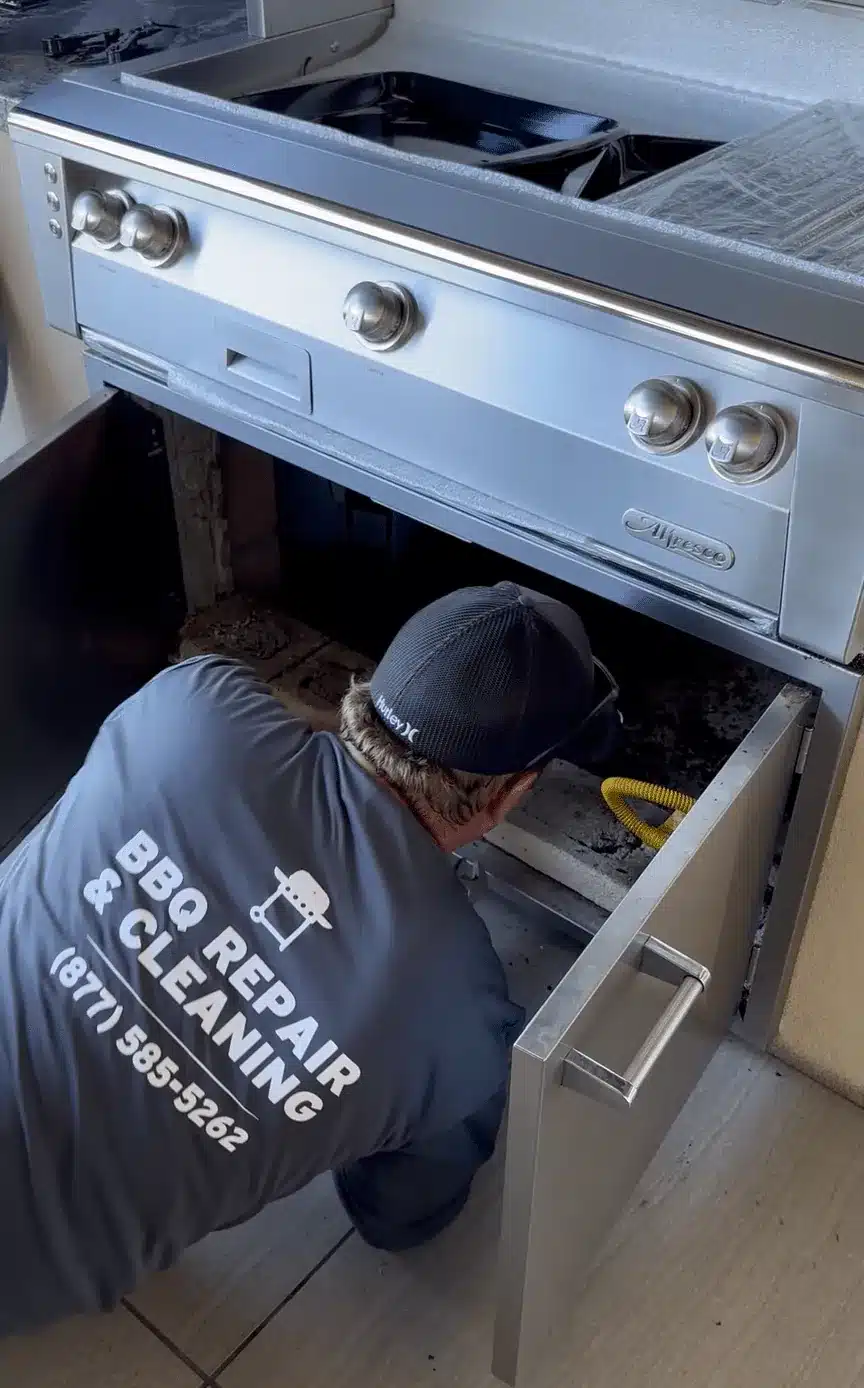
Start With What the Grill Is Doing
You don't have to know whether you have a bad burner, igniter, regulator, valve or another failed part. Start with the symptom.
Grill Won't Light
You turn the knob, press the igniter and nothing happens—or you hear clicking but the burner never lights.
Grill Won't Get Hot
The grill lights, but preheating takes too long or temperatures remain much lower than they used to.
One Burner Isn't Working
Some burners operate normally while another is weak, uneven or doesn't light at all.
Flames Look Different
Flames may appear uneven, unusually weak or noticeably different from the other burners.
Igniter Keeps Clicking
You can hear the ignition system working, but the burner still doesn't reliably ignite.
Knob Won't Turn
A control may feel stuck, loose or noticeably different from the other burner controls.
Heat Is Uneven
One side of the cooking surface runs much hotter or colder than another.
Grill Keeps Going Out
The burner lights initially but shuts off or will not remain operating normally.
Parts Are Falling Apart
Burners, trays, grates or other internal components may be corroded, warped, cracked or deteriorating.
Recognize One of These Grill Problems?
Tell us what your grill is doing. You don't need to know which part is broken before contacting us.
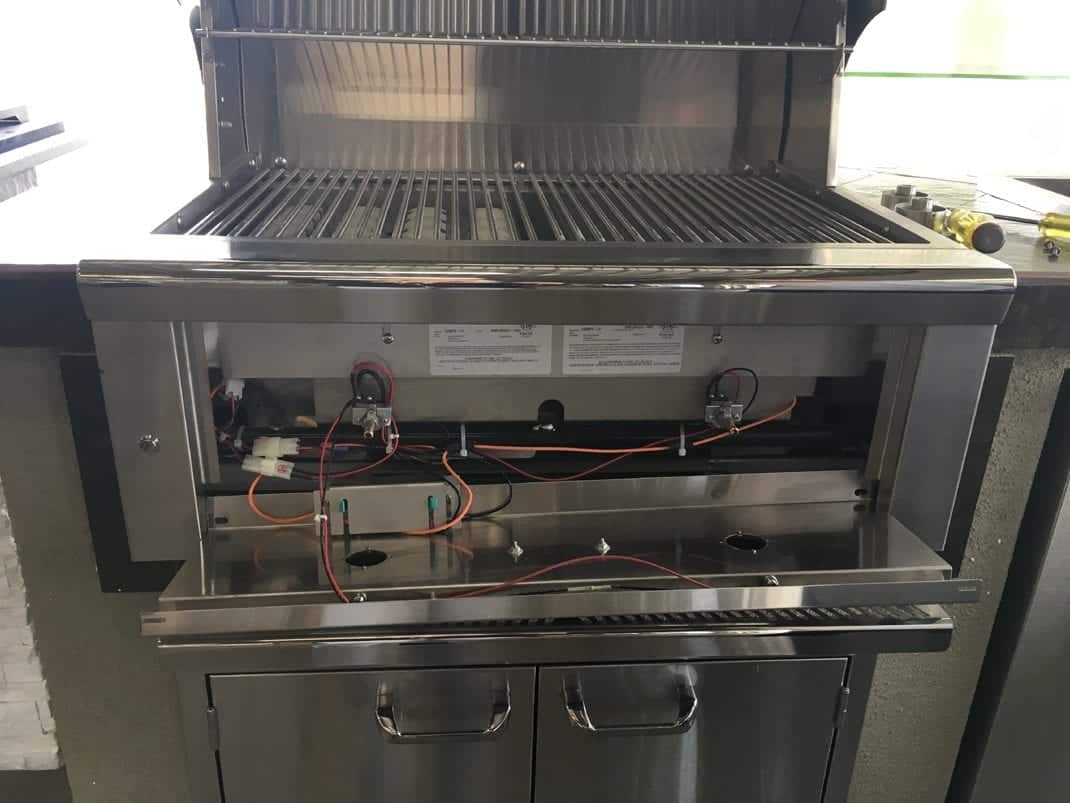
Some Grill Checks Are DIY-Friendly. Gas Repairs Are Different.
There is nothing wrong with checking simple things before scheduling grill repair. A dead igniter battery, empty propane tank or obvious cleaning issue does not necessarily require a professional.
But a gas grill combines fuel, ignition and high heat. There is a point where basic troubleshooting should stop and professional diagnosis should begin.
If you smell gas, hear an unexplained hissing sound, see damaged gas connections or suspect a leak, turn the grill off and shut off the fuel supply if it can be done safely. Do not continue trying to ignite or troubleshoot the grill.
Basic DIY Checks Before Calling for Grill Repair
You don't necessarily need a service appointment for every problem. Start with simple observations that don't require disassembling the gas system.
Check the Fuel Supply
For propane grills, confirm the tank isn't empty and that the fuel supply is turned on. For natural-gas grills, verify that the normal accessible shutoff is in its operating position.
Check the Igniter Battery
If your grill uses a replaceable battery for electronic ignition, a weak or dead battery can cause an otherwise functional ignition system to stop sparking.
Look at the Burner Flame
If the grill lights, compare the burners. Is one noticeably weaker? Is one section failing to ignite? Observing the difference can give a technician useful information.
Look for Visible Deterioration
With the grill completely cool and the fuel off, look for obvious corrosion, burned-through trays, damaged burners, broken grates or loose visible components.
Check the Grill's Cleaning Condition
Heavy grease, carbon and debris can make it difficult to see what is happening inside an older grill. Sometimes a grill needs cleaning as well as repair.
Find the Brand and Model
If possible, locate the manufacturer's model information. Knowing exactly which grill you own can make parts research and repair planning much easier.
When Should You Call a Professional for Grill Repair?
A few simple checks are one thing. Taking apart a gas appliance without knowing what is causing the problem is another.
Don't keep attempting ignition or experimenting with the grill when a possible fuel leak is involved.
If a temporary reset or simple check doesn't resolve the problem, the underlying cause may still need diagnosis.
When several burners behave abnormally, the problem may extend beyond one individual burner.
Gas-control components should not become a trial-and-error DIY repair project.
Replacing parts based on a guess can become expensive without actually correcting the problem.
When several components are badly corroded or damaged, it can make sense to evaluate the grill as a whole before ordering parts.
DIY Has Reached Its Limit?
You don't have to keep guessing. See how Pro Grill diagnoses and repairs BBQ grills.
What Is Your Broken Grill Doing?
The same symptom can have several possible causes. These checks can help you decide whether you have a simple issue or need professional grill repair.
My Grill Won't Light
A grill that won't ignite doesn't automatically mean the igniter itself has failed. The ignition source, electrode, wiring, burner and fuel delivery can all play a role.
- Confirm fuel is available.
- Confirm the normal fuel shutoff is open.
- Listen for the igniter clicking.
- Check an accessible igniter battery when applicable.
- Notice whether every burner or only one burner is affected.
- There is fuel but the burner still will not ignite.
- The igniter works but ignition is unreliable.
- Only certain burners fail.
- Wiring or electrodes appear damaged.
- You suspect a valve or gas-delivery problem.
My Grill Igniter Clicks but the Grill Won't Light
Hearing the igniter click tells you part of the ignition system is responding, but it does not necessarily mean the burner is receiving a usable spark or the correct fuel flow.
- Confirm the grill has fuel.
- Check whether the issue affects one burner or several.
- Replace an accessible igniter battery if your model uses one.
- Look for obvious visible damage around accessible ignition components when the grill is cool.
- Note whether the clicking sounds normal or different than before.
- The igniter clicks repeatedly but the burner never lights.
- The problem occurs on only certain burners.
- An electrode or ignition wire appears damaged.
- The problem returns after basic checks.
- The burner appears to have a fuel-delivery issue.
My Grill Lights but Won't Get Hot
Low heat is one of the easiest grill problems to misdiagnose. Burners are one possibility, but fuel supply, regulators, valves, restrictions and other components can also affect heat.
- Confirm adequate fuel.
- Compare the flame across all burners.
- Notice whether one burner or every burner is weak.
- Look for obvious visible burner deterioration when cool.
- Notice whether the problem started suddenly or became worse over time.
- All burners remain unusually weak.
- The problem returns repeatedly.
- Burners appear badly deteriorated.
- Heat remains low despite adequate fuel.
- The cause isn't obvious from basic checks.
One Burner Isn't Working Correctly
When the rest of the grill works normally but one burner doesn't, that difference can help narrow the diagnosis.
- Compare its flame with neighboring burners.
- Look for visible burner damage after the grill cools.
- Notice whether it ignites from the electronic igniter.
- Take photos of anything visibly different.
- Notice whether the burner is weak, completely off or uneven.
- The burner won't ignite reliably.
- The flame is consistently abnormal.
- The burner is corroded or damaged.
- The control itself behaves differently.
- You aren't sure whether the burner is actually the cause.
My Grill Has Uneven or Strange Flames
Burner flames should generally behave consistently across the grill. A noticeable difference between burners can help identify where further diagnosis is needed.
- Compare the flame pattern from burner to burner.
- Notice whether the issue is isolated to one area.
- Look for visible burner deterioration when the grill is completely cool.
- Take a photo or short video showing the difference.
- Notice whether the condition is getting progressively worse.
- One burner looks significantly different from the others.
- Several burners are behaving abnormally.
- Flame remains unusually weak or inconsistent.
- Burners show visible deterioration.
- You suspect the problem extends beyond the burner itself.
My Grill Knob Won't Turn or Feels Stuck
A grill knob is connected to the control behind it. If a knob suddenly becomes difficult to turn, forcing it can create a larger problem rather than fixing the original one.
- Compare the feel of the control with the other knobs.
- Look for obvious external damage to the knob.
- Make sure the knob itself has not become loose or cracked.
- Stop if the control feels unusually stiff or jammed.
- The control will not turn normally.
- The knob moves but the control behind it does not behave correctly.
- The control has become progressively harder to operate.
- You suspect the gas valve behind the knob is involved.
- You would need to disassemble gas-control components to continue.
My Grill Keeps Going Out
A burner that lights but will not remain operating can be frustrating because the grill initially appears to be working. Recurring shutdowns usually deserve more attention than simply relighting the grill over and over.
- Confirm there is adequate fuel.
- Notice whether one burner or the whole grill is affected.
- Observe whether the flame weakens before going out.
- Take note of how long the grill operates before the problem occurs.
- Stop using the grill if you smell gas or notice abnormal operation.
- The problem happens repeatedly.
- Several burners shut down or weaken together.
- The flame becomes noticeably abnormal before shutting off.
- The grill will not remain operating despite adequate fuel.
- The cause cannot be identified through basic observation.
My Grill Is Rusted Inside or Parts Are Falling Apart
Visible deterioration does not automatically mean the entire grill is finished. Many internal components are designed to be replaceable, while other types of deterioration may affect whether repair remains worthwhile.
- Wait until the grill is completely cool.
- Look for visible corrosion or holes in internal components.
- Identify which parts appear deteriorated.
- Take photos before removing or disturbing anything.
- Locate the brand and model information when possible.
- Multiple components are deteriorated.
- Burners or trays have holes or severe corrosion.
- You are unsure whether the damaged part can be replaced.
- The grill is an older premium built-in model.
- You need help deciding between repair and replacement.
Still Not Sure What's Wrong?
You don't have to keep troubleshooting. Tell our team what the grill is doing.
Can a Broken Grill Be Repaired?
In many cases, yes. A broken grill does not automatically mean you need to buy a new grill.
Burners, igniters, valves, internal trays, grates, briquette systems, knobs and other components can wear out while the main grill body still has usable life remaining. Depending on the brand and model, many of these components may be repairable or replaceable.
Whether grill repair makes sense depends on what has failed, the overall condition of the grill, availability of the correct replacement parts and the amount of work required to correct the problem.
This can be particularly important with a premium built-in grill. Replacing a built-in grill can involve more than purchasing a new appliance because the new grill also needs to properly fit the existing outdoor kitchen or BBQ island.
If you don't know what is broken, you don't need to diagnose the grill yourself. A professional evaluation can help determine what needs attention and whether repairing the existing grill remains practical.
The Part That Looks Broken Isn't Always the Actual Problem
This is where DIY grill repair can get expensive.
A grill that won't light may appear to need an igniter, but the problem can involve the electrode, wiring, burner or fuel delivery. A grill that doesn't get hot may look like it needs new burners when another part of the fuel-delivery system is contributing to the problem.
Likewise, a broken-looking knob does not automatically mean the knob itself is the only problem. The control behind it may need attention.
Professional grill repair should begin with diagnosis rather than guessing which part to order.
For a deeper look at burners, valves, ignition systems, briquettes, grates, knobs and other components, visit our complete BBQ repair service page .

Built-In and Freestanding Grill Repair
Both types of grills can develop similar mechanical problems, but the repair-versus-replace decision can be very different.
Built-In Grill Repair
A built-in grill is installed into an outdoor kitchen or BBQ island. That makes replacing it more involved than simply rolling away an old grill and putting another one in its place.
Even grills described as the same nominal width can have different cutout dimensions, countertop requirements, clearances and installation specifications.
For that reason, repairing a quality built-in grill can be especially worth evaluating when its main structure is still in reasonable condition and the required replacement parts remain available.
Burners, ignition components, valves, briquette trays, grates and other serviceable components may wear out long before the entire built-in grill needs to be discarded.
Freestanding Grill Repair
A freestanding or cart grill can also be worth repairing when the overall grill remains in good condition.
An ignition failure, damaged burner, worn internal component or control problem does not automatically mean the entire appliance has reached the end of its life.
The value of repair depends on the quality and condition of the grill, availability of replacement parts and how much work is needed to return it to normal operation.
If you're unsure, start with diagnosis rather than assuming the whole grill needs replacement.
What Happens When You Call Pro Grill?
You don't need to know the name of the broken part. Start by telling us what the grill is doing.
- Tell us the grill brand and model when available.
- Describe the problem or symptoms you are experiencing.
- Our technician evaluates the relevant grill systems.
- We work to identify the cause rather than simply guessing at parts.
- When parts are required, applicable components can be identified and sourced when available.
- We can help you understand whether repair remains practical for the condition of the grill.
The Grill Is at Your House. That's Where We Service It.
Built-in grills aren't going anywhere, and even large freestanding grills can be difficult to transport for service. Pro Grill provides mobile grill repair so the grill can be evaluated at the property where it is normally used.
This also allows the technician to see the grill in its normal installation and operating environment rather than having the customer remove and transport the appliance.
If you're dealing with a broken grill, simply tell us what is happening and what brand you own. We'll help you determine the right next step.
Should You Repair Your Grill or Replace It?
A broken grill doesn't automatically need to be replaced. But repair isn't automatically the right answer either.
Repair May Make Sense When...
The grill is otherwise in good condition, the firebox and major structure remain serviceable, the needed parts are available, and the repair addresses a limited number of failed or worn components. This can be especially worth considering with premium built-in grills.
Replacement May Be Worth Considering When...
Deterioration is widespread, several major components need attention, essential replacement parts are unavailable or the overall condition makes investing significantly more into the existing grill difficult to justify.
Not Sure Which Direction Makes Sense?
A professional grill inspection can help you understand the condition of the grill before making a larger repair or replacement decision.
Repair Starts With Understanding the Grill in Front of Us
Different brands, ages, installations and component conditions can create very different repair situations.
What If the Grill Is Dirty and Broken?
These are two different problems, but they can exist at the same time.
Heavy grease and carbon accumulation can make it more difficult to see the condition of burners, trays, grates and other internal components. Cleaning can expose deterioration that wasn't obvious beforehand.
But cleaning isn't a substitute for repairing a failed mechanical, ignition or gas-delivery component.
If your grill is heavily soiled and not operating correctly, tell us both when you contact us. We can help determine the appropriate service.
Grill Repair Is What We Do Every Day
Outdoor grills operate in a difficult environment. They are repeatedly exposed to high temperatures, grease, food residue, weather and normal wear.
Pro Grill works specifically with outdoor cooking equipment. Our repair and parts teams help diagnose grill problems, identify applicable components and complete repairs when practical.
We've completed more than 10,000 grill repairs and have received more than 2,500 five-star reviews from customers.
We work with built-in and freestanding grills from many premium and popular manufacturers. Exact repairability depends on the model, condition and availability of the correct parts.
Find the Right Next Step for Your Grill
Whether the grill needs diagnosis, repair, cleaning or replacement, you don't have to figure everything out yourself.
Frequently Asked Questions
Why won't my grill light?
Why does my grill igniter click but not light?
Why does my grill light but not get hot?
Why is only one grill burner working?
Why are my grill flames uneven?
What should I do if my grill knob won't turn?
Can I repair my gas grill myself?
Can a broken grill be repaired?
Is an old grill worth repairing?
Do you repair built-in grills?
What grill brands does Pro Grill repair?
What if my grill needs both cleaning and repair?
Still Trying to Figure Out What's Wrong With Your Grill?
You don't need to diagnose it before contacting us. Tell Pro Grill what the grill is doing, what brand you have and what you've already noticed. We'll help you determine the next step.