


Gas Grill Conversion: Propane to Natural Gas or Natural Gas to Propane
Can a gas grill be converted from propane to natural gas, or from natural gas to propane? Sometimes—but the answer depends on the grill. Pro Grill performs professional gas grill conversions on compatible grills, but we do not convert every brand or model.
Before you spend money on a conversion kit, new parts or even a replacement grill, call us. Our team can help identify what you have, explain whether conversion appears practical, guide you toward the right decision and help determine what the work may cost for your particular grill.
What Is a Gas Grill Conversion?
A gas grill conversion changes a grill that was configured by the manufacturer for one fuel type so that it can operate on another compatible fuel type. The two conversions homeowners most commonly ask about are propane to natural gas and natural gas to propane.
This is more involved than replacing a hose or attaching a different fitting. Propane and natural gas have different characteristics and are delivered to the appliance differently. The grill's fuel-delivery components must be appropriate for the fuel being supplied. Depending on the manufacturer and model, that can involve specific orifices, regulators, valves, fittings, hoses or a manufacturer-designed conversion kit.
Some grills were designed with an approved conversion procedure. Others were produced as separate propane and natural-gas models and are not intended by the manufacturer to be changed in the field. That distinction is one of the first things we consider when a customer calls Pro Grill about a conversion.
Not Sure Whether Your Grill Can Be Converted?
Call Pro Grill before ordering parts. If you can provide the brand, model number, current fuel type and a few photos, our team can help guide you toward the right next step and discuss what may be involved in determining a conversion cost.
Why Do Homeowners Want to Convert a Grill?
Fuel conversion often comes up because the grill and the property do not match. A homeowner may buy a house with a natural-gas connection already installed at the outdoor kitchen but own a propane grill. Someone else may purchase a replacement grill without realizing that the existing appliance was configured for a different fuel.
Natural gas is attractive to many homeowners because the grill can be connected to the home's available gas supply and there is no propane cylinder to refill or exchange. For people who grill frequently, that convenience can be significant.
Propane can make more sense when natural gas is not available at the grill location or when the appliance is intended for an installation that uses propane. The better choice is not universal; it depends on the property, grill, installation and how the homeowner plans to use it.
Another common situation involves an expensive built-in grill that is still in good condition. If the outdoor kitchen has the opposite fuel type, replacing a premium appliance solely because of fuel configuration may seem wasteful. If the manufacturer supports conversion and the appropriate parts are available, conversion may be worth evaluating before purchasing a new grill.

Propane and Natural Gas Are Not Interchangeable
One of the most important things to understand is that a propane grill should not simply be connected to natural gas, and a natural-gas grill should not simply be connected to propane. The appliance was designed around a particular fuel and fuel-delivery configuration.
A grill needs the correct relationship between fuel supply, pressure, metering components and burners. Using the wrong configuration can result in poor performance or abnormal combustion. That is why a proper conversion starts with identifying the exact grill and determining what the manufacturer permits.
What Are Grill Orifices and Why Do They Matter?
The word orifice comes up frequently when discussing gas grill conversion. An orifice is a small, precisely sized opening associated with the gas-delivery path to a burner. Its opening helps meter the amount of gas delivered for the appliance's intended fuel and operating configuration.
Propane and natural gas generally require different orifice sizing. This is one reason a fuel conversion is not accomplished by simply changing the hose. The grill must be configured so that the appropriate amount of the intended fuel reaches the burner under the conditions for which the appliance is designed.
A multi-burner grill may also have more than just the main cooking burners to consider. Depending on the appliance, there may be a rear rotisserie burner, sear burner, side burner or other gas-fired components. A legitimate conversion needs to account for the applicable components of that particular model rather than treating every grill as though it were the same.

What Parts May Be Needed for a Gas Grill Conversion?
The answer varies substantially from grill to grill. A manufacturer-supported conversion may use a model-specific kit containing the components required for that appliance. On another grill, individual approved or compatible components may be required. Some grills should not be converted at all.
- Fuel-specific burner orifices or manufacturer conversion components
- An appropriate regulator when required by the grill's approved configuration
- Fuel-specific valves or valve components on certain designs
- Approved hoses, fittings or connections appropriate to the application
- Components for rear, side or specialty burners when applicable
- Manufacturer labels, instructions or conversion-kit components where required
This list is not a DIY conversion procedure. It illustrates why we need to identify the manufacturer and model before quoting the work. Two grills that look nearly identical from the outside can require very different components.
Not Every Grill Brand Can Be Converted
Pro Grill performs gas conversions only when we determine that the particular grill is an appropriate candidate. We do not convert every brand or every model.
Some manufacturers sell propane and natural-gas versions of a grill but do not authorize changing an appliance from its original fuel configuration. Manufacturer policies matter because an unauthorized modification can affect warranty coverage and may put the appliance outside the configuration for which the manufacturer intended it to operate.
Weber is an important example. Pro Grill does not perform fuel conversions on Weber grills. If you own a Weber and want to change fuel types, we recommend following Weber's current manufacturer guidance rather than modifying the grill in a way that could affect its warranty or approved configuration.
For other manufacturers, conversion availability can vary by model and generation. That is why we prefer to look at the exact appliance rather than tell a customer that an entire brand is automatically convertible.
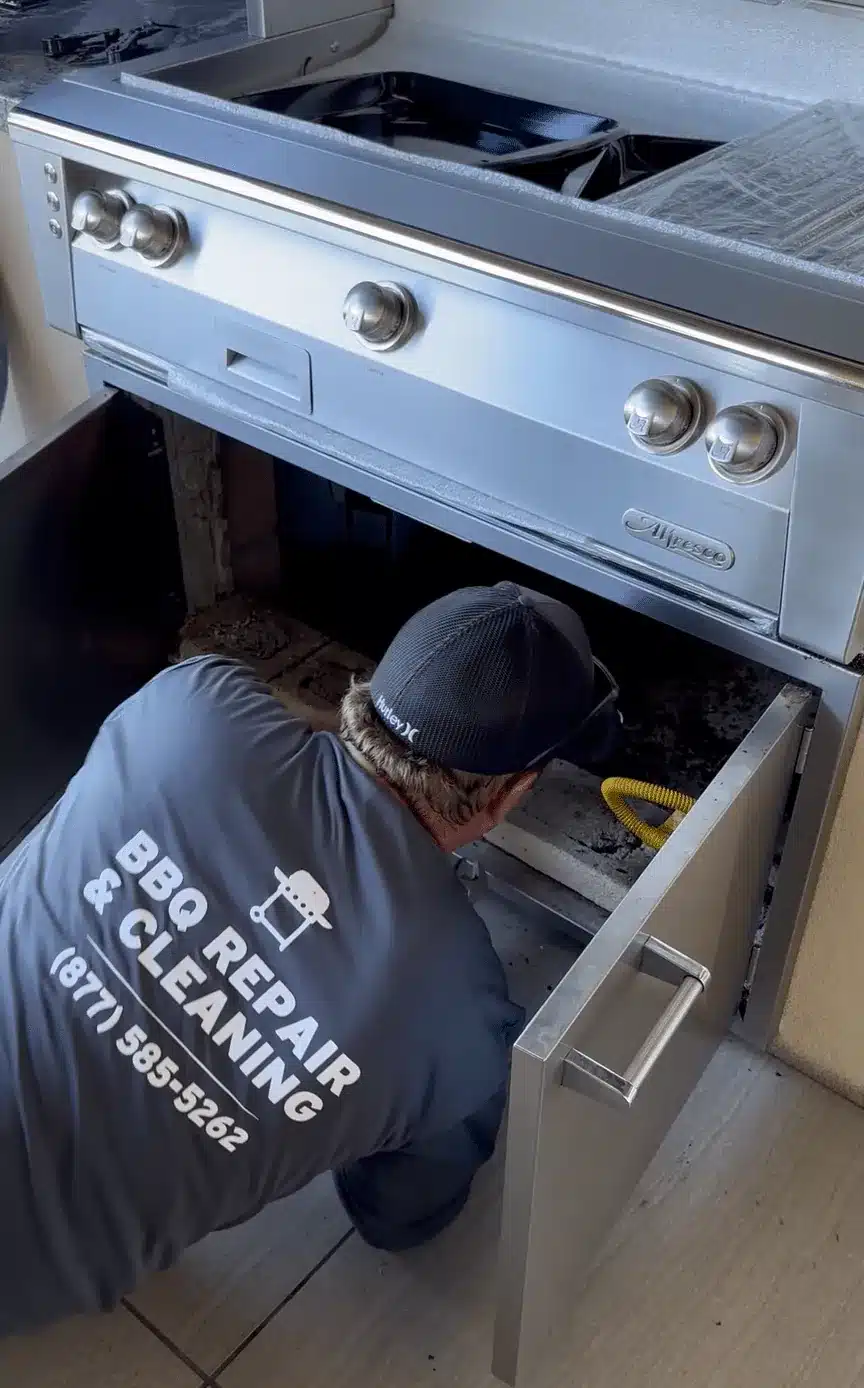
Let Us Evaluate the Grill Before You Spend Money
A quick conversation can often prevent the wrong parts from being ordered or money being spent on a conversion that is not appropriate for the appliance.
Call Pro Grill with the brand, model, current fuel type and a few photos if available. We can help determine what information is still needed and whether conversion, repair or replacement deserves a closer look.
How Pro Grill Determines Whether Conversion Is Possible
The process begins with information. When you contact us, the most useful details are the grill manufacturer, model number, current fuel type and the fuel you want to use. Photos of the grill, rating plate and outdoor-kitchen installation can also help.
From there, we can help determine whether the grill appears to have an appropriate conversion path and whether additional evaluation is needed. We may need to determine parts availability, review the condition of the appliance or inspect the installation before a final price can be established.
If you do not know the model number, that is common—especially with a built-in grill that came with the house. A rating or identification plate may be located in a manufacturer-selected location such as near a drip tray, inside an accessible cabinet or elsewhere on the appliance. If the grill cannot be identified remotely, a professional grill inspection may be the best starting point.
How Much Does a Gas Grill Conversion Cost?
Gas grill conversion pricing is based on the specific grill, the parts required and the amount of work involved. There is not one responsible flat price that applies to every conversion.
One grill may have a readily available manufacturer conversion kit and a relatively straightforward approved process. Another may require multiple fuel-specific components, additional labor or parts that are more expensive or difficult to source. The grill's condition can also affect the job. If components are heavily corroded, inaccessible or already damaged, additional work may be necessary before conversion is practical.
This is why we encourage you to call Pro Grill before purchasing conversion parts online. Our team can talk through what grill you have, what you are trying to accomplish and what information we need to help establish the right approach and a cost.
Call Us and Let Us Help You Make the Right Decision
You do not need to know which kit, orifice or regulator you need before calling. Tell us what grill you own and what fuel you have now. We can help guide you through whether conversion appears practical, what additional information is needed, and what the conversion may cost.
Is a Gas Grill Conversion Worth It?
For the right grill, yes. A conversion can be especially attractive when a premium built-in BBQ is in good condition, fits the outdoor kitchen correctly and would be expensive to replace. If an approved conversion path exists and the required parts are available, changing the fuel type may allow the homeowner to keep an appliance they already like.
Conversion may be less attractive when the grill is old and deteriorated, several other repairs are already needed, conversion parts are unavailable, the manufacturer does not permit the change, or the combined cost of conversion and repairs approaches the cost of a suitable replacement.
The condition of the surrounding installation matters too. A built-in grill is part of a larger outdoor-kitchen system. Fuel availability, grill opening dimensions, ventilation, clearances and the condition of the appliance all need to make sense together.

Conversion Is Only One Possible Solution
Sometimes conversion is the right investment. Other times the grill needs repair first, or replacement makes more financial sense. Because Pro Grill works with cleaning, repair, parts and replacement, our team can help you compare the options instead of looking at the fuel conversion in isolation.
Conversion vs. Replacing the Grill
If you are deciding between conversion and replacement, we can help evaluate both options. Sometimes keeping a high-quality grill and converting it is the practical choice. In other cases, putting significant money into an older appliance does not make sense.
Pro Grill also provides BBQ grill sales and replacement, so our conversation does not have to begin with the assumption that conversion is always the answer. Our goal is to help you understand the options and choose the path that makes the most sense for your grill and outdoor kitchen.
Can I Convert a Gas Grill Myself?
We recommend professional evaluation and conversion rather than treating fuel-system changes as a casual DIY project. Online videos and generic conversion kits can make the process appear universal, but grill designs and manufacturer requirements vary.
A fitting that physically attaches does not prove that the appliance is correctly configured for the fuel. Likewise, a flame that appears to light does not by itself establish that the conversion is correct. Gas pressure, fuel metering, burner operation and manufacturer requirements all matter.
If you smell gas, suspect a leak, hear unexplained hissing or observe abnormal operation, stop using the appliance and follow appropriate gas-safety procedures. Do not continue operating a grill that may have a fuel-system problem.
What Information Should I Have When I Call?
You can make the conversation faster by gathering a few details before contacting Pro Grill. Do not worry if you cannot find everything; our team can tell you what we need next.
- Grill brand or manufacturer
- Exact model number, if available
- Current fuel type: propane or natural gas
- Fuel type you want to convert to
- Photos of the grill and identification/rating plate
- Whether the grill is built-in or freestanding
- Any current problems with ignition, burners, heat or gas flow
- Whether you already have a conversion kit or other parts
With that information, we can have a much more useful conversation about feasibility, parts, inspection needs and pricing.
Gas Grill Conversion and Existing Grill Problems
A fuel conversion is also a good time to consider the overall condition of the grill. If the burners are deteriorated, ignition system is failing, briquette trays are damaged or the grill has significant grease and carbon buildup, those issues do not disappear simply because the fuel type changes.
Depending on the grill, it may make sense to address needed grill repairs or professional grill cleaning at the same general stage of ownership. We can help identify what is conversion-related and what is normal maintenance or repair so you can make an informed decision about the total investment.
More Than Gas Grill Conversion
Pro Grill specializes in professional BBQ service throughout the life of the appliance. If conversion is only one part of what your grill needs, our team can also help with:
BBQ Grill Cleaning
Professional deep cleaning for built-in and freestanding grills, including removal of accumulated grease and carbon from applicable accessible areas and components.
BBQ Grill Repair
Professional diagnosis and repair for ignition problems, burner issues, weak heat and other grill component failures.
Grill Inspection
A useful starting point when the grill has multiple problems, the model is unclear or you are deciding whether further work is worthwhile.
BBQ Maintenance
Ongoing grill care that can help identify cleaning, wear and service needs as outdoor cooking equipment ages.
BBQ Grill Parts
Help with burners, ignition components, grates, briquette trays and other replacement components for many major grill brands.
Grill Sales & Replacement
When conversion or repair no longer makes sense, we can help identify a replacement that works with the existing outdoor-kitchen application.
Gas Grill Conversion Service Areas
Pro Grill provides mobile grill services across our Southern California and Arizona service regions. Gas grill conversion availability still depends on the manufacturer, model, parts and type of work required, so we recommend calling before scheduling specifically for a conversion.
Visit our complete Pro Grill service-area directory or explore several of our major regional service areas below.
Orange County
Mobile BBQ cleaning, repair, inspection and related grill services throughout Orange County.
Los Angeles
Professional mobile grill service throughout Pro Grill's Los Angeles service areas.
Inland Empire
Grill cleaning, repair, inspection and related services across our Inland Empire coverage area.
Coachella Valley
Serving Palm Springs, Palm Desert, Rancho Mirage, La Quinta and surrounding desert communities.
Phoenix & Scottsdale
Professional mobile BBQ services throughout Pro Grill's greater Phoenix and Scottsdale service region.
All Pro Grill Locations
Use our service-area directory to find current Pro Grill coverage and local service information.
Gas Grill Conversion FAQ
Can every propane grill be converted to natural gas?
No. Conversion depends on the manufacturer, model and whether an appropriate conversion procedure and components are available.
Can a natural-gas grill be converted to propane?
Some compatible grills may be convertible in the opposite direction, but the same manufacturer, model, parts and fuel-system considerations apply.
Does Pro Grill convert Weber grills?
No. Pro Grill does not perform Weber fuel conversions because changing the original fuel configuration can conflict with manufacturer requirements and affect warranty coverage.
Do I only need to change the orifices?
Not necessarily. Requirements vary by appliance and may involve other fuel-specific components. A conversion should be based on the exact grill rather than a generic assumption.
Can you give me a conversion price over the phone?
Often we can help narrow down what is involved, but a final cost depends on the grill, required parts and labor. Photos, model information or an inspection may be needed.
Should I buy a conversion kit before calling?
We recommend speaking with us first. A kit advertised online may not be appropriate for your exact model or manufacturer-approved configuration.
Is conversion worth it on an older built-in grill?
It can be if the grill is structurally sound and the required components are available. If major repairs are also needed, replacement may be the better investment.
What if I cannot find my grill model number?
Call us anyway. Photos and an inspection can help identify the appliance and determine what information is needed before proceeding.
Before You Convert Your Grill, Talk With Pro Grill
Call us with the grill brand, model and current fuel type. We can help guide you toward the right decision, determine what additional information or parts may be needed, and help you understand the likely cost before you commit to a conversion or replacement.