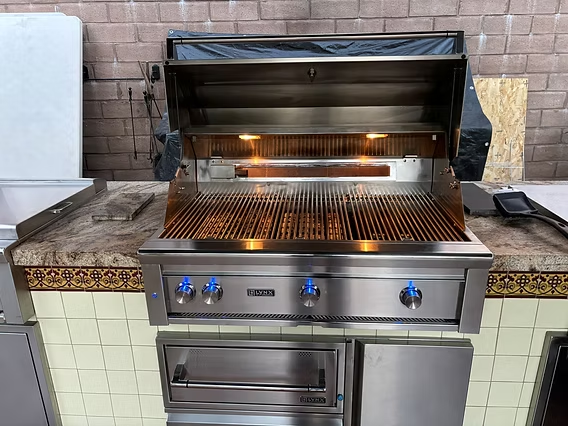
Grill Won't Light? Here's What to Check
A gas grill that suddenly won't light can be frustrating, but the problem does not always mean you need a new BBQ. Learn what the symptoms can tell you, what you can safely check yourself, and when it is time for professional grill repair.
You turn the knob, press the igniter, and nothing happens. Or maybe the grill clicks repeatedly but the burner never lights. Perhaps one burner works while the others stay cold. These symptoms can look similar from the outside, but they do not always have the same cause.
A grill that will not ignite can have a problem involving the fuel supply, ignition system, burner, regulator, valve or another component. In some cases the issue is relatively simple. In others, the grill needs professional diagnosis before any parts should be replaced.
The most useful starting point is not guessing which part is bad. It is paying attention to exactly what the grill is doing.
Does the igniter click? Can you see a spark? Does one burner light while another does not? Is the propane tank full? Did the problem begin after changing the tank, cleaning the grill, or leaving it unused for several months? Those details can help narrow down where the problem may be.
Grill Won't Light? Start With These Basic Checks
Before assuming the grill needs a new igniter, burner or valve, there are a few simple observations you can make without disassembling the gas system.
These are basic checks only. If you smell gas, hear unexplained hissing, suspect a leak or are unsure about the condition of the fuel system, stop using the grill and have it evaluated.
What You Can Safely Look At First
Confirm that the grill actually has a fuel source available. For a propane grill, make sure the cylinder is not empty. For a natural gas grill, verify that the accessible shutoff is in its normal operating position.
If your grill uses an accessible igniter battery, check the owner's manual and replace the battery if appropriate. Many electronic ignition systems stop clicking or produce a weak spark when the battery is depleted.
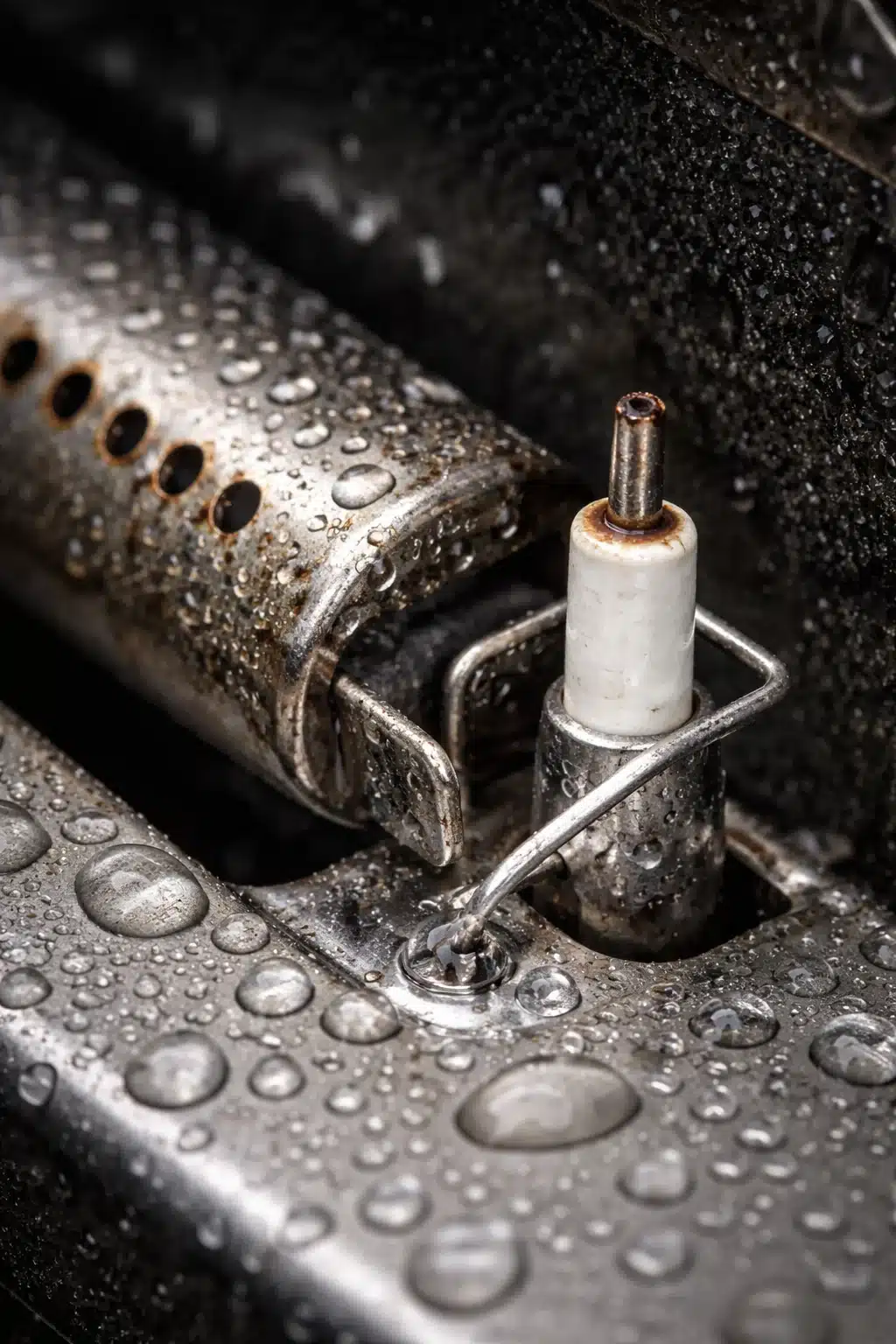
Look for obvious visible deterioration around accessible ignition electrodes, burners and wires without removing or altering gas-system components.
If those simple checks do not reveal the problem, the next step is to pay attention to the symptom.
What Different Grill Ignition Problems Can Mean
Nothing Happens
No click, no visible spark and no burner ignition may point toward the battery, igniter button, wiring or ignition module.
Clicks but Won't Light
The ignition system may be creating a spark, but the spark may not be reaching the proper location or fuel may not be reaching the burner correctly.
One Burner Won't Light
A single-burner problem may involve that burner, its ignition electrode, gas delivery to that burner or deterioration in a related component.
Grill Lights Then Goes Out
This can point toward unstable gas flow, a burner problem, regulator issues or another condition that needs diagnosis.
Weak Flame
A grill that technically lights but produces weak flame may have a gas-flow, burner, regulator or fuel-supply problem.
Lights Manually but Not With Igniter
If the burner operates normally when lit according to the manufacturer's manual-lighting procedure, the ignition system may be the area that needs attention.
My Grill Won't Light at All
If your grill does absolutely nothing when you try to light it, start by separating the ignition problem from the fuel problem.
If the grill uses an electronic ignition system and there is no clicking sound, the issue may involve an accessible battery, igniter switch, ignition module or wiring. Some grills use a piezo-style igniter instead of a battery-powered module, so the exact system varies by manufacturer.
If the igniter does click but the grill still does not ignite, the problem may be elsewhere.
Do not immediately assume the igniter is bad simply because the grill did not light. Pro Grill regularly sees situations where different component failures create similar symptoms. Proper diagnosis is more useful than replacing parts at random. That same principle is emphasized throughout our grill repair troubleshooting guide .
My Grill Igniter Doesn't Click
A grill igniter that no longer clicks is one of the easier symptoms to identify because something has changed before a spark is even produced.
On grills with a battery-powered electronic ignition system, a weak or dead battery is a reasonable first thing to check. Some igniter buttons unscrew to expose the battery compartment, but you should follow the grill manufacturer's instructions for your specific model.
If a fresh battery does not restore the clicking sound, the problem may involve the igniter button, wiring, module or another ignition component.
Moisture and corrosion can also affect ignition components, especially on outdoor grills that remain exposed to weather or have been unused for an extended period.
For a deeper explanation of these components, see our BBQ ignition and igniter repair guide .
My Grill Clicks but Won't Light
This is one of the most common and confusing grill problems. You hear the clicking, so it seems like the igniter must be working. But clicking only tells you that part of the ignition system is attempting to operate.
The spark may not be occurring at the correct location. The electrode may be dirty, damaged or positioned incorrectly. The burner may not be receiving fuel correctly. A burner port near the ignition point may be obstructed. Or there may be another gas-flow issue.
Because several different problems can create the same “clicks but won't light” symptom, diagnosis matters.

It is also possible for a grill to have more than one problem at the same time. For example, an older grill may have a weak ignition component and a deteriorated burner. Replacing only one part may not restore normal operation.
My Grill Igniter Sparks but the Burner Won't Light
If you can visibly confirm a spark at the ignition electrode but the burner does not ignite, the issue may no longer be the basic ignition module itself.
The burner still needs the correct gas flow and the spark needs to occur in a location where it can ignite the fuel-air mixture.
Burner deterioration, blocked burner ports, damaged electrodes or other component problems can interfere with that process.
This is where homeowners often begin replacing parts without knowing which component actually failed. That can become expensive, especially on premium built-in grills where burners, electrodes and modules may be model-specific.
Our BBQ burner repair and replacement guide explains more about burner wear and common burner problems.
Why Won't One Grill Burner Light?
When every burner works except one, the problem is more focused. That does not necessarily make the diagnosis automatic, but it does tell you that the entire grill is not completely without fuel or ignition.
A single burner that will not light may have:
- a damaged or deteriorated burner;
- blocked burner ports;
- a failed or damaged ignition electrode;
- an ignition wire problem;
- a gas-delivery issue affecting that burner; or
- a valve or related component that needs professional evaluation.
If the burner itself is visibly deteriorated, cracked or perforated in unintended areas, continued use may not be appropriate until it is evaluated.
Why Does My Grill Light With a Match but Not the Igniter?
Some manufacturers provide a manual-lighting procedure in the owner's manual for use when the electronic ignition system is not functioning.
If the grill operates normally when lit using the manufacturer-approved manual procedure but will not light from the ignition button, that points more strongly toward an ignition-system problem.
The issue could involve the battery, ignition module, wiring, electrode or another related component.
Do not improvise a lighting method that differs from the manufacturer's instructions. If you are unsure how the grill is designed to be manually lit, consult the owner's manual rather than experimenting around an open gas source.
Why Does My Grill Light and Then Go Out?
A grill that lights briefly and then goes out has a different problem from a grill that never ignites.
Possible causes can include unstable fuel delivery, a regulator problem, burner deterioration, obstruction or other issues that affect the grill after ignition occurs.
If the flame repeatedly disappears, do not continue cycling the gas on and attempting to relight the grill over and over. Stop and have the issue diagnosed.
Propane Grill Won't Light
When a propane grill will not light, the propane cylinder and regulator become part of the diagnostic picture.
The most obvious possibility is simply that the cylinder is empty or nearly empty. If the grill was operating normally and then stopped after substantial use, confirm that there is still fuel available.
Another common situation occurs after a propane cylinder is changed. Some regulator systems can enter a restricted-flow condition when gas is introduced too quickly or the grill's controls are not in the proper position during connection.
Because propane systems involve pressurized fuel, do not take apart regulators, valves, hoses or fittings in an attempt to “fix” the problem yourself.
Follow the grill manufacturer's reset or startup procedure if one is provided in the owner's manual. If normal operation does not return, professional diagnosis is the safer next step.
Propane Grill Won't Light After Changing the Tank
If the grill worked before the propane cylinder was changed but not afterward, pay attention to the sequence of events.
First, verify that the tank actually contains propane and that the valve is open according to the grill manufacturer's instructions.
If the grill produces only very small flames or will not light normally after a tank change, a regulator-related restricted flow condition may be involved.
Do not attempt to modify, bypass or disassemble the regulator. Use only the manufacturer's recommended procedure for the grill. If the problem remains, the regulator or another part of the fuel system may require professional evaluation.
Natural Gas Grill Won't Light
A natural gas grill removes the propane cylinder from the equation, but it can still experience ignition and gas-flow problems.
Make sure the accessible gas shutoff supplying the grill is in its normal operating position. If other work has recently been performed around the outdoor kitchen, it is possible that a shutoff was changed.
Beyond that basic check, problems with valves, regulators, manifolds or the gas supply itself should be handled professionally.
Natural gas grills can also experience the same ignition-system and burner failures seen on propane grills, including bad electrodes, modules, wiring and deteriorated burners.
Grill Won't Light After Sitting for Months
A grill that has not been used for months can develop problems even if it worked perfectly the last time you cooked.
Outdoor equipment is exposed to moisture, dust, insects and temperature changes. Batteries can discharge. Ignition electrodes can corrode. Burner openings can become obstructed. Wires can deteriorate, and grease or debris left inside the grill can harden over time.
Rodents and insects can also create problems inside unused outdoor equipment.
Before firing up a grill after a long period of inactivity, give it a visual inspection. If you find significant corrosion, damaged components, nesting material or anything unusual around the fuel system, do not simply turn on the gas and hope for the best.
Grill Won't Light After Cleaning
If the grill operated before cleaning and stopped afterward, consider whether moisture may have reached the ignition system or whether an accessible ignition wire or electrode was disturbed.
Electronic ignition components do not always respond well to excessive water exposure.
If the grill was heavily washed, allow appropriate components to dry according to the manufacturer instructions before testing again.
If the problem continues, avoid repeatedly adjusting ignition electrodes or moving wires unless the manufacturer specifically provides instructions for doing so.
Professional grill cleaning is different from simply spraying the entire interior with water. Cleaning should account for the condition and location of components inside the grill.
Can a Dirty Grill Cause Ignition Problems?
Yes, buildup can contribute to certain ignition and burner problems.
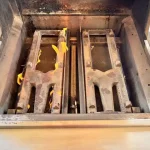
Grease, food debris and carbon can accumulate around burners, ignition areas and heat-distribution components. Burner ports can become obstructed, and heavy buildup can make it harder to see the condition of the components underneath.
However, cleaning should not be treated as a universal repair. If an electrode has failed, a burner has deteriorated or a valve is malfunctioning, cleaning alone will not restore the failed component.
That is why the right solution may be cleaning, repair, or a combination of both.
Could the Burner Be the Reason My Grill Won't Light?
Yes. Burners are wear components, especially in grills that are used frequently or exposed to coastal air, moisture and long-term heat cycling.
A burner may eventually develop corrosion, blocked ports, uneven openings or structural deterioration.
If the burner no longer distributes gas correctly near the ignition point, the grill may become difficult to light even when the ignition system is producing a spark.
A failing burner can also create other symptoms such as low heat, uneven flames or one side of the grill cooking differently from the other.
Could the Igniter Be the Problem?
Absolutely, but “the igniter” is not always one single part. Depending on the grill, the ignition system can include a battery, switch, ignition module, wiring and one or more electrodes.
Any of those components can fail.
This is one reason replacing the button or electrode without testing the rest of the system can fail to solve the problem.
Pro Grill's repair approach is to diagnose the system before recommending replacement components. That is especially important with older and premium built-in grills, where parts can be expensive and model-specific. Our technicians inspect the complete ignition sequence before recommending replacement parts, helping avoid unnecessary repairs.
Could a Grill Valve Cause a No-Light Condition?
A gas valve controls fuel flow to a burner, so valve problems can affect ignition.
However, grill valves are part of the gas-control system and are not a good area for experimental DIY repair.
If a knob is difficult to turn, a valve feels abnormal, one burner receives no apparent gas flow, or there is any concern about leakage, stop and have the grill evaluated.
You can learn more about how these components work on our BBQ grill valve repair and replacement page .
Common Components That Can Affect Grill Ignition
A Grill That Won't Light Does Not Automatically Need an Igniter
One of the most common mistakes is replacing a part based only on the symptom. A grill that will not light can have an ignition problem, but it can also have a burner problem, fuel-flow problem, valve issue, regulator problem or multiple failing components.
Correct diagnosis can prevent unnecessary parts replacement and help determine whether the grill is worth repairing.
When Should You Stop Troubleshooting a Grill That Won't Light?
There is a clear line between reasonable observation and working on the gas system.
Stop troubleshooting and have the grill professionally evaluated if you notice:
- the smell of gas;
- unexplained hissing;
- a suspected gas leak;
- damaged hoses, fittings or regulators;
- valves that are stuck or behaving abnormally;
- significant burner corrosion or structural deterioration;
- flames appearing where they should not;
- repeated ignition failures after basic checks;
- evidence of heat damage inside the grill; or
- anything involving gas-system disassembly.
Do Not Disassemble the Gas System to Troubleshoot an Ignition Problem
Gas valves, manifolds, regulators, orifices and related fuel components should not be taken apart simply to see whether that fixes the problem.
If you smell gas or suspect a leak, turn the grill off if it is safe to do so, move away from the source and follow the manufacturer's safety instructions.
Does a Grill That Won't Light Need to Be Replaced?
Not necessarily.
A quality grill can often be repaired for substantially less than the cost of replacing the entire unit, especially when it is built into an outdoor kitchen.
Ignition components, burners and many other serviceable parts can often be replaced when compatible components remain available.
Replacement becomes more reasonable when the grill has extensive corrosion, structural deterioration, unavailable parts, multiple major component failures or repair costs that no longer make sense compared with a new grill.
At Pro Grill, we make the same distinction every day: a grill that will not ignite does not necessarily need to be replaced. Proper diagnosis helps determine whether the problem involves burners, ignition components, valves, the regulator or another part of the fuel-delivery system.
If repair no longer makes sense, Pro Grill also provides new grill sales and replacement for built-in and freestanding BBQs.
Built-In Grill Won't Light
Built-in grills deserve special consideration because replacement is often more complicated than simply buying another BBQ.
The grill may be installed into stone, stucco, tile or other outdoor-kitchen construction. A replacement grill must work with the existing opening, gas type, ventilation requirements and surrounding clearances.
For that reason, repairing a quality built-in grill can make very good financial sense when the firebox and major structure remain in serviceable condition.
If the grill is older, having the model and serial number ready can help determine which ignition components, burners and other parts are still available.
Why Professional Diagnosis Matters
The phrase “my grill won't light” describes the symptom, not the diagnosis.
Two grills can have exactly the same complaint and need completely different repairs.
One may only need an ignition battery. Another may have a failed ignition module. A third could have deteriorated burners. Another may have a regulator or gas-flow issue.
The goal of professional diagnosis is to identify the actual cause before recommending parts.
Pro Grill provides mobile grill repair and diagnosis for many major built-in and freestanding outdoor grill brands. Our repair services include common ignition failures, low heat, uneven heating and deteriorated components.
Still Can't Get Your Grill to Light?
If the basic checks do not solve the problem, Pro Grill can diagnose the grill and determine whether the issue involves the ignition system, burners, valves, gas flow or another component. Our mobile technicians service many major outdoor grill brands directly at your property.
Related Grill Repair Resources
Grill Won't Light FAQ
Why won't my gas grill light?
Common possibilities include an empty fuel source, a weak ignition battery, failed ignition components, damaged electrodes, burner problems, restricted gas flow, regulator issues or valve-related problems. The exact cause depends on the symptoms and should be diagnosed before parts are replaced.
Why is my grill clicking but not lighting?
Clicking usually means the ignition system is attempting to create a spark, but the spark may not be occurring where it is needed or the burner may not be receiving fuel correctly. Electrode, burner and gas-flow problems can all produce this symptom.
Why won't my grill igniter click?
If the grill uses a battery-powered ignition system, an accessible dead battery is a reasonable first thing to check. If a fresh battery does not restore operation, the igniter switch, module, wiring or another ignition component may need evaluation.
Why won't one burner on my grill light?
A single burner may fail to light because of burner deterioration, blocked burner ports, a failed ignition electrode, wiring problems or an issue with gas delivery to that burner.
Why won't my propane grill light after changing the tank?
First confirm that the cylinder contains propane and is connected according to the manufacturer's instructions. Some systems can enter a restricted-flow condition after a tank change. Follow the grill manufacturer's startup or reset procedure rather than disassembling the regulator.
Can a dirty grill keep it from lighting?
Heavy grease, carbon and debris can contribute to blocked burner ports or buildup around ignition areas. However, cleaning will not repair a failed electrode, module, valve or deteriorated burner.
Can I replace a grill igniter myself?
Some manufacturers provide homeowner instructions for certain accessible ignition components. Follow the manual for your specific grill. Do not disassemble gas valves, manifolds, regulators or other fuel-system components while attempting to diagnose an ignition problem.
Is it worth repairing a grill that won't light?
Often, yes. Igniters, burners and many other components can frequently be replaced for much less than the cost of a new premium or built-in grill. Replacement may make more sense if the grill has extensive corrosion, structural deterioration, multiple major failures or unavailable parts.
Who repairs gas grills that won't light?
Pro Grill provides mobile grill diagnosis and repair for many major outdoor grill brands. Service can include ignition systems, burners, valves and other serviceable components, depending on the grill model, condition and parts availability.