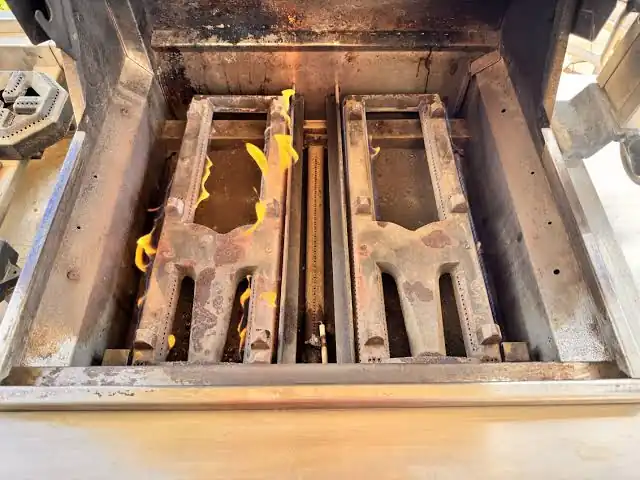
You preheat the grill, put food across the cooking surface and quickly realize something is wrong. One side is sizzling while the other side barely seems hot. Food in the back cooks faster than food in the front, or one section of the grill consistently burns whatever you place over it.
If your grill is heating unevenly, the problem is not always the amount of heat the BBQ produces. The real issue may be how that heat is being created and distributed across the cooking surface.
Uneven grill temperatures can be caused by deteriorated or obstructed burners, damaged briquette trays, missing ceramic briquettes, warped heat shields, grease buildup and other problems inside the BBQ.
If one side of your grill is hotter than the other, start by comparing the burners and heat-distribution components underneath the cooking grates. A burner that is partially obstructed or deteriorated may produce less heat in one section. Damaged briquette trays, missing ceramic briquettes, warped heat shields or heavy buildup can also create noticeable hot and cold spots.
Is Some Uneven Heat Normal on a Grill?
Yes. Very few grills maintain exactly the same temperature at every point across the cooking surface.
Grill design, burner arrangement, airflow and the location of heat-distribution components can naturally create some temperature variation.
Experienced grill owners sometimes learn these characteristics and intentionally use warmer and cooler areas for different foods.
The concern is when the temperature difference becomes extreme or when the grill used to heat evenly and suddenly develops major hot and cold spots.
A noticeable change in cooking performance can indicate that something inside the BBQ has changed as well.
First, Identify What "Uneven Heat" Means on Your Grill
Before replacing parts, pay attention to exactly what the BBQ is doing.
Different patterns can point toward different areas of the grill.
- One side is much colder: a burner or heat-distribution component in that section may need attention.
- One narrow section is extremely hot: heat may be concentrating because of a damaged, missing or incorrectly positioned component.
- The front and back cook differently: inspect burner performance and the heat-distribution system across those areas.
- One burner area stays cold: that burner may not be lighting completely or distributing flame normally.
- The entire grill is cooler than before: this is more likely a whole-grill low-heat problem rather than simply uneven heat.
If the entire BBQ is struggling to reach temperature, read our separate guide: Why Is My Gas Grill Not Getting Hot Enough?
Common Causes of Uneven Heat in a Gas Grill
A gas grill is a system. The burners create heat, but other components help distribute that heat between the flame and your food.
That means uneven cooking does not automatically mean the burners need replacement.
Here are some of the most common areas worth investigating.
1. A Burner May Be Partially Clogged or Obstructed
Gas grill burners contain a series of ports designed to distribute flame along the burner.
If some of those openings become obstructed, the flame pattern can change.
One portion of the burner may appear normal while another produces weaker flames or does not burn consistently.
The result can be a noticeable cold section directly above the affected part of the burner.
Once the grill is completely cool and the gas supply is off, inspect accessible burner areas according to the manufacturer's maintenance instructions.
Do not enlarge burner openings or drill the ports in an attempt to increase heat.
Learn more about BBQ burner cleaning, repair and replacement .
2. The Burner May Be Deteriorating
Grill burners operate in an extremely demanding environment.
Every time you cook, they heat up and cool down while being exposed to grease, food drippings, moisture and outdoor conditions.
Eventually, burners can corrode, crack, split or develop larger openings where the metal has deteriorated.
A damaged burner may no longer distribute flame evenly.
Signs that a burner deserves closer inspection include:
- Part of the burner does not light
- One section has noticeably weaker flames
- One area produces unusually large flames
- The burner has visible cracks or splits
- There are large corrosion holes
- The burner is severely rusted or structurally deteriorated
- The grill has developed hot and cold spots that were not present before
Surface cleaning can help when ordinary debris is the problem. It cannot restore a burner that is physically deteriorating.
If you smell gas, suspect a leak, see a damaged gas component or observe flame behavior that appears unsafe, stop using the BBQ and follow the manufacturer's safety instructions. Do not continue operating the grill simply to diagnose the uneven heat.
3. Damaged Briquette Trays Can Create Hot and Cold Spots
On grills that use ceramic briquettes, the burners are only the beginning of the heat-distribution process.
Ceramic briquettes absorb and radiate burner heat across the cooking area. The trays supporting them help hold the briquettes in their intended position.
Over time, those trays can corrode, warp or burn through.
If a briquette tray collapses or no longer supports the ceramic properly, the distance between the flame, briquettes and cooking grate can change.
Heat may then concentrate in one area while another section receives less radiant heat.
This can make a grill feel inconsistent even when the burners are still producing flame.
Learn more about BBQ briquette tray replacement .
4. Missing or Damaged Ceramic Briquettes Can Change Heat Distribution
Ceramic briquettes are not simply decorative pieces placed above the burners.
On grills designed to use them, they are part of the cooking system.
If briquettes are broken, crumbling, heavily deteriorated or missing from portions of the tray, the grill may no longer distribute heat the way the manufacturer intended.
One section may receive more direct burner heat while another section receives less radiant heat.
Avoid simply filling empty spaces with arbitrary ceramic material. The correct briquette arrangement depends on the grill's design.
See our guide to BBQ ceramic briquette cleaning and replacement .
5. Heat Shields or Flame Tamers May Be Warped or Damaged
Not every grill uses ceramic briquettes.
Many gas grills use metal heat shields, flame tamers, vaporizer panels or similarly designed components between the burners and cooking grates.
These parts help manage and distribute heat while also interacting with food drippings.
Years of heating, cooling and exposure to grease can cause metal components to warp, corrode or burn through.
If one shield has collapsed or is missing while the others remain intact, the cooking temperature directly above it can change significantly.
This is one reason replacing a burner without inspecting the rest of the grill may fail to correct an uneven-heating problem.
6. Heavy Grease and Carbon Buildup Can Affect Cooking Performance
Grease and carbon accumulate underneath the cooking surface over time.
Drippings can coat ceramic briquettes, briquette trays, heat shields and other internal surfaces.
Heavy buildup can contribute to flare-ups, excessive smoke and inconsistent cooking conditions. It can also make it much harder to see whether the components underneath are damaged.
This is particularly important on an older grill that has not received a thorough cleaning in years.
Once heavy grease and carbon are removed, the actual condition of the burners and heat-distribution system becomes much easier to evaluate.
Read more about grease buildup inside a BBQ grill .
Is Your Grill Dirty and Heating Unevenly?
Sometimes the BBQ needs more than one thing. Years of grease and carbon can hide deteriorated burners, damaged briquette trays and other internal problems.
Pro Grill provides professional BBQ cleaning and grill repair, so we can help determine whether the uneven heat is being caused by buildup, failed components or a combination of both.
7. One Burner May Not Be Lighting Completely
Sometimes what feels like uneven heat is actually an ignition problem.
A burner may ignite near the electrode but fail to carry flame across its entire length.
Or one burner may not light at all while the burners beside it operate normally.
The result is an obvious cold zone above the burner that is not operating correctly.
Possible causes can involve the burner itself, obstructed burner ports, the cross-lighting system or other ignition components.
If your grill is having ignition problems, see our BBQ ignition and igniter repair guide .
8. The Cooking Grates May Be Part of the Problem
Cooking grates are not usually the first component we would blame for major temperature differences, but their condition can affect how food cooks.
Different grate materials absorb, retain and transfer heat differently.
Severely deteriorated, damaged or mismatched cooking grids can create an inconsistent cooking surface even when the heat underneath is relatively similar.
If sections of the cooking grid are badly deteriorated, inspect the grates along with the burners and heat-distribution components underneath them.
Learn more about BBQ cooking grate repair and replacement .
9. Wind Can Affect Grill Temperature
A gas grill is an outdoor appliance, so environmental conditions can affect cooking.
Strong wind can remove heat from the grill and may affect burner behavior depending on the grill design and installation.
If the uneven heating occurs only during particularly windy conditions, the environment may be contributing.
However, do not improvise barriers that interfere with required ventilation or manufacturer-specified clearances.
If the grill consistently heats unevenly regardless of weather, an internal component or maintenance issue becomes more likely.
10. The Problem Could Be the Grill's Design
Some grills simply have more noticeable hot and cold zones than others.
Burner layout, firebox shape, ventilation and heat-distribution design all influence cooking temperatures.
This is particularly relevant if the BBQ has always cooked the same way.
If the same section has been somewhat hotter since the grill was new, you may simply be experiencing a characteristic of that particular model.
If the grill cooked evenly for years and has recently developed a severe temperature difference, normal grill design is a much less satisfying explanation.
A grill that has always had a slightly warmer area may simply have a natural hot spot. A grill that suddenly develops a major hot or cold section deserves closer inspection because a burner or heat-distribution component may have changed.
Why Is One Side of My Grill Hotter Than the Other?
When one entire side of a gas grill is significantly hotter, compare what is happening underneath both sides.
For example, if the left side cooks normally but the right side remains cold, inspect whether:
- The right-side burner is fully lighting
- The flames appear similar on both burners
- Burner ports are obstructed
- One burner is more deteriorated than the other
- A briquette tray has collapsed or rusted through
- Ceramic briquettes are missing from one section
- A heat shield or flame tamer is damaged
- Heavy buildup is concentrated in one area
Comparing the hot side with the cold side can often provide useful clues because you have a normally operating section of the same grill for reference.
Why Does My Grill Have One Extremely Hot Spot?
A cold spot is not the only uneven-heating complaint.
Sometimes one area becomes dramatically hotter than the rest of the cooking surface.
This can happen if flame or radiant heat is being concentrated in that location.
A damaged heat-distribution component, deteriorated burner or missing briquette can expose one portion of the cooking grid to more direct heat.
Excessive grease can also produce flare-ups that temporarily create intense heat in a localized area.
If the hot spot is severe enough to repeatedly burn food in the same location, inspect the components directly beneath that area once the grill has completely cooled.
Can a Dirty Burner Cause Uneven Heat?
Yes, if burner ports become obstructed enough to change the flame pattern.
But this is where diagnosis matters.
A burner that looks dirty may actually be deteriorated, and a burner that appears relatively clean may still have an internal obstruction or structural problem.
Clean burners only according to the manufacturer's instructions.
Do not drill burner ports larger, enlarge openings or otherwise modify the burner in an attempt to improve the flame.
Can Ceramic Briquettes Cause Uneven Heat?
Yes, particularly on a grill specifically designed around a ceramic briquette system.
Missing, broken or incorrectly arranged briquettes can change how radiant heat is distributed.
But do not automatically blame the ceramic pieces themselves.
The tray underneath them may be warped, corroded or collapsing. The burner below the tray may also be operating unevenly.
The burner, tray and briquettes work together as part of the cooking system, so all three deserve consideration.
Can Grease Buildup Cause Hot Spots?
Heavy grease accumulation can contribute to inconsistent cooking, particularly when it coats heat-distribution components or causes repeated flare-ups.
Grease can also hide deteriorated components underneath.
If a grill has not been thoroughly cleaned in years, removing the accumulated grease and carbon may be an important first step before deciding which parts actually need replacement.
Should You Replace the Burners If the Grill Heats Unevenly?
Not automatically.
This is one of the main reasons we recommend diagnosis before ordering parts.
Uneven heat can involve:
- Burners
- Burner ports
- Ignition or cross-lighting
- Ceramic briquettes
- Briquette trays
- Heat shields
- Flame tamers
- Cooking grids
- Heavy grease buildup
- Other internal components
Replacing a burner will not repair a collapsed briquette tray.
Likewise, installing new briquettes will not repair a burner that is severely deteriorated.
Correctly identifying the cause can save both time and unnecessary parts replacement.
What Can You Safely Check Yourself?
Basic observation can provide useful information without disassembling the gas system.
Follow your grill manufacturer's instructions and consider these basic checks:
- Determine exactly which area is hotter or colder
- Compare flame patterns across the burners
- Check whether every burner lights completely
- Look for obvious burner corrosion or structural damage
- Inspect accessible briquette trays or heat shields after the grill cools
- Look for missing or broken ceramic briquettes
- Check for substantial grease and carbon buildup
- Notice whether weather conditions are affecting performance
If the problem requires work on valves, regulators, manifolds, gas connections or other fuel-delivery components, professional diagnosis is the better next step.
What Not to Do When a Grill Heats Unevenly
Uneven heat can be frustrating, but random modifications can create larger problems.
Avoid:
- Drilling burner ports larger
- Enlarging gas orifices
- Modifying regulators
- Moving gas-system components from their designed positions
- Adding random briquettes or other materials to create more heat
- Continuing to operate a grill that smells like gas
- Replacing multiple parts without identifying the likely cause
A grill is a gas appliance. The goal is to restore the system to proper operation—not redesign how the fuel system works.
When Does Uneven Heat Mean the Grill Needs Repair?
Consider professional BBQ repair when:
- One burner does not fully light
- Burners are cracked, split or severely corroded
- The grill has developed extreme hot and cold zones
- Briquette trays have collapsed or burned through
- Heat shields are badly deteriorated
- The grill's performance has changed significantly
- Cleaning does not correct the problem
- Multiple internal components are deteriorated
- You suspect a fuel-delivery problem
- You smell gas or have another safety concern
Pro Grill provides professional BBQ grill repair for built-in and freestanding outdoor grills.
Does an Unevenly Heating Grill Need to Be Replaced?
Usually, uneven heat by itself does not mean you need a new BBQ.
Many quality grills are designed with replaceable burners, ignition components, briquette trays, cooking grids and other serviceable parts.
If the grill body and major structural components remain in good condition and replacement parts are available, repairing the problem can make much more sense than replacing the entire appliance.
Replacement becomes more worth considering when the grill has extensive structural deterioration, multiple expensive failures or parts that are no longer available.
If your BBQ has reached that point, Pro Grill also provides built-in BBQ grill replacement and sales .
Related Grill Troubleshooting Resources
Frequently Asked Questions About Uneven Grill Heat
Why is one side of my gas grill hotter than the other?
One side can become hotter because of uneven burner performance, obstructed burner ports, a deteriorated burner, damaged briquette trays, missing ceramic briquettes or problems with heat shields and other heat-distribution components.
Is it normal for a grill to have hot spots?
Some temperature variation is normal. The concern is when the difference becomes extreme or when a grill that previously cooked evenly suddenly develops a major hot or cold area.
Can dirty grill burners cause uneven heat?
Yes. Obstructed burner ports can change flame distribution. However, burners can also deteriorate structurally, so cleaning will not correct every burner-related problem.
Can bad briquette trays cause uneven grill temperatures?
Yes. A warped, corroded or collapsed briquette tray can change the position of the ceramic briquettes and alter how radiant heat reaches the cooking surface.
Can missing ceramic briquettes create hot spots?
They can. On grills designed to use ceramic briquettes, missing or badly deteriorated pieces can change heat distribution and expose portions of the cooking surface to different amounts of radiant or direct heat.
Why is the back of my grill hotter than the front?
Some front-to-back temperature difference can result from the grill's original design. If the difference has become much greater than it used to be, inspect burner performance and heat-distribution components for deterioration or obstruction.
Can grease buildup make a grill heat unevenly?
Heavy grease and carbon can contribute to inconsistent cooking conditions, flare-ups and smoke. Buildup can also cover components and make deteriorated burners, briquette trays and heat shields harder to inspect.
Should I replace my burners if my grill has hot spots?
Not automatically. Uneven heat can involve burners, briquette trays, ceramic briquettes, heat shields, ignition and other components. Diagnose the likely cause before replacing parts.
Why is one burner on my grill colder than the others?
The burner may have obstructed ports, deterioration or incomplete ignition. Compare its flame pattern with the other burners and inspect it according to the manufacturer's instructions after the grill has cooled.
Can an unevenly heating grill be repaired?
Often, yes. Many grills have replaceable burners, briquette trays, heat shields, ignition parts and cooking grids. Whether repair makes sense depends on the condition of the grill and availability of the correct replacement parts.
Still Trying to Figure Out Why Your Grill Heats Unevenly?
You do not need to replace random parts and hope the problem disappears. Pro Grill can inspect your BBQ, identify deteriorated components, professionally clean heavy buildup and recommend the appropriate repair.
We service built-in and freestanding outdoor grills and come directly to your home.