
Mobile service
We come to you in Cloud Lake
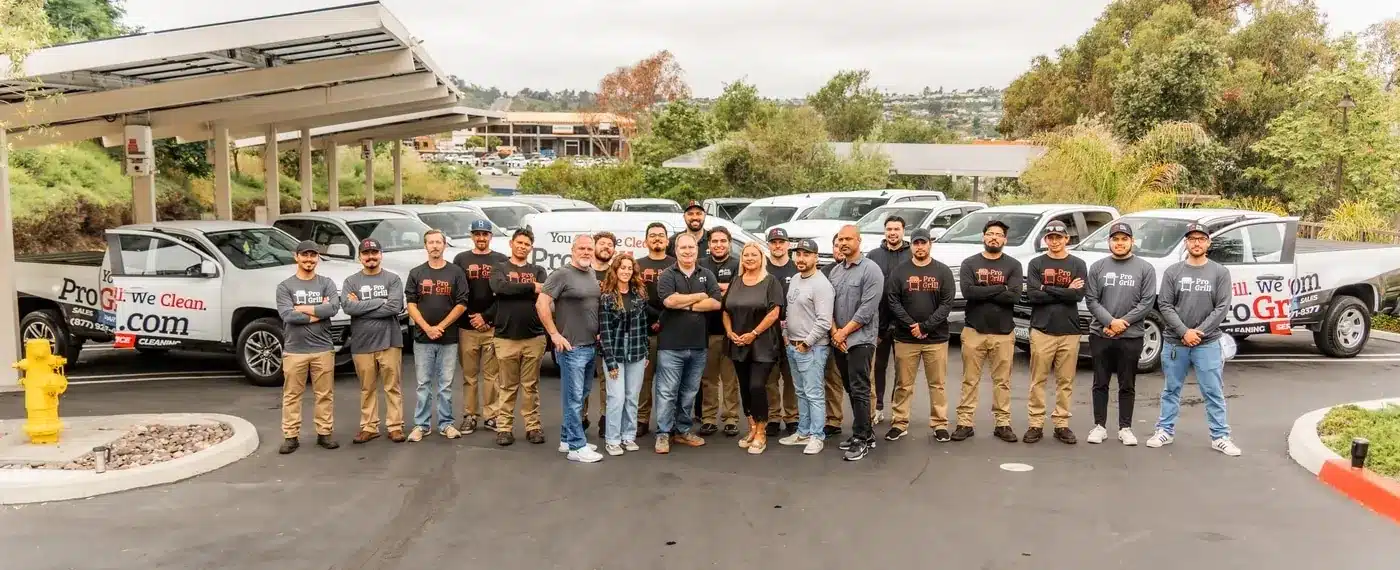
A grill doesn't need to go anywhere to be cleaned or fixed. Our technician arrives with tools, parts and a work area kit, and does the job where the grill sits. You don't load a greasy cart into the car, and you don't wait two weeks at a shop.
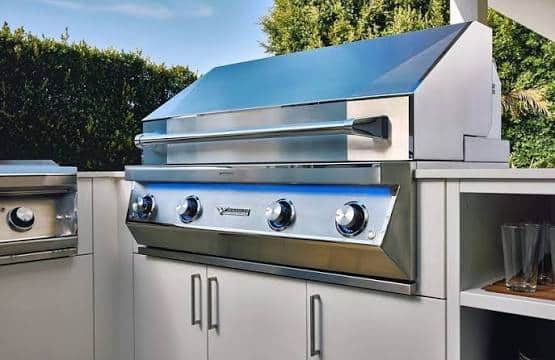
This matters most for built-in grills. A built-in is set into masonry or a stainless frame and isn't coming out for a cleaning. We work on it in place, which is how it has to be done anyway.
Cloud Lake is a small town, so we also take calls in the communities around it, listed below. Our technicians are insured, and we've serviced over 25,000 grills since 2018. We have 2,500+ five-star reviews (Google, Yelp and Facebook).
Deep cleaning
Deep grill cleaning
A deep cleaning is more than scraping the grates. We take the grill apart to the parts that collect grease and carbon, clean them, and put it back together. Here is what's included:
- Cooking grates, scrubbed and cleared of baked-on residue
- Burners, cleaned along the length and at every port
- Heat plates or flavorizer bars, cleaned or flagged if they're worn through
- Briquette trays and ceramic or lava rock where the grill uses them
- Firebox, scraped out from the walls to the bottom
- Drip tray and grease management system, emptied and cleaned
- Igniter electrodes, cleaned so the spark reaches the burner
- Hood interior and the outside stainless, cleaned and wiped down
- Our work area, cleaned up when we leave
Buildup is not just a looks problem. Grease and carbon feed flare-ups and grease fires. Clogged ports cause uneven heat, with one side of the grill running hotter than the other. Trapped moisture and grease speed up rust, and burners that sit in that mess rot out sooner than they should. A cleaned grill lights more reliably and cooks more evenly, and its parts last longer.

Start with the symptom
BBQ repair at your Cloud Lake home
If your grill is acting up, chances are one of the problems below is the cause. Our technicians repair burners, valves, igniters, grates, briquettes, heat plates, knobs and regulators, and most fixes happen on the first visit.
Uneven heat and hot spots
Usually clogged burner ports, a warped heat plate or a burner that has started to fail. We clean or replace what's causing it and check the flame across the whole grill.
Spiders and nests in the burner tubes
Spiders and insects like the venturi tubes, and a nest there blocks gas and air. The flame turns yellow, sputters, or burns back toward the knobs. We clear the tubes and check the burner.
Low heat or a weak flame
Dust and debris in the burner ports choke the flame. We clean each port, and if the burner metal is thinning, we tell you so.
Won't get past 300 degrees
This is often a regulator stuck in low-flow (bypass) mode, which restricts the gas. We test the regulator and replace it if it's the cause.
Flare-ups and grease fires
Grease built up on the heat plates, in the firebox and in the drip tray is what's burning. We deep clean those areas and replace any heat plates that have worn through.
Clicks but won't light
The electrode may be dirty, the wire loose, the battery dead or the module failed. We test the spark and fix the part that's actually at fault.
Briquette trays and heat shields burned through
Years of heat and grease eat through thin metal. We replace the trays or shields with ones that fit your grill and put the briquettes back in order.
Smells like gas
Shut the gas off at the tank or the supply valve and don't light the grill until it has been checked. We find the leak, which is usually a hose, fitting, valve or regulator, and repair it.
Repair it right
We diagnose before we buy parts
The same symptom can have different causes. A grill that won't light might need a battery, an electrode or a new valve. If we guessed and swapped parts, you'd pay for the wrong ones. We check first, then repair.
It speeds things up if you send a photo of the model and serial number label before we come. It's usually on the frame, inside a cabinet door or near the control panel. Our truck carries parts for most brands, and we can order more from store.progrill.com when a grill needs something specific.
Built-ins & outdoor kitchens
Built-in grills and outdoor kitchens
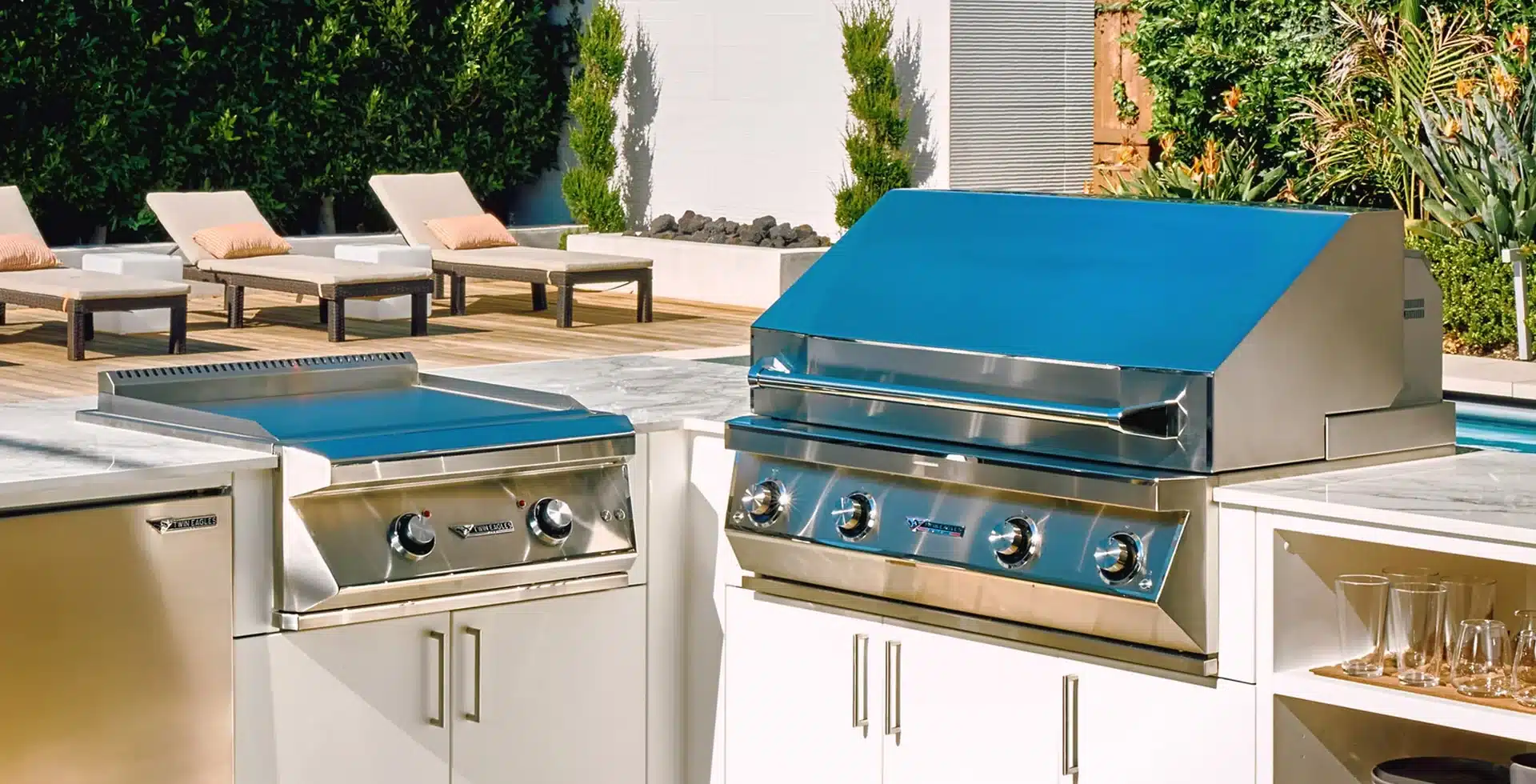
When one part fails on a built-in, repair is nearly always the better call. The grill is set into a stone or stucco island, with cabinets, a countertop and gas lines built around it. A new burner, valve or igniter costs far less than tearing out and rebuilding that setup.
We also design, fabricate and repair outdoor kitchens. That includes new islands, replacement of worn components and fixes to what's already built. Beyond gas grills, we service smokers, griddles, pizza ovens, fireplaces and fire pits.
Inspections & maintenance
Inspections and maintenance
An inspection is a full check of the gas connections, burners and ignition system, with a written report of what we found. It's useful before you host a big cookout, when you've bought a house with an existing grill, or when something doesn't seem right and you can't tell what.
Most homes should have a deep cleaning every 6 to 12 months. If you grill several times a week, lean toward 6.
The Protection Plan membership puts those cleanings on a schedule, so you don't have to remember to book them.
Wear and tear
What wears grills out in Cloud Lake
In South Florida, humidity and heat do most of the damage. Moisture sits in the firebox and on the burners, grease turns to a crust in the heat, and metal parts rust sooner than they would elsewhere.
Dust and debris collect in burner ports, and spiders and insects move into the venturi tubes. That's why we see so many uneven flames and weak burners, and why a cover and regular cleaning pay off.
When it's time to replace
New grills, measured and installed
Sometimes repair doesn't make sense, such as when the firebox has rusted through or the repair costs more than the grill is worth. In that case we measure the cutout, sell you a grill that fits, install it, and haul the old one away.
Measuring first matters with built-ins, because the opening has to match the new grill closely.
What to expect
What a visit looks like
- You book online and tell us what the grill is doing.
- The technician arrives in the scheduled window with tools and common parts.
- We look the grill over and explain what we find before we start work.
- We clean it, repair it, or both on the same visit.
- We clean our work area and go over what we did.