


BBQ Ignition & Igniters: Problems, Repair & Replacement
Does your gas grill click but refuse to light? Is there no spark at all? Does one burner ignite while another does not? BBQ ignition problems can involve batteries, ignition modules, electrodes, wires, grounding, burner condition, control components or the grill's fuel supply.
Pro Grill diagnoses and repairs ignition problems on many major outdoor grill brands. We also evaluate accessible ignition components during professional BBQ cleaning visits and can advise you when an igniter, electrode, wire or related component appears to need repair or replacement.
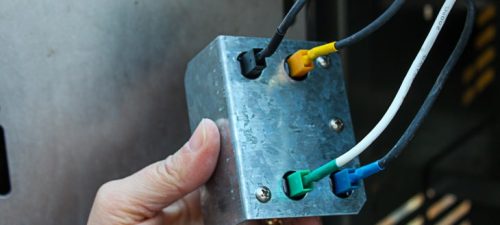
Signs your BBQ ignition system needs attention
Ignition problems are common on outdoor grills because igniter components live near heat, grease, moisture and weather. The exact symptom can provide useful clues, but it does not always identify the failed component by itself.
What actually happens when you ignite a gas grill?
A gas grill needs two things at the burner at the correct time: an appropriate fuel-air mixture and a reliable source of ignition. Depending on the grill, that ignition source may be an electrical spark, a mechanical piezo spark, a small flame-assisted ignition jet or a crossover system that transfers flame from an already-lit burner.
In a common electronic system, pressing or turning a control activates an ignition module. The module sends high voltage through one or more wires to electrodes positioned near the burners. Electricity jumps across a small gap, creating the visible and audible spark that can ignite the gas.
That means the word igniter may refer to several different pieces. A replacement kit can include an ignition module, button, battery, electrode, wire, ground wire, brackets and other hardware. Manufacturer parts listings illustrate this clearly: some Weber igniter kits, for example, include the module, electrode/wire, ground wire and battery as separate pieces within one kit. See an example of a multi-component igniter kit.
Because the system has several parts, replacing the button or module alone will not necessarily fix every no-spark condition.
Gas grills use several different ignition designs
There is no universal BBQ igniter. Ignition systems vary between manufacturers, models and even different burners on the same grill. A main burner, side burner and rear rotisserie burner may use different ignition components.
Battery-powered electronic ignition
A battery supplies power to an ignition module that generates repeated sparks. One module may serve several electrodes, or the system may use multiple outputs and wires.
Piezo ignition
A mechanical piezo system creates a high-voltage spark when the mechanism is pressed or actuated. These systems generally do not require a battery.
Push-and-turn ignition
Some grills integrate ignition with control operation. Pushing or rotating the burner knob can mechanically or electrically activate the ignition system while the valve opens.
Dedicated push-button ignition
Other grills use a separate ignition button. The burner valve is opened with the knob and the separate control activates the spark system.
Flame-assisted / flame-thrower ignition
Some grills use a small directed ignition flame rather than relying solely on an electrical spark directly at the main burner. The terminology and construction vary by manufacturer.
Crossover and cross-light systems
Some designs ignite one burner first and transfer flame to another burner through a crossover tube, channel, bracket or other flame path.
Battery, module, electrode, wire and ground all matter
When an electronic BBQ igniter stops working, it is tempting to replace the entire system immediately. Sometimes the problem is much simpler. A dead or incorrectly installed battery, disconnected wire or dirty connection can stop an otherwise functional system.
Ignition battery
Battery-powered modules need a healthy battery installed in the correct orientation. Battery compartments can also develop corrosion or poor contact after years outdoors. Weber's troubleshooting guidance for electronic igniters specifically includes checking gas flow, wire connections and the battery before replacing the igniter. See Weber's official igniter troubleshooting example.
Ignition module
The module generates the electrical pulse sent to the electrode. A failed module can produce no clicking, weak or inconsistent output, or failure at one or more outputs depending on its design.
Electrodes
The electrode is the component positioned near the point where ignition needs to occur. It must be intact, appropriately positioned and capable of creating a spark where the fuel-air mixture can ignite. Cracked ceramic insulation, corrosion, physical damage or improper alignment can interfere with ignition.
Igniter wires
High-voltage wires connect the module to the electrodes. Heat damage, loose terminals, pinched wires, corrosion or insulation damage can prevent the spark from reaching the intended location.
Grounding
Many spark systems depend on a proper electrical path through the grill structure or a dedicated ground. If the spark is jumping somewhere unintended, or if a connection is compromised, ignition can become unreliable.
Why a mechanical BBQ igniter can stop sparking
A piezo igniter uses mechanical force to generate a high-voltage electrical pulse. Because there is no battery to replace, a no-spark condition usually sends troubleshooting toward the piezo mechanism itself, its wiring, the electrode, connections and spark location.
A healthy mechanical igniter typically produces a distinct click when actuated. If the mechanism no longer clicks, the internal piezo device may be damaged. If it clicks but there is no spark at the burner, the electrical pulse may be escaping elsewhere or failing to reach the electrode correctly.
Again, a spark does not guarantee ignition. Fuel must also be reaching the correct area. This distinction is important because a customer may replace a working piezo igniter when the actual problem is a clogged burner, valve issue or another fuel-delivery problem.
Flame-thrower and gas-assisted ignition systems
Some premium gas grills use a small directed ignition flame instead of relying exclusively on an electrode spark positioned beside the main burner. You may hear these systems described as flame-thrower ignition, flame-assisted ignition, gas-assisted ignition or by a manufacturer's proprietary name.
The exact design varies considerably. The ignition flame may originate near the valve or control area and travel toward the burner through a dedicated port or path. Other designs combine a spark with a small gas jet that then ignites the primary burner.
When a flame-assisted system stops working, the main valve is only one possible cause. The ignition path, small ignition opening, control mechanism, alignment, debris, corrosion or related components may be involved.
Napoleon's JETFIRE™ system is one manufacturer-specific example of this broader category. Napoleon describes the system as using a jet of flame to light an individual burner. See Napoleon's manufacturer example. Other grill manufacturers use their own designs and terminology, so the exact model should be identified before parts are ordered.
When one burner lights another burner
Many multi-burner grills incorporate a way for flame to move from one burner to another. Depending on the grill, this may involve a crossover tube, cross-light bracket, channel, opening or another design that allows an already-lit burner to ignite an adjacent burner.
This can complicate troubleshooting. If the first burner lights but the second does not, the second burner's valve may still be functioning. The problem may instead involve the crossover path, burner ports, alignment, obstruction or deterioration.
Grease, carbon, corrosion and debris can interfere with these areas over time. Professional cleaning can improve visibility and remove buildup around accessible burner and crossover areas, making it easier to determine whether the problem is maintenance-related or whether a component has deteriorated.
Manufacturers implement crossover systems differently. The important point is not the brand name—it is understanding how the particular grill was designed to transfer flame before deciding which component needs replacement.
Why your grill can spark normally and still not ignite
One of the most common complaints is, “My grill is clicking, but it won't light.” A clicking sound tells us something about the ignition system, but it does not prove the spark is occurring in the correct place or that gas is reaching the burner properly.
- The electrode may spark, but the spark gap may be too far from the intended ignition point.
- The spark may be jumping to another metal surface instead of the intended location.
- The burner ports near the electrode may be obstructed.
- The burner may be corroded or deteriorated.
- The valve or orifice may not be delivering fuel correctly.
- A regulator or supply issue may be reducing gas flow.
- A crossover or flame-transfer path may be blocked.
This is why ignition diagnosis should include both sides of the equation: Is there an effective ignition source, and is the correct fuel-air mixture reaching it?
Grill clicking but still won't light?
Instead of replacing ignition parts by guesswork, Pro Grill can diagnose the ignition and fuel-delivery system and identify the component actually causing the problem.
What to check when the BBQ igniter appears completely dead
If an electronic system produces no sound and no visible spark, start with the simplest manufacturer-approved checks before assuming every ignition component has failed.
- For a battery-powered system, check the battery condition, orientation and battery-cap contacts.
- Look for clearly disconnected wires or terminals with the grill off and cool.
- Determine whether the problem affects every ignition output or only one burner.
- Inspect accessible wires for obvious heat damage, cuts or pinching.
- Look at the electrode ceramic for obvious cracking or physical damage.
- Check the owner's manual for the exact ignition sequence and model-specific troubleshooting.
If a single electrode fails while others continue sparking, the problem may be localized to that wire, electrode or module output. If every electrode stops at the same time, a shared battery, module, button or power issue becomes more relevant.
Ignition components are part of what we can observe during cleaning
Ignition components live in one of the dirtiest environments on the grill. Grease vapor, food residue, carbon, moisture and heat can accumulate around burners and electrodes. Heavy buildup can make it difficult to see whether an electrode is damaged, a burner is deteriorated or an ignition area is obstructed.
During a professional Pro Grill cleaning, applicable cooking grids, briquette trays or heat-distribution components are removed or cleaned so accessible internal areas can be serviced. As buildup is removed, burners and ignition components become easier to evaluate.
We are not simply trying to make the grill look cleaner. If an accessible electrode is obviously broken, a wire is disconnected, a burner has deteriorated or another component appears to need attention, we can advise the customer and discuss the next step.
Regular professional cleaning can also reduce the grease and debris surrounding the ignition and burner areas. The U.S. Consumer Product Safety Commission recommends regular grill cleaning according to the owner's manual and cleaning the grease trap to help reduce flare-ups and grease fires. Read CPSC's gas-grill safety guidance.
Book a cleaning and let us look at the ignition system while we're there.
If your grill needs a deep cleaning and the igniter has also become unreliable, tell us about the problem. Cleaning can improve access and visibility, and we can advise you when repair or replacement appears appropriate.
What can you reasonably check yourself?
There are useful observations a homeowner can make without disassembling the gas system. Always begin with the grill off and cool when inspecting components, and follow the manufacturer's instructions for your exact model.
- Replace the ignition battery if your system uses one and the manufacturer specifies the correct type.
- Check that the battery is installed in the correct direction.
- Look for loose or disconnected ignition wires that are readily accessible.
- Inspect the visible electrode for obvious cracking or damage.
- Observe whether the system clicks and whether a spark is visible at the intended location.
- Determine whether the failure affects one burner or all burners.
- Keep burner and ignition areas clean according to manufacturer instructions.
- Locate the model and serial number before ordering replacement ignition components.
When does a BBQ igniter need replacement?
Replacement becomes appropriate when diagnosis identifies a failed module, electrode, piezo mechanism, wire assembly or another ignition component that cannot be corrected through basic maintenance or reconnection.
It is important to match replacement components to the grill. Ignition modules can have different numbers of outputs, electrode wires can vary in length and terminal style, mounting brackets differ, and electrode shape and spark position can be specific to the burner design.
Main burners are not the only components with igniters
Premium outdoor grills can have several separate ignition points. Main burners may share one electronic module while a side burner, infrared sear burner or rear rotisserie burner uses a different electrode, wire or ignition method.
This matters when troubleshooting because “the igniter works” may only mean one section of the system works. A grill can successfully ignite its main burners while the side burner electrode is broken. Likewise, a rear infrared burner can have an ignition problem even though every main burner lights normally.
When describing a problem to us, tell us exactly which burner is affected. That information can help narrow the diagnosis and identify the correct parts more efficiently.
BBQ ignition repair across many major grill brands
Ignition systems vary widely between grill manufacturers and model generations. Pro Grill works on many premium and popular outdoor BBQ brands, including grills with electronic modules, piezo systems, push-and-turn ignition, flame-assisted systems and crossover designs.
The same brand may use several different ignition systems across its product history, so we still want the exact model whenever possible. Visit our BBQ brands page to see more of the manufacturers we service.
A failed igniter usually does not mean you need a new grill
Ignition components are replaceable service parts on many grills. If the firebox, burners, valves and overall structure remain in good condition, repairing an ignition system can be a practical way to keep an otherwise excellent built-in BBQ operating.
Even if an older grill's original ignition component has been discontinued, there may be a manufacturer supersession, updated kit or other approved repair path. The answer depends on the exact model and what parts remain available.
Complete grill replacement becomes more relevant when ignition failure is only one of several major problems—for example, severely deteriorated burners, damaged valves, corroded briquette trays, structural firebox deterioration and discontinued parts.
Pro Grill offers both professional BBQ repair and BBQ replacement sales and installation, allowing customers to compare repair with replacement when an older grill needs extensive work.
Ignition is only one part of the BBQ system
If your grill lights but does not perform correctly afterward, the ignition system may no longer be the main issue. Our related guides can help you understand the components that work together.
- BBQ Burners: Cleaning, Repair & Replacement — for weak, uneven, clogged or deteriorated burners.
- BBQ Grill Valves: Problems, Repair & Replacement — for stuck controls, fuel-control issues and valve diagnosis.
- Why Is My Gas Grill Not Getting Hot Enough? — for low-temperature and weak-flame troubleshooting.
- How to Clean BBQ Grates — for routine cooking-grid maintenance.
- BBQ Maintenance Services — for ongoing professional grill care.
- BBQ Cleaning Before & After Gallery — to see examples of professional deep cleaning.
Frequently asked questions about grill ignition
Why is my BBQ igniter not working?
Possible causes include a dead battery, failed ignition module, damaged piezo mechanism, disconnected wire, cracked electrode, poor ground, incorrect spark gap or another component in the ignition system.
Why does my grill click but not light?
Clicking may indicate the ignition system is operating, but the spark may be in the wrong location or fuel may not be reaching the burner correctly. Burner, valve, regulator and fuel-supply problems can all contribute.
Why is there no spark at my grill igniter?
For electronic systems, check the battery and readily accessible wire connections according to the owner's manual. A damaged electrode, wire or ignition module may also cause a no-spark condition.
Can a BBQ igniter be cleaned?
Accessible debris around an electrode and burner can sometimes be cleaned according to manufacturer instructions, but a cracked electrode, failed module or damaged piezo mechanism generally requires repair or replacement rather than cleaning.
Can Pro Grill replace BBQ igniters?
Yes. Pro Grill repairs BBQ ignition systems and can replace applicable modules, electrodes, wires and related ignition components when the correct parts are available.
Do all grill igniters use batteries?
No. Some use battery-powered electronic modules, while others use mechanical piezo systems or flame-assisted ignition designs that do not rely on the same type of battery-powered spark module.
Why does only one burner fail to ignite?
A single-burner problem may involve that burner's electrode, wire, ignition port, burner condition, valve, orifice or crossover path rather than the entire ignition module.
Can a dirty grill cause ignition problems?
Heavy grease, carbon and debris can accumulate around burners and ignition areas. Cleaning can improve access and may correct some obstruction-related issues, but damaged ignition components still need repair or replacement.
Is a universal grill igniter okay to use?
Not automatically. Modules, electrodes, wire lengths, terminal styles, brackets and spark positions vary. The correct component should be matched to the grill whenever possible.
Is it safe to keep trying the igniter when the grill will not light?
Do not continue allowing unburned gas to accumulate. Follow the manufacturer's lighting instructions. If you smell gas or suspect a leak, stop using the grill until the issue is corrected.
Do you inspect igniters during professional BBQ cleaning?
Cleaning gives our technicians improved visibility of accessible burners, electrodes, wires and surrounding components. If we notice an apparent ignition problem, we can advise you about repair or replacement.
BBQ parts, repair & maintenance guides
Your BBQ operates as a complete system. Explore each major component to learn how it works, what can go wrong and how Pro Grill handles cleaning, repair and replacement.
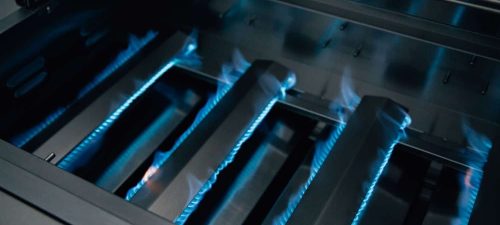 Burners
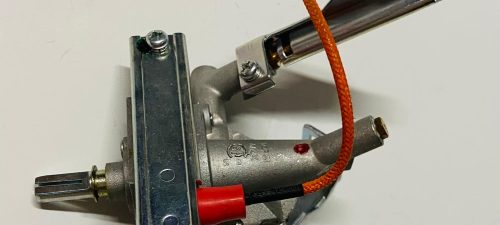 Valves
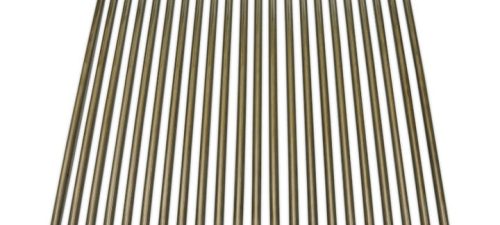 Grates
 Briquettes
 Briquette Trays
 Knobs
Knobs BBQ Parts & More
Let Pro Grill find the problem and get your BBQ lighting again.
Whether your grill has no spark, clicks but will not light, works intermittently or needs a complete ignition replacement, Pro Grill can diagnose the problem and help identify the correct repair.