


BBQ Grill Knobs: Problems, Repair & Replacement
A grill knob may look like a simple cosmetic part, but it is the control you use to operate the gas valve behind the front panel. When a BBQ knob cracks, spins freely, becomes difficult to turn, falls off or no longer lines up correctly, the problem may be the knob itself—or it may be telling you something about the valve underneath.
Pro Grill services BBQ controls as part of our broader grill repair work. We can help identify damaged knobs, determine whether the problem is actually with the gas valve, locate compatible replacement parts when available, and evaluate other grill components at the same time.
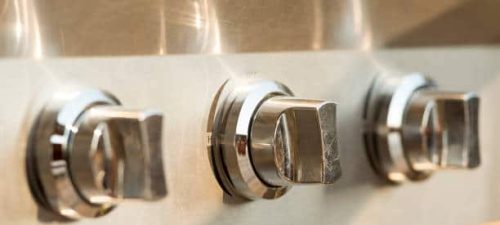
What does a BBQ grill knob actually do?
The knob is the user-facing portion of a larger control assembly. It normally fits onto a valve stem behind the grill's control panel. Turning the knob rotates that stem, allowing the valve to control gas flow to a burner. On some grills, pushing or turning the knob can also interact with an ignition system.
That distinction matters for diagnosis. A cracked plastic insert inside a knob can make the knob spin without properly turning the valve. A damaged valve stem can make a perfectly good knob appear loose. A stiff valve can make the customer believe the knob is stuck. And on illuminated-control systems, a lighting problem near the knob may involve switches, wiring or LEDs rather than the knob itself.
Why BBQ grill knobs break, stick or stop working
Control knobs live outdoors and sit directly on the front of a high-temperature appliance. They are repeatedly turned, pushed and exposed to heat, grease, cleaning products, sunlight and weather. Over years of use, several types of failure can develop.
How to tell whether the problem is the knob or the gas valve
This is one of the most important questions when diagnosing a grill control problem. Replacing a knob will not repair a seized valve, and replacing a valve is unnecessary when only the knob's internal socket has cracked.
If the knob pulls off normally, its interior can sometimes reveal obvious damage. Look for a split socket, rounded or stripped engagement surfaces, missing inserts or deformation. The valve stem should also be visually inspected for damage, but gas-control components should not be disassembled casually.
If a knob becomes unusually hard to rotate, do not use pliers or excessive leverage to force it. The resistance may be coming from the BBQ valve. Forcing a compromised gas-control component can turn a manageable repair into a larger problem.
The knob is visibly cracked, slips on an otherwise normal stem, falls off easily, or has a damaged internal socket.
The control is extremely stiff, the stem itself appears damaged, gas flow does not correspond with knob movement, or the valve does not shut/control normally.
The knob is only the part you see
Behind each control knob is the valve and related hardware that actually regulates burner gas flow. When a control feels loose, stiff or inconsistent, looking beyond the visible knob helps determine whether the correct repair is a replacement knob, valve service or another control-system component.
A broken BBQ knob can become a gas-control concern
A cosmetic crack is different from a condition that prevents you from confidently controlling the valve. You should be able to identify the OFF position and operate the control normally. If the knob spins freely, the valve does not respond as expected, or you are uncertain whether a burner has actually been shut off, stop using that control until the problem is resolved.
The U.S. Consumer Product Safety Commission recommends checking gas grills for leaks and having leaks repaired before using the grill. The broader principle is important here: gas-control problems should be treated as functional appliance issues rather than merely cosmetic inconveniences.
Why universal grill knobs are not always universal
Replacement BBQ knobs are sold in many shapes and styles, and generic products may be advertised as “universal.” Physical fit, however, is only part of the equation. The internal stem interface, depth, orientation and OFF/HI/LOW markings all need to correspond correctly with the valve.
Common valve stems can include D-shaped profiles, flattened shafts and other manufacturer-specific interfaces. Two knobs may slide onto the same-looking stem but point in different directions when the valve is off. A replacement that indicates OFF while the valve is partially open is not an acceptable outcome.
Depth matters too. A knob that bottoms out against the control panel before fully engaging the stem may feel loose. One that sits too far outward may wobble or fail to engage push-to-ignite functions correctly. Decorative bezels, light rings and ignition features add further model-specific differences.
For these reasons, we prefer identifying the grill manufacturer and model before choosing replacement knobs whenever possible.
Not all BBQ knobs and controls work the same way
Modern grills use several control arrangements. A basic knob may simply rotate a valve. Other designs require the user to push inward before turning, and some combine that movement with an ignition function. Premium grills may add illuminated bezels or LEDs around the control.
The knob mechanically rotates the valve stem to change burner output.
The user pushes inward and rotates the control, often as part of a safety or ignition sequence.
Turning or pressing the control may activate a spark or flame-assisted ignition system.
Premium grills may include LED lighting, switches or light rings around the controls. A lighting failure is not automatically a failed knob.
How we clean BBQ knobs and the control-panel area
Knobs and the front control panel can collect grease, fingerprints, smoke residue, dust and weather-related grime. During professional BBQ cleaning, the exterior control area is cleaned as part of the overall grill service, with care taken around printed markings, finishes, electronics and control openings.
Knobs should not simply be soaked indiscriminately. Some contain inserts, decorative finishes or materials that can react poorly to harsh chemicals. Likewise, flooding cleaner behind the control panel is not a good idea because valves, switches, wiring and ignition components may be located directly behind it.
A detailed cleaning also makes physical damage easier to see. Grease can hide cracks around the knob hub, while dirt can make worn markings difficult to distinguish. Once clean, it becomes easier to evaluate whether the knob is merely aged cosmetically or actually failing.
Cleaning the grill? Let us look at the controls too.
Our deep-cleaning service addresses much more than the cooking grates. We can clean the grill and identify visible issues with knobs, valves, ignition components, burners and other accessible parts.
What you can check when a grill knob is not working
Some basic observations can help narrow down a knob problem without disassembling the gas system. Begin with the grill off and cool, and follow the manufacturer's instructions for your model.
- Inspect the knob exterior for cracks, melting, deformation or missing markings.
- If the manufacturer permits knob removal, inspect the internal socket for splitting or stripping.
- Compare the problem knob with another control on the same grill to see whether fit and orientation differ.
- Check whether the knob is rubbing against a bezel or front panel.
- Confirm that the knob points accurately to OFF when the valve is in its proper off position.
- Do not lubricate, disassemble or modify a gas valve unless the manufacturer's service procedure specifically calls for it and you are qualified to perform that work.
- Do not force a stiff valve with tools through the knob or stem.
Our DIY BBQ maintenance guide has additional homeowner maintenance ideas and explains when professional service becomes the better choice.
What if the BBQ knob is stuck?
A stuck knob deserves careful diagnosis. Grease or debris around the control may create resistance, and a damaged knob can bind against the panel. But if the valve stem itself has become difficult to rotate, the issue is no longer simply the knob.
Do not solve the problem by grabbing the knob or valve stem with pliers and forcing it. Gas valves contain internal components designed to meter and shut off fuel. Excessive force can damage the stem or internal mechanism.
Instead, determine whether the knob can be removed according to the owner's manual and whether the resistance clearly comes from the knob or panel. If the valve remains stiff, have the grill inspected. Our detailed BBQ valve repair and replacement guide explains common valve designs and symptoms in greater depth.
Why does my grill knob turn without changing the flame?
A knob that rotates without positively moving the valve can have a stripped or cracked internal socket. The outside may look normal even though the engagement point inside has failed. The valve stem itself can also be damaged.
This symptom should not be ignored because the user may lose reliable control over burner output or the OFF position. Remove the grill from service if you cannot confidently shut the affected burner off using its intended control.
When diagnosing the issue, the objective is to determine which interface has failed: the knob, the valve stem or the valve assembly. Once that is known, the correct part can be identified rather than guessing.
OFF, ignition, high and low positions need to line up correctly
Replacement is not only about making a knob physically fit. The pointer and markings need to correspond with the valve's actual positions. Different manufacturers may arrange OFF, ignition, HIGH and LOW differently around the control arc.
This becomes especially important when generic replacement knobs include interchangeable inserts or adhesive labels. A knob that points to the wrong position can confuse anyone operating the grill. For a shared community grill, vacation rental or commercial installation, clear control markings are particularly valuable because many users may be unfamiliar with the appliance.
Pro Grill services HOAs, communities, cities, clubhouses, resorts and other shared BBQ installations, where reliable and understandable controls are an important part of keeping equipment usable.
When the knob problem is actually an ignition or electrical problem
On some grills, pressing or rotating a control knob is part of the ignition sequence. If the burner does not light, the knob may be functioning perfectly while the problem lies with an electrode, wire, battery, ignition module or other component.
Likewise, a lighted knob that no longer illuminates does not necessarily need a new knob. Premium grill control lighting may involve LEDs, wiring harnesses, switches, transformers or modules behind the panel.
Before ordering a cosmetic control part, determine what has actually stopped working. Visit our BBQ ignition and igniter repair guide for a detailed explanation of spark systems, electrodes, modules, wires and ignition-related symptoms.
How to find the right replacement BBQ knob
The most reliable starting point is the grill's manufacturer and model number. Model information may be found on a rating plate, data label, inside a cabinet, behind an access door or in another location specified by the manufacturer.
Photos are also useful. A clear picture of the front and back of the original knob, the valve stem, control panel and complete grill can help distinguish similar-looking parts. Dimensions may help confirm compatibility, but they should not replace model identification when model-specific parts are available.
On older grills, the original knob may be discontinued. Manufacturers sometimes supersede older parts with updated versions, while aftermarket alternatives may exist for other models. Compatibility should be verified rather than assumed from appearance.
If multiple knobs are faded or damaged, customers may choose to replace a complete matching set for appearance, but there is no reason to replace functional controls solely because one knob failed unless the desired part is sold only as a set.
Knobs, valves, burners and igniters all work together
A gas grill control begins at the knob, but the result occurs deeper inside the appliance. The knob turns the valve; the valve meters fuel; the burner distributes that fuel through its ports; and the ignition system lights the mixture.
Above the burner, ceramic briquettes, briquette trays or another radiant system distribute heat before it reaches the cooking grates.
That chain is why a symptom at the knob should be diagnosed rather than guessed at. If turning the knob produces little flame, the problem could be downstream. If the knob does not move correctly, the problem may be right at the control interface. Understanding the system helps avoid unnecessary parts replacement.
Replacement grill knobs for many BBQ brands
Knob styles vary significantly between manufacturers and even between models from the same brand. Pro Grill works on many premium and popular outdoor grill brands and can help identify control and repair needs.
Visit our BBQ brands page to learn more about the manufacturers we service.
A broken control knob rarely means the entire BBQ is finished
Knobs are replaceable components on many grills. Even when the underlying valve is the problem, a repair can often make more sense than replacing a premium built-in BBQ—especially when the firebox and other major systems remain in good condition and replacement parts are available.
Built-in grill replacement can involve cutout dimensions, countertop clearances, gas connections and compatibility with an existing outdoor kitchen. Repairing controls, burners, ignition parts or radiant components can extend the useful life of a quality appliance.
If a grill has widespread deterioration and several major parts are unavailable, replacement may become more sensible. Pro Grill offers both professional BBQ repair and new grill replacement sales and installation.
Knob broken, stuck or spinning?
We can help determine whether you need a replacement knob, a valve repair or a broader grill service.
Small control problems are easier to address before they become larger ones
Routine BBQ maintenance is an opportunity to notice loose knobs, faded markings, stiff controls and ignition issues before the grill becomes frustrating to operate. During a deep cleaning, years of grease are also removed from the areas surrounding the controls and internal cooking system.
If your grill also has weak flame or struggles to reach temperature, see Why Is My Gas Grill Not Getting Hot Enough?. A low-heat complaint can involve burners, valves, regulators and fuel supply rather than the knob itself.
For maintenance you can perform between professional visits, our DIY BBQ Maintenance article covers practical homeowner checks and explains when it is time to call a professional.
Frequently asked questions about grill knobs
Why does my grill knob spin freely?
The internal socket may be cracked or stripped and no longer gripping the valve stem. The stem itself can also be damaged, so both parts should be evaluated.
Why is my BBQ knob hard to turn?
Resistance can come from the knob rubbing or binding, but it may also indicate a stiff gas valve. Do not force a difficult control with tools.
Can I use a universal BBQ knob?
Only when the replacement is genuinely compatible with the valve stem, depth, rotation and control markings. A knob that physically fits is not necessarily functionally correct.
Can a broken knob cause a gas problem?
A damaged knob can prevent reliable control of the valve. If you cannot confidently identify or operate the OFF position, discontinue use until the problem is corrected.
Why does my grill knob keep falling off?
The internal socket may be worn or cracked, the knob may be incorrect for the valve stem, or the stem itself may be damaged.
Can grill knobs be cleaned?
Yes, but cleaning methods should be appropriate for their material and finish. Avoid flooding cleaners behind the control panel where valves, wiring and ignition parts may be located.
Why does the knob turn but the flame stays low?
The issue may not be the knob. Valve, burner, regulator, fuel-supply or other gas-flow problems can cause weak flame and should be diagnosed separately.
Why doesn't my illuminated grill knob light up?
The problem may involve an LED, switch, wiring harness, transformer or another electrical component rather than the physical knob.
How do I find the correct replacement knob?
Start with the manufacturer and grill model number. Photos of the original knob, its rear socket, valve stem and control panel can also help verify compatibility.
Should I replace all my knobs if one breaks?
Not necessarily. If matching individual replacements are available, only the failed knob may need replacement. Some owners replace a set for cosmetic consistency.
Does Pro Grill replace BBQ knobs?
When compatible parts are available, Pro Grill can help identify and replace damaged knobs and diagnose related valve or ignition problems.
Can Pro Grill inspect controls during a cleaning?
Our cleaning service provides an opportunity to identify visible problems with accessible knobs, controls and other grill components while the BBQ is being serviced.
BBQ parts, cleaning, repair & replacement guides
From the control knob to the burner and cooking surface, each part works with the rest of the grill. Explore our component guides for cleaning, troubleshooting and replacement information.
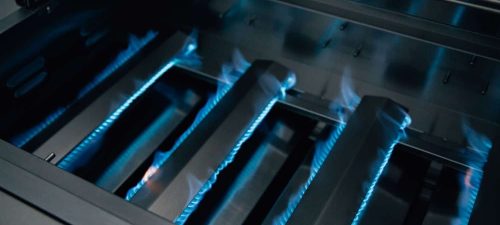 Burners
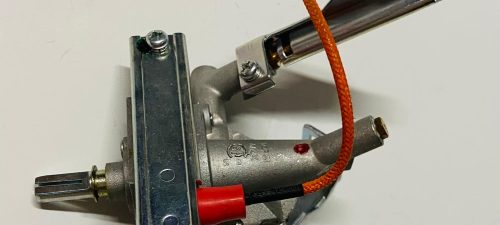 Valves
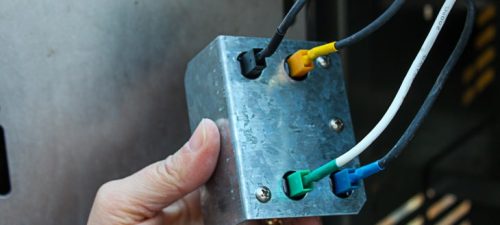 Ignition & Igniters
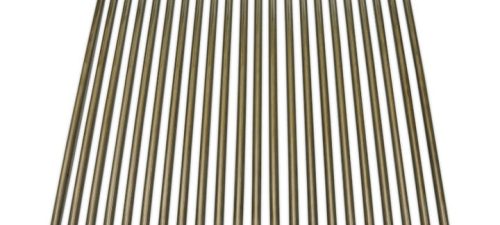 Grates
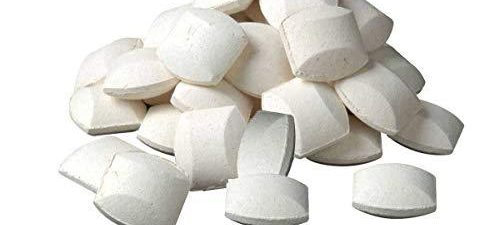 Briquettes
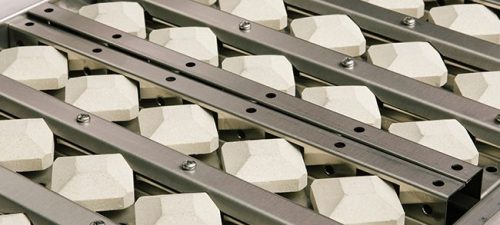 Briquette Trays
 BBQ Parts & More
Get the right fix for a broken grill knob.
Whether the knob itself is cracked, the control is difficult to turn, the valve may be failing or several parts need attention, Pro Grill can help evaluate the BBQ and determine the appropriate repair.