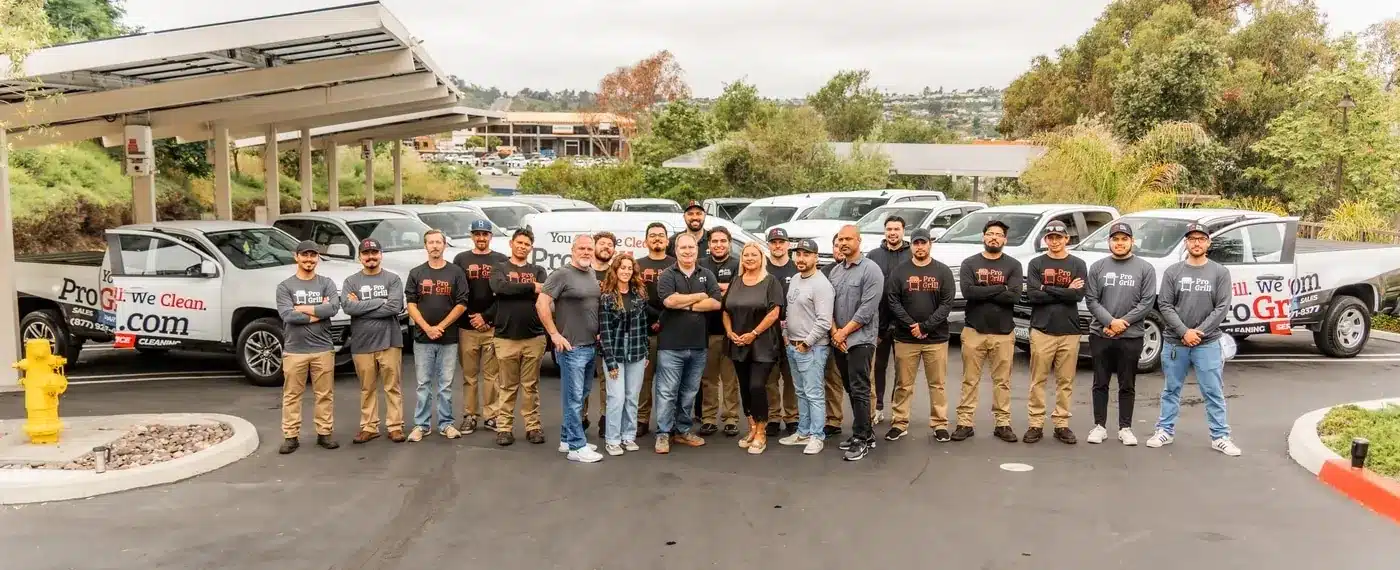

Mobile service
We come to your Camarillo home
A Pro Grill technician drives to your house and works on the grill where it sits: on the patio, beside the pool, or set into a block island in the backyard. Nothing gets loaded into a truck, and nothing sits in a shop for a week.
That matters most for built-ins, which can't be moved anyway. It also spares you from hauling a greasy freestanding grill to a repair shop and back. We cover Old Town Camarillo, Camarillo Springs, Leisure Village, Mission Oaks, Spanish Hills, Camarillo Heights, Las Posas Estates, Village at the Park, Sterling Hills and Springville, plus the streets around them.
We have serviced more than 25,000 grills since 2018, and the team has 50+ years of combined grill experience. We are insured, and we have 2,500+ five-star reviews on Google, Yelp and Facebook.
Deep cleaning
Deep grill cleaning, start to finish
A deep cleaning takes the grill apart, not just the part you see. Here is what we go through:
- Cooking grates, scrubbed and rinsed
- Burners, cleaned and cleared of clogged ports
- Heat plates or flavorizer bars
- Briquette trays and briquettes
- The firebox, scraped out down to bare metal
- Drip tray and grease management, emptied and cleaned
- Igniter electrodes, cleaned and checked for a good spark
- Hood, and the outside stainless polished
- Cleanup of our work area when we're done
Buildup is more than a looks problem. Old grease feeds flare-ups and can catch fire in the firebox. Caked-on residue blocks burner ports, so one side runs hotter than the other and food cooks unevenly. Grease and moisture sitting on metal start rust, and a burner that rusts from the outside in will eventually rot through. Cleaning on a schedule is cheaper than replacing burners early.

Start with the symptom
BBQ repair
Most grill problems come down to a handful of parts. We fix the ones below at your home, usually in a single visit.
Igniter clicks but the grill won't light
The cause is often a dead battery, a dirty or misaligned electrode, or a failed ignition module. We test each one and replace only the part that failed.
Low heat
A grill that can't get past 300 degrees usually has a regulator problem, a gas flow restriction, or burner ports clogged with debris. Each has a different fix.
Uneven or yellow flames
Yellow, lazy flames mean the burner isn't mixing air and gas properly. Blocked ports, a spider nest in the venturi tube, or a worn burner are the usual reasons.
Burners rusted through
Once a burner has holes or cracks, cleaning won't bring it back. We replace it with the right burner for your model and check the valves while we're in there.
Sticking or leaking valves
A knob that is stiff, spins freely, or smells of gas needs attention right away. We replace worn valves and test every connection for leaks.
Worn grates
Chipped porcelain, thinning rods and rust that flakes into your food are signs the grates are done. We replace them with ones that fit your grill.
Briquette trays and heat shields
These burn out over the years and leave the burners exposed to drippings. New trays and heat plates bring back even heat and cut down on flare-ups.
Ignition modules, rotisserie motors and lights
Dead sparks, rotisserie motors that stall and burned-out control lights are all repairable. We also replace knobs and regulators.
Repair it right
We diagnose before we replace parts
The same symptom can come from different causes. A grill that won't stay lit might need a new regulator, or it might only need a cleaned orifice. Replacing parts by guesswork costs you money, so we check first and then repair what is actually wrong.
When you book, take a photo of the model and serial number label on your grill, usually inside a cabinet door or on the back or side panel. With that we can often bring the right part on the first trip. The truck carries parts for most brands, and more are available at store.progrill.com if we need something specific.
Built-ins & outdoor kitchens
Built-in grills and outdoor kitchens
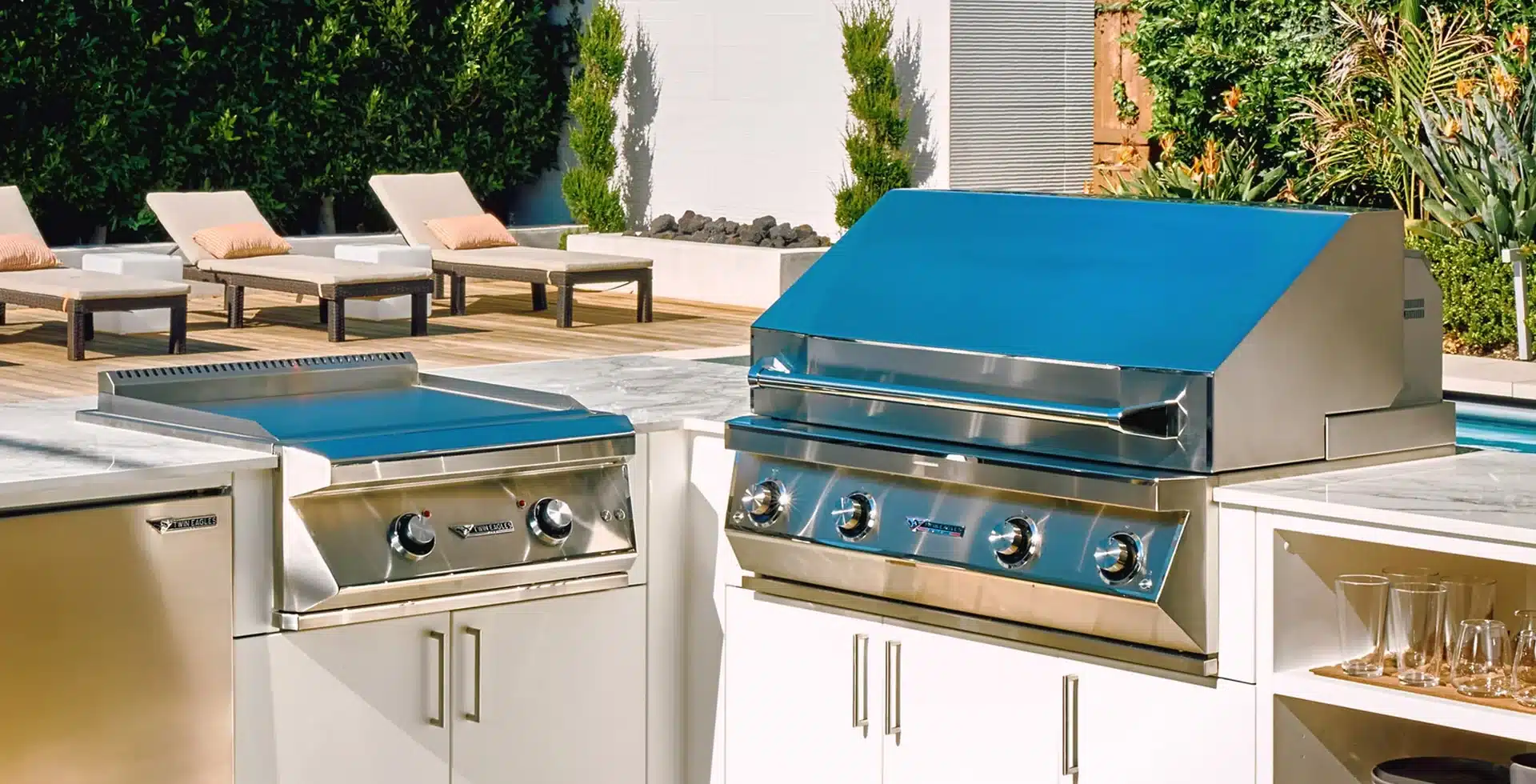
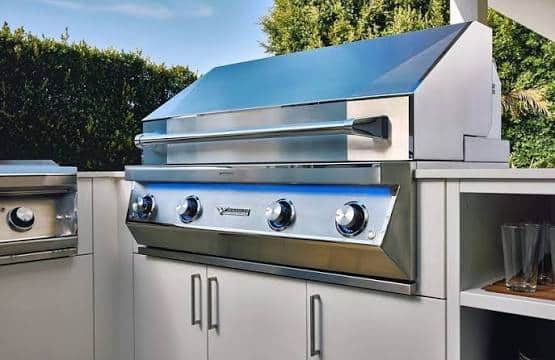
When one part fails on a built-in, repair is almost always the better choice. The grill head is the expensive piece, and the cutout in your island was made for it. A new burner, valve or igniter gets it cooking again without tearing out countertops.
We also design, fabricate and repair outdoor kitchens. That covers islands, countertops, cabinetry and appliance cutouts, whether you're starting from nothing or fixing an existing setup.
Grills are not the only thing we work on. We service smokers, griddles, pizza ovens, fireplaces and fire pits, too.
Inspections & maintenance
Inspections and regular maintenance
A grill inspection is a full check of the gas connections, burners and ignition, with a written report on what we found. It is useful before a big cookout, when you're buying a home with a grill, or when you suspect trouble but can't pin it down.
Most homes should have the grill cleaned every 6 to 12 months. If you grill several times a week, lean toward every six months or sooner.
If you'd rather not keep track, the Protection Plan membership sets up scheduled cleanings so the grill gets serviced without you having to call each time.
Wear and tear
What wears grills out in Camarillo
Camarillo is inland, so salt air isn't the main enemy. Heat and dust are. Grills left uncovered collect fine dust, and the sun bakes grease onto grates and into the firebox.
Spiders are the other regular problem. They build webs inside the venturi tubes, which block the gas and air mix and cause yellow flames or a burner that lights poorly. A cover and a cleaning every year or so keep it under control.
When it's time to replace
When a new grill makes more sense
Sometimes repair isn't worth it: the firebox has rusted through, the frame is warped, or parts are no longer made. We'll tell you plainly when that's the case.
If you decide to replace, we measure the cutout, sell you a new grill, install it and haul the old one away. You don't have to find a truck or figure out whether the new grill fits.
What to expect
What a visit looks like
- We confirm a time window and what you need done.
- The technician arrives, looks over the grill and explains what is needed.
- We clean, repair or inspect on site, with the parts we carry.
- We test the grill, light it and check the flames.
- We clean up our work area and go over what we did.